Is your installation team struggling with split air conditioner setups that lead to callbacks? You are losing money and trust every time a unit fails due to poor installation.
Proper installation of a split air conditioner requires careful planning of indoor and outdoor unit placement, correct copper pipe sizing, and rigorous vacuum testing. Following a strict protocol ensures unit longevity, prevents refrigerant leaks, and maintains the high efficiency promised by brands like iClima.
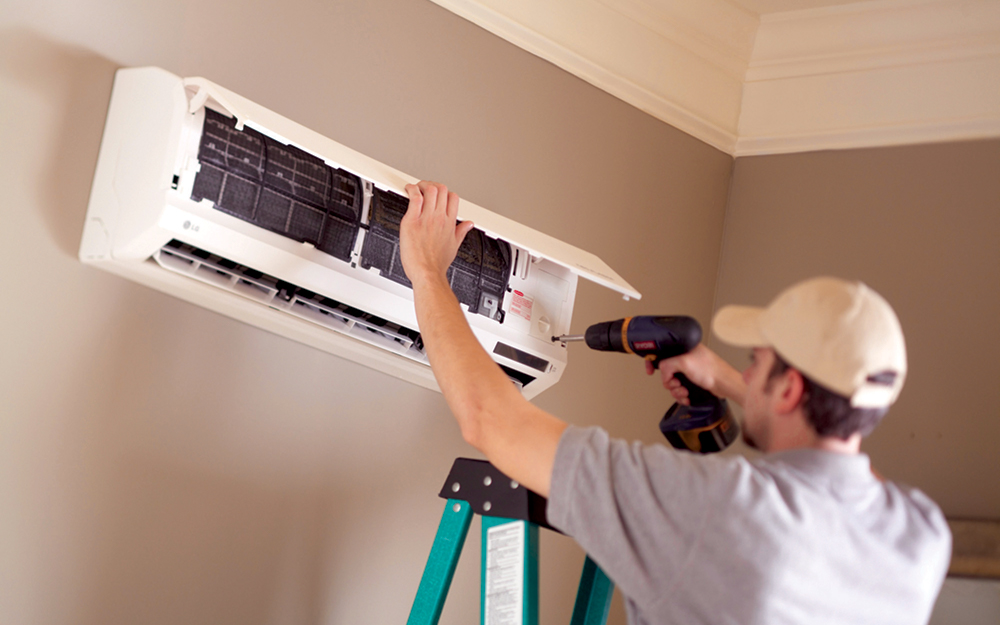
Most distributors and contractors rush through the initial steps. They think "plug and play" works for commercial hardware. It does not. If you want to build a reputation for reliability in markets like South Africa or Latin America, you need to understand the technical nuances deep down. Let’s break down the essential phases.
What do you need to know before starting the installation?
Are you jumping straight into drilling holes without checking the site conditions first? Skipping the site survey is the number one reason for installation failure and customer dissatisfaction.
Before starting, you must verify the wall strength for the indoor unit and ensure the outdoor unit has sufficient clearance for airflow. You also need to confirm the electrical capacity matches the split air conditioner’s requirements to prevent circuit overloads.
When I visit job sites in Latin America, I often see good equipment installed in bad locations. The preparation phase is critical. You cannot just mount an AC anywhere. At iClima, we emphasize three specific checks before any tools leave the truck.
First, look at the Indoor Unit Placement1. The wall must be strong enough to hold the unit’s weight without vibration. If it vibrates, it makes noise. Also, there must be no obstacles blocking air circulation. I have seen units installed behind curtains—this kills efficiency immediately.
Second, consider the Outdoor Unit (Condenser) Location2. This needs a solid, flat surface. It can be a concrete pad or wall brackets. The most important factor is ventilation. The condenser needs to dump heat. If you put it in a tight corner, the heat recycles back into the unit, causing high pressure and compressor failure.
Third, check the Drainage Route3. Water must flow down by gravity. If the pipe goes up, water flows back into the room. This damages the customer’s property. Planning the pipe route before drilling saves you from ugly patchwork later.
| Pre-Installation Checklist | Why it Matters |
|---|---|
| Wall Integrity4 | Prevents vibration noise and safety hazards. |
| Airflow Clearance | Ensures the split air conditioner does not overheat. |
| Electrical Load | Prevents tripping breakers or fire risks. |
| Sun Exposure | Direct sun on the outdoor unit reduces cooling capacity. |
How do you correctly size a split system for the space?
Do you guess the AC size based on square meters alone? Using a basic rule of thumb without considering other heat factors leads to under-cooling and angry clients.
Correct sizing requires calculating the room’s BTU needs based on area, ceiling height, insulation quality, and heat sources like windows or equipment. An undersized unit runs constantly and fails, while an oversized unit cycles too frequently, increasing humidity.
Sizing is where many B2B buyers get confused. They buy a standard 12,000 BTU unit for every room. This is a mistake. During my negotiations with hotel procurement managers, I always ask about the glass exposure in their rooms. A room with a large west-facing window needs more cooling power than a standard room.
You need to use a calculation that goes beyond just floor area.
- Calculate the Base Area: Start with the square meters. multiplied by roughly 500-600 BTUs per square meter (this varies by climate).
- Add for Occupancy: Each person generates heat. In a conference room, this adds up fast. Add 400 BTUs per person.
- Factor necessarily high Ceilings: Hot air rises, but if the ceiling is very high (over 3 meters), the volume of air increased significantly. You need to increase capacity by 10% for high ceilings.
- Device Heat: Computers, servers, or kitchen appliances add massive heat loads.
If you undersize the split air conditioner5, the compressor never stops. It runs at 100% capacity trying to reach a temperature it can never hit. This burns out the compressor quickly.
If you oversize it, the unit cools the air too fast and shuts off before it removes humidity. The room feels cold but clammy and wet. This leads to mold growth.
iClima Sizing Quick-Guide:
- Small Office (up to 15 sqm): 9,000 – 12,000 BTU
- Master Bedroom / Hotel Room (15-25 sqm): 12,000 – 18,000 BTU
- Large Living Area / Retail Shop (25-40 sqm): 18,000 – 24,000 BTU
What are the Pros and Cons of choosing a Split System?
Are you sure a split system is the right choice for every single project? Blindly recommending splits without weighing the downsides can hurt your long-term relationship with distributors.
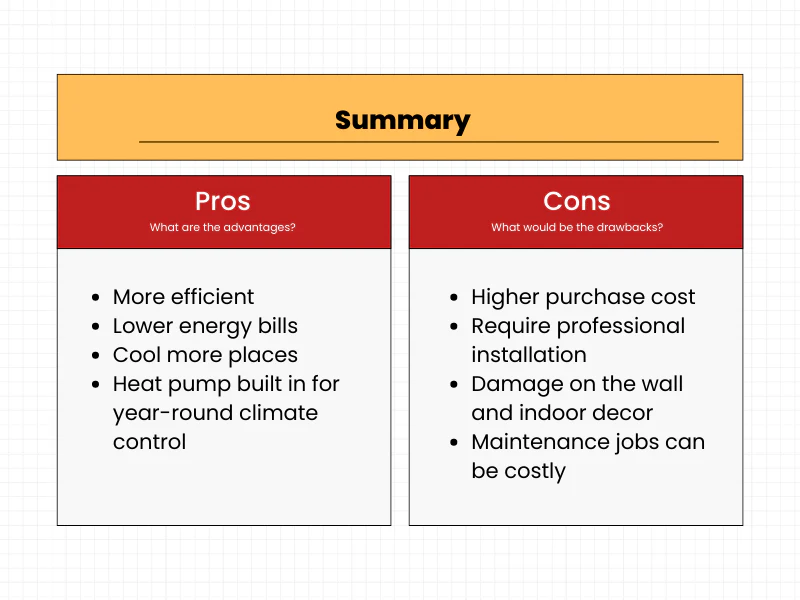
Split systems offer high efficiency, quiet operation, and easy zoning, making them ideal for retrofits. However, they require visible indoor units, professional installation for copper piping, and regular maintenance of filters to prevent mold.
When I speak with government buyers or large distributors, I have to be honest. iClima manufactures excellent split air conditioners, but they are not magic. You need to understand the trade-offs to sell them effectively.
The Major Pros:
- Energy Efficiency6: Because there are no ducts, you lose zero energy to duct leakage. Central systems can lose 30% of energy in the ducts. Splits deliver cooling directly.
- Zoning: You can cool one room while leaving another off. This saves massive amounts of money for hotels or office blocks with varying occupancy.
- Quiet Operation: The noisy part (compressor) is outside. The indoor part is whisper quiet. This is crucial for bedrooms and boardrooms.
The Real Cons:
- Aesthetics: You have a white plastic box on the wall. Some architects hate this.
- Installation Cost7: It is not a DIY job. You need a specialized technician to handle refrigerant and vacuum pumps. This adds to the upfront cost.
- Maintenance8: Each indoor unit has a filter. In a building with 50 units, that is 50 filters to clean. If you ignore this, the split air conditioner smells bad and leaks water.
At iClima, we support our partners by offering ODM services. We can customize the look of the indoor unit to blend in better, which helps overcome the aesthetic objection. But you simply must budget for the installation labor.
| Feature | Advantage | Disadvantage |
|---|---|---|
| Ductless Design | No energy loss; higher efficiency. | Visible unit on the wall. |
| Separated Components | Very low indoor noise levels. | Requires copper tubing run through walls. |
| Individual Control | Only cool rooms you are using. | Multiple maintenance points (filters). |
Conclusion
Proper installation involves assessing site conditions, calculating precise sizing loads, and weighing the pros and cons to ensure your iClima split air conditioner delivers optimal performance and longevity.
-
Understanding proper placement can enhance efficiency and reduce noise, ensuring a better installation outcome. ↩
-
Choosing the right location is crucial for ventilation and performance, preventing future issues with the unit. ↩
-
A well-planned drainage route prevents water damage and ensures efficient operation of the air conditioning system. ↩
-
Ensuring wall integrity is vital for safety and performance, preventing noise and potential hazards during operation. ↩
-
Discover the consequences of undersizing your AC unit to avoid costly repairs and ensure optimal performance. ↩
-
Explore how energy efficiency in split systems can save costs and reduce environmental impact. ↩
-
Understand the costs involved in installation to budget effectively for your project. ↩
-
Discover essential maintenance tips to ensure your split system operates efficiently and lasts longer. ↩