
High cooling costs ruin your commercial budget. You struggle to find cost-effective units with good features. In this guide, I will show you how to buy high-power window air conditioners.
To source high-power window air conditioners for B2B projects, you must evaluate BTU output, compressor quality, and EER ratings. Partnering with a factory like ours provides OEM customization and low minimum orders, which helps you win tenders and secure reliable supply chains for commercial spaces.
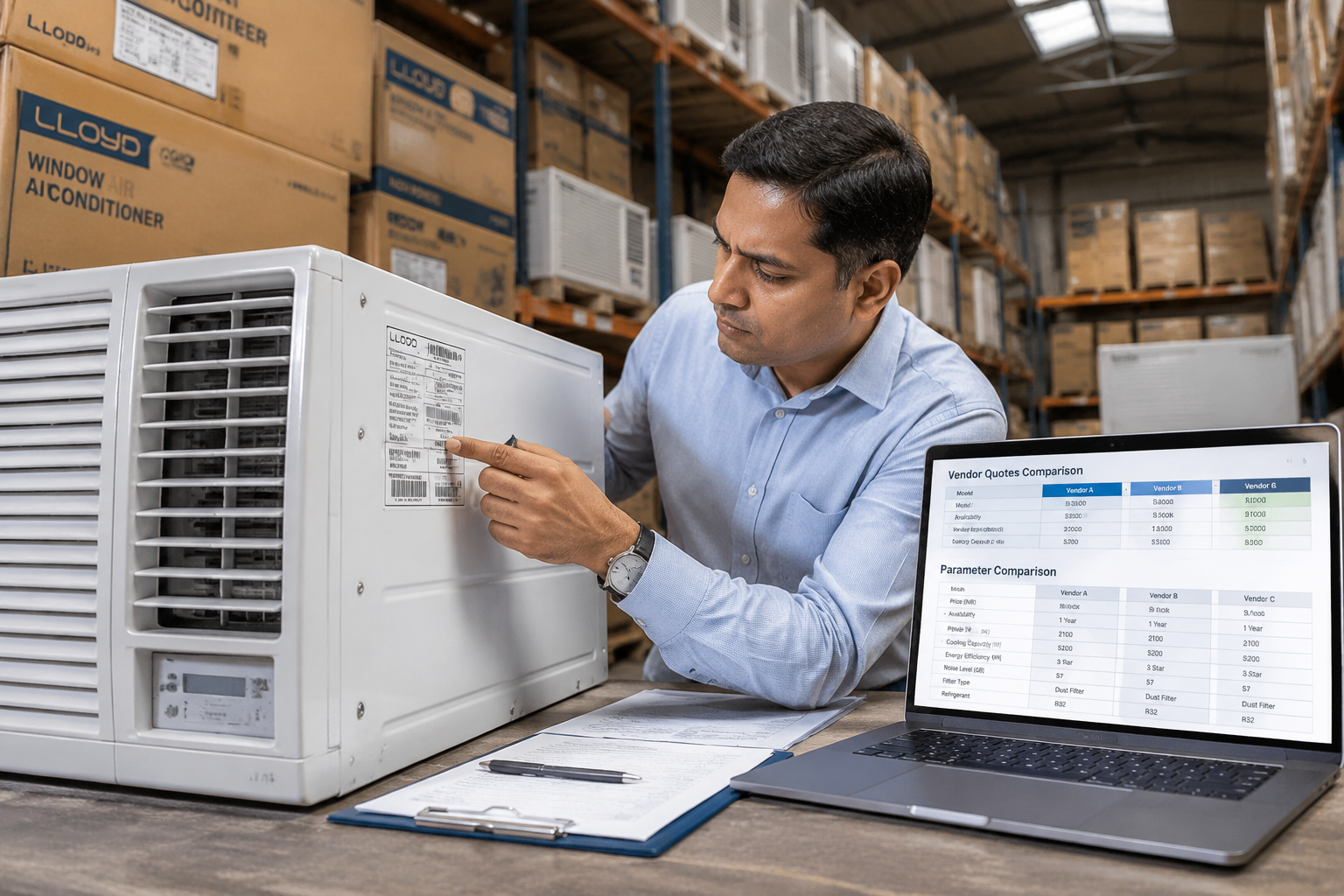
Buying the wrong air conditioner will hurt your business reputation and empty your wallet. Let us look closely at how you can make the smartest bulk purchase for your next big project so you do not lose a single dollar.
How to Choose the Right BTU for Commercial & Hospitality Spaces?
Guests complain about hot rooms in your hotel or office. Large spaces are hard to cool down rapidly. You need the right BTU to fix this problem fast.
To pick the correct BTU for commercial and hospitality spaces, calculate the total square footage and check the local climate heat load. High-traffic commercial spaces in hot areas usually require window units ranging from 18,000 to 24,000 BTUs for fast and stable cooling.1

Understanding Space and Cooling Needs
I often talk to corporate procurement managers in Latin America. They usually look at raw BTU output first. But bigger is not always better. If you put a massive 24,000 BTU unit in a small hotel room, it will cool the air too fast. This short cycle leaves the room very cold but highly humid. Guests will feel uncomfortable. You must size the unit correctly.
Matching BTU to the Application
You must match the cooling power to the exact room size. Let us break down the standard sizing for commercial spaces.
| Room Size (Sq Ft) | Recommended BTU | Ideal Commercial Use Case |
|---|---|---|
| 300 – 450 | 10,000 – 12,000 | Small hotel rooms, private offices, small clinics |
| 450 – 700 | 14,000 – 18,000 | Large hotel suites, waiting rooms, classrooms |
| 700 – 1,000 | 18,000 – 24,000 | Open office floors, public lobbies, retail shops |
The Value of Proper Sizing
I always remind my clients that proper sizing extends the life of the machine. When your unit fits the room, it runs normally. It does not stop and start too often. This means fewer repairs for your maintenance team over the years. This also makes the guests much happier, which protects your business brand.
What Are the Key Features: Compressors, Energy Efficiency & Durability?
High electricity bills upset government buyers. Cheap air conditioners break down early in hot weather. You must check the parts inside the unit to stop this pain.
The most important features of a window air conditioner are a high Energy Efficiency Ratio (EER), a top-quality compressor, and a durable anti-corrosion coil. These features ensure lower power bills and long machine life in hot regions like South Africa and Latin America.
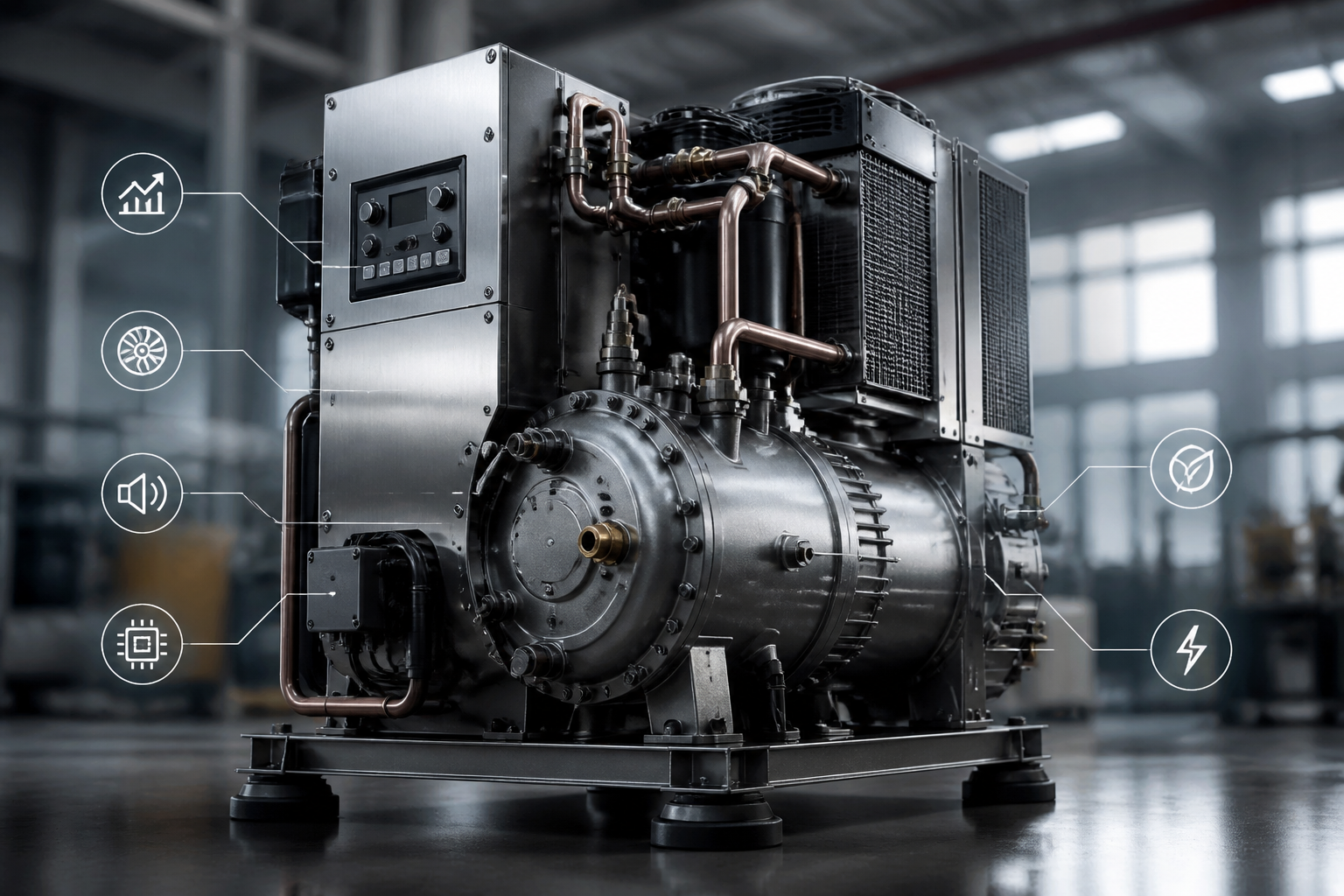
The Hidden Value of High EER
Many buyers focus only on a cheap upfront price. This is a mistake. When you bid for government or corporate tenders, you should pitch highly efficient units. A unit with a high EER uses much less electricity. This gives the buyer massive long-term operational savings. I once secured a big public tender just by showing the five-year power savings compared to a cheaper, low-EER competitor.
Why the Compressor Matters Most
The compressor is the heart of the air conditioner.2 If it fails, the whole unit is dead. At iClima, we have a strict strategic partnership with TCL. This means we use very strong, reliable compressors in our builds.
| Component | Standard Supplier Feature | Premium iClima Feature (TCL Backed) |
|---|---|---|
| Compressor | Basic rotary (shorter lifespan) | High-efficiency, low-noise rotary |
| EER Rating | Low (High monthly power cost) | High (Lower monthly power cost) |
| Coil Protection | None (rusts fast in wet areas) | Anti-corrosion gold fin |
Long-Term Durability for Tenders
When you buy units for hospitals or schools, durability is key. Strong coils stop rust from eating the metal. Good compressors keep the cold air flowing year after year. These internal features bring true value to your purchase and keep maintenance costs low.
How to Maximize ROI: Low MOQ & OEM Services for HVAC Brands?
Famous big brands give you very low profit margins. High minimum orders block you from testing new markets safely. You need a better factory partner to grow.
To maximize ROI, choose a manufacturer that offers low Minimum Order Quantities (MOQ) and complete OEM services. This allows local distributors to build their own custom brand, avoid price wars, and greatly increase their profit margins with very low risk.

Escaping the Regional Price War
If you are a corporate distributor, you know the daily pain. You sell the same big brands as the shop next door. You both cut prices to win sales. This kills your profit margin. I tell my clients that OEM custom branding is the only way out.3 When you put your own brand on the machine, you set your own price. You do not fight with your neighbor anymore.
The Power of Low Minimum Orders
Many factories ask you to buy thousands of units at once. This traps your cash in a warehouse. At iClima, we do things differently. We offer a Low MOQ for our B2B partners. This lets you run an initial pilot test in your local market without heavy stress.
| Business Strategy | Benefit to Distributor | Financial Risk Level |
|---|---|---|
| Big Brand / High MOQ | Locked-in prices, intense competition | High (lots of trapped cash) |
| iClima Low MOQ OEM | Own brand control, better margins | Low (easy market pilot testing) |
A Safe Path to Growth
Using our factory means you get TCL-level quality tied to your own logo. You step out of the daily price war. You test the true market demand safely. Then, you can easily scale up your orders when you see the money coming into your bank account.
Conclusion
To succeed in sourcing window air conditioners, you must look at EER, strong compressors, and smart OEM branding strategies. Good choices here will increase your business profits quickly and safely.
-
"Room Air Conditioners | Department of Energy", https://www.energy.gov/energysaver/room-air-conditioners. Government and HVAC-sizing guidance provide BTU-per-area heuristics and example room-size charts that show large, high‑occupancy or poorly insulated commercial rooms in hot climates commonly require single‑room units in the high‑teens to mid‑twenties (thousands of BTU) range; these sources present rule‑of‑thumb ranges rather than a one‑size‑fits‑all prescription. Evidence role: statistic; source type: government. Supports: High-traffic commercial spaces in hot areas usually require window units ranging from 18,000 to 24,000 BTUs for fast and stable cooling.. Scope note: These references give general sizing heuristics; exact requirements depend on detailed cooling‑load calculations that include occupancy, insulation, solar gain, ventilation, and equipment efficiency. ↩
-
"[PDF] Optimization of Compressors used in Air Conditioning Units", https://docs.lib.purdue.edu/cgi/viewcontent.cgi?article=3627&context=icec. Engineering and university resources describing the compressor’s role in the refrigeration cycle as the component that pressurizes refrigerant and enables heat transfer; these sources note that compressor failure disables the refrigeration cycle and prevents the unit from producing cooling, though compressors are replaceable and other faults can also render a unit inoperable. Evidence role: mechanism; source type: education. Supports: The compressor is the heart of the air conditioner; if it fails, the refrigeration cycle stops and the unit will not cool.. Scope note: Supports that compressor failure stops refrigeration function but does not imply the entire external cabinet is irreparable—repair/replacement options exist and other failure modes can also stop cooling. ↩
-
"[PDF] THE COMPETITIVE IMPLICATIONS OF PRIVATE LABEL MERGERS", https://www.anderson.ucla.edu/documents/sites/faculty/strategy/schmitt/SchmittSmith_PrivateLabelMergers.pdf. Academic and market‑research studies on private‑label and white‑label strategies show that selling products under a distributor’s own brand can enable product differentiation and improved margins, thereby reducing direct price competition; however, effectiveness depends on category, brand strategy, and execution and is not an exclusive solution. Evidence role: mechanism; source type: research. Supports: OEM custom branding is the only way out.. Scope note: Studies show private‑label can increase margins in many contexts but do not establish it as the sole or universally best strategy for all distributors. ↩