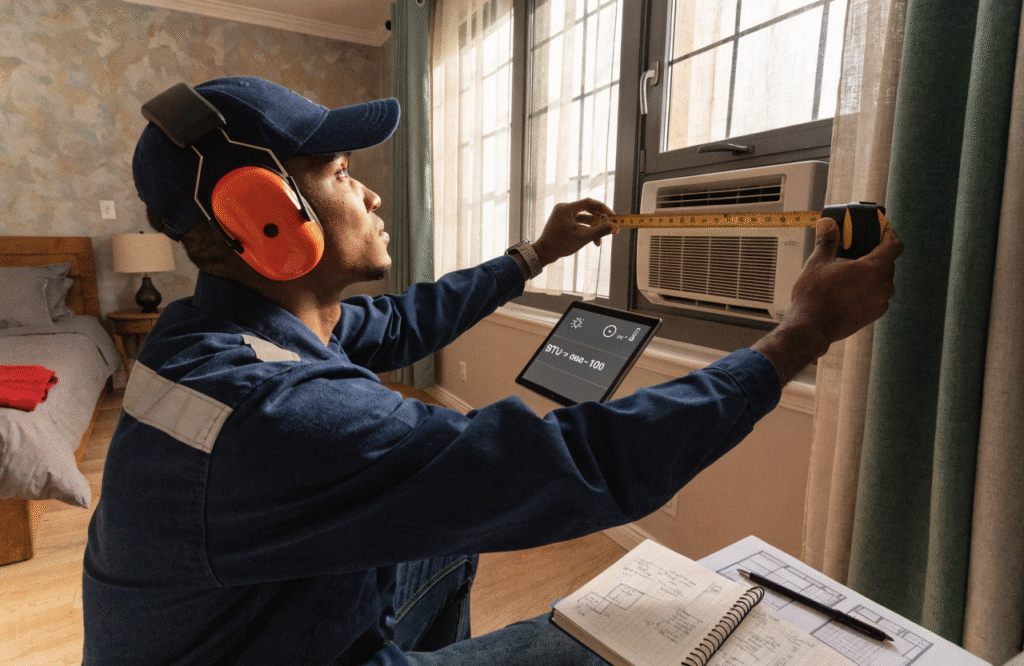
Buying the wrong size window AC wastes money. Rooms stay hot, or energy bills skyrocket. Do you know how to pick the exact right unit for your space?
To calculate room BTUs, measure the room’s square footage and multiply by 20. A 200-square-foot room needs about 4,000 BTUs. Adjust this baseline up or down based on ceiling height, room insulation, and sunlight exposure to ensure perfect cooling efficiency.
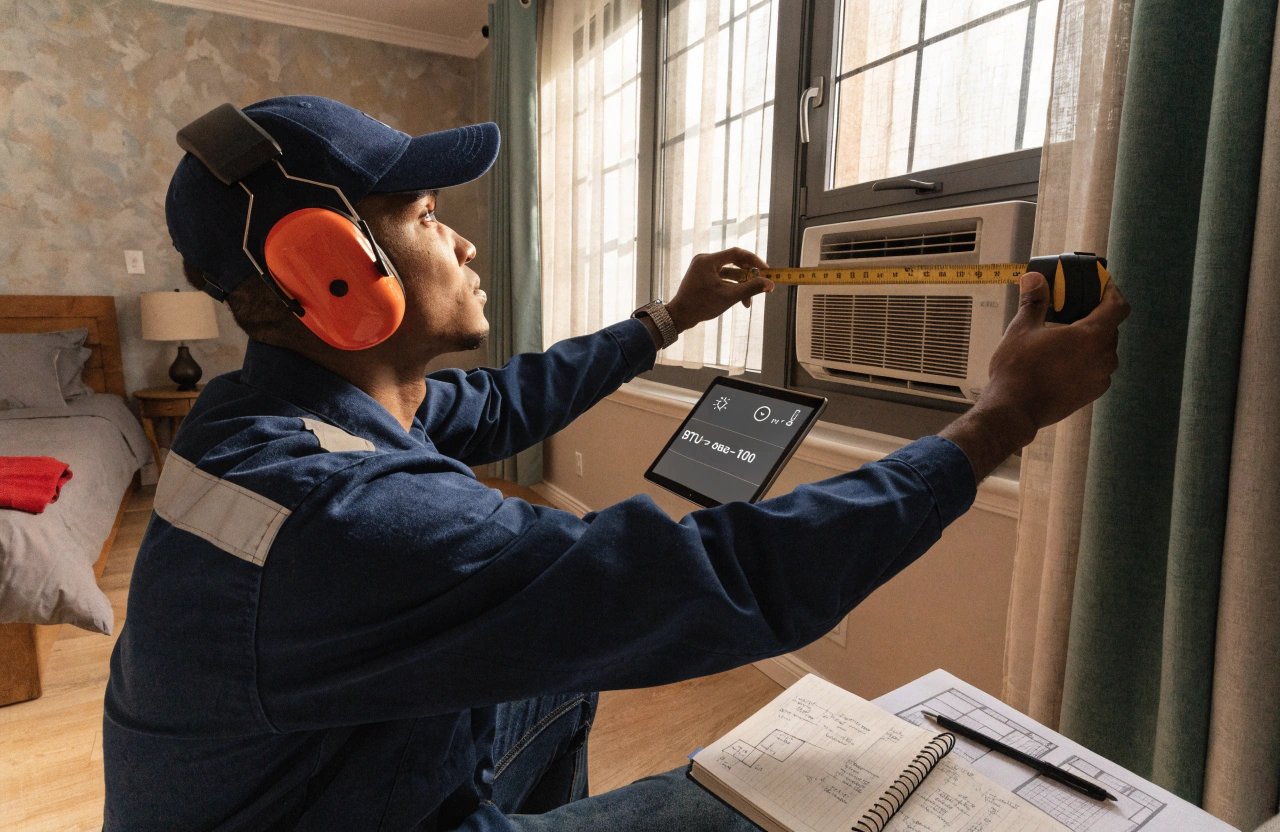
Getting the math right is the secret to a comfortable room. Let us look at how you can avoid common mistakes and buy smart.
BTU vs. Square Footage: Avoiding Costly AC Sizing Myths?
People often guess when they buy an AC. A wrong guess means poor cooling and high costs. How can you dodge these common sizing traps?
The biggest myth is that bigger is always better. An oversized air conditioner cools the room too fast and fails to remove humidity.1 An undersized unit runs non-stop. Both mistakes lead to discomfort and higher electricity bills.
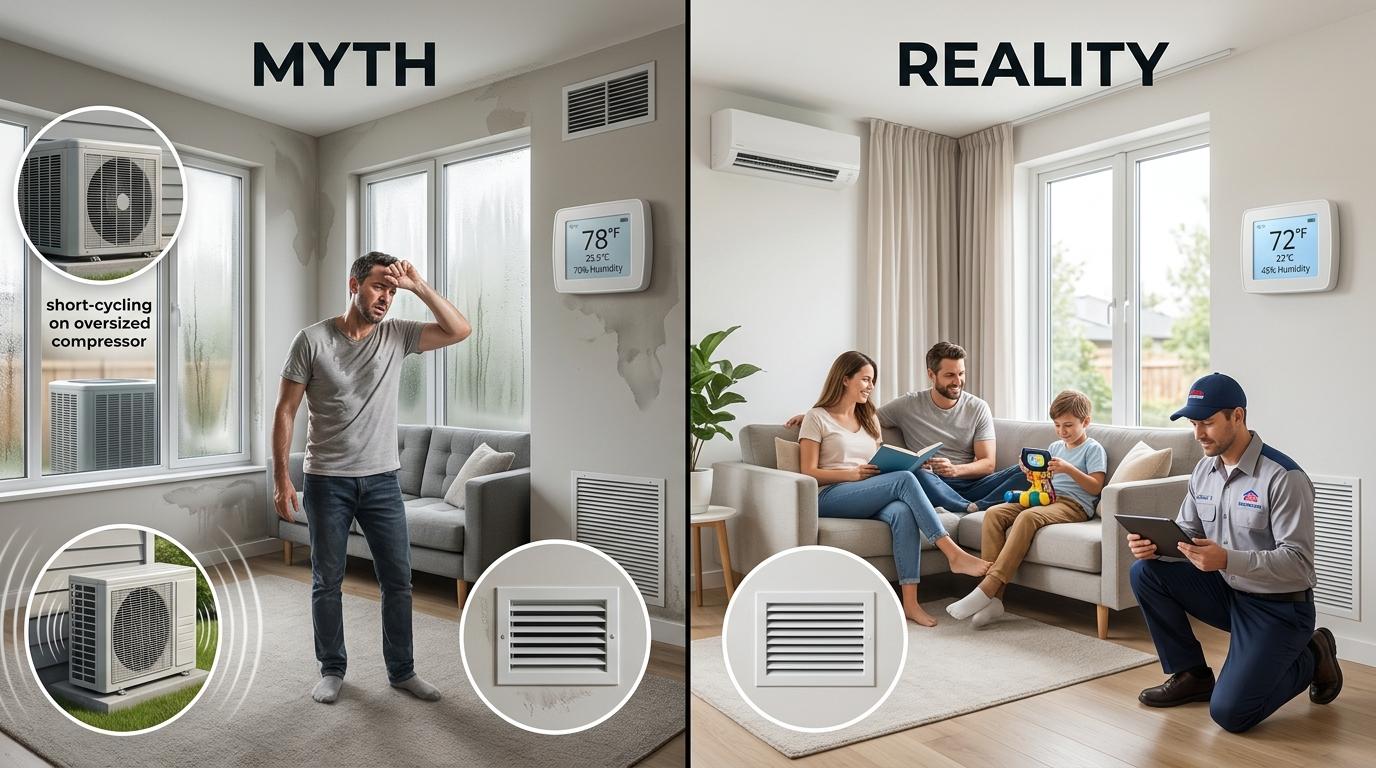
Let me tell you a quick story about a common mistake. Last year, a buyer from a large hotel group told me he simply bought the largest window ACs for all his rooms. He thought this would fix all cooling issues forever. He was very wrong. The rooms felt damp and clammy, and the guests complained.
Why does this happen? When a unit is too big for the square footage, it cools the air too quickly and shuts off early. This is a short-cycle. It does not run long enough to pull moisture out of the air. When a unit is too small, it just keeps running all day and night. The compressor burns out very fast. In our factory at iClima, we test these units for thousands of hours. We know exactly how long they should run.
To fix this, we need to look at actual numbers, not just feelings. Here is a simple chart I use to guide my B2B clients.
Basic BTU Sizing Guide
| Room Size (Square Feet) | Suggested BTUs |
|---|---|
| 100 – 150 | 5,000 |
| 150 – 250 | 6,000 |
| 250 – 300 | 7,000 |
| 300 – 350 | 8,000 |
This simple table is your starting point. Do not just buy the biggest unit on the market. Match the BTU to the actual floor space. This is step one to save money and keep people happy.
Advanced Calculation: How Do Sunlight, Ceilings, and Insulation Affect BTUs?
Basic math is sometimes not enough. Hot rooms stay hot if you ignore other factors. Do you know how heat sources change your AC needs?
Sunlight, high ceilings, and poor insulation add extra heat to a room. You must add 10% to your BTU count for sunny rooms. You should subtract 10% for heavily shaded rooms. Add extra power if the room has high ceilings or heavy traffic.
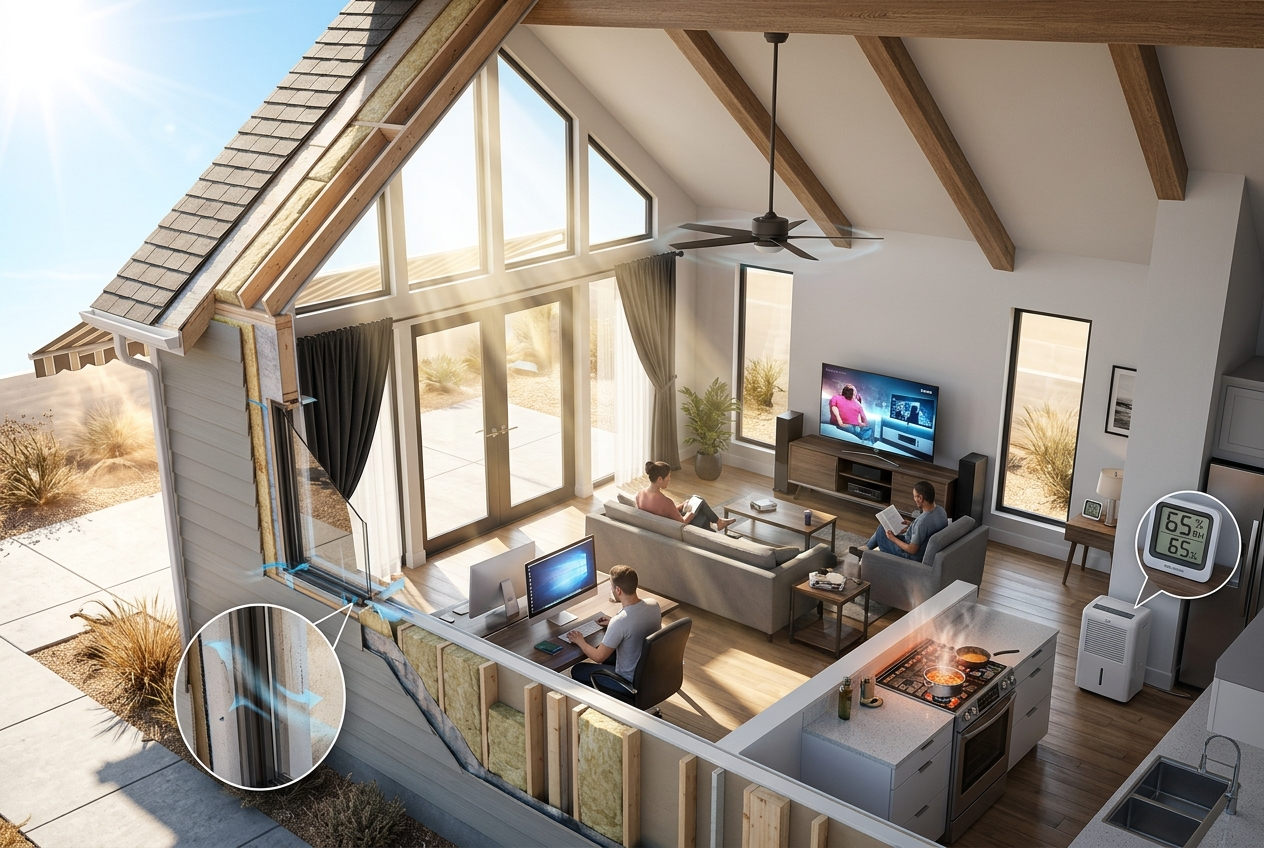
Square footage is only the beginning of the math. The real world is not a flat box. Sun, people, and building limits change everything about how a room feels. When we export units to hot regions like South Africa and Latin America, these factors become even more important.
If your room gets full sun all afternoon, it acts like a hot box. You need more power. If the room is always in the shade, you need less power. Kitchens are also a big problem in apartment projects. Stoves and ovens make a lot of heat. You must add about 4,000 extra BTUs just for a kitchen area.2
Let us look at ceiling height next. Standard ceilings are about 8 feet high. If your room has a 10-foot ceiling, you have much more air to cool. You cannot use the basic square foot math alone. You must think about the total volume of air.
Advanced BTU Adjustments
| Factor | Adjustment |
|---|---|
| Very Sunny Room | Add 10% BTUs |
| Very Shaded Room | Subtract 10% BTUs |
| Room is a Kitchen | Add 4,000 BTUs |
| Over 2 People in Room | Add 600 BTUs per person |
As a smart buyer, you must look at the whole picture. I always remind my clients to check the building setup, window size, and daily sun direction before they send me their final order numbers.
B2B Buying Strategy: What is the Best Window AC Capacity for Commercial Use?
Buying for a large project is tricky. One wrong size ruins the whole budget. How do you plan capacity for hundreds of rooms at once?
The best B2B strategy is to avoid buying a single BTU size for an entire building.3 Procurement managers should create a capacity matrix based on room location. Order different BTU sizes to match sunny sides, shaded sides, and room differences.

I see a very common pitfall for procurement managers handling large-scale hotel or apartment projects. They order a single BTU size for the entire building to simplify purchasing. They think it saves time. This is a critical mistake.
As I explained earlier, oversized units short-cycle and fail to remove humidity. They leave rooms feeling clammy. On the other hand, undersized units run continuously. This leads to premature compressor burnout before the warranty even ends. You lose money and time both ways.
For B2B buyers, I highly recommend creating a special "capacity matrix" based on room sun exposure and daily usage. Map out your building carefully. Find the hot south-facing rooms and the cool north-facing rooms. Plan for the different needs.
Sample B2B Capacity Matrix
| Room Type | Sun Exposure | Chosen BTU Model |
|---|---|---|
| Standard Room | Shaded (North) | 5,000 BTU |
| Standard Room | Sunny (South) | 6,000 BTU |
| Large Suite | Mixed | 8,000 BTU |
| Corner Office | Full Sun | 10,000 BTU |
At iClima, our flexible low minimum order quantity policy fixes this problem for you. Our low MOQ allows you to mix and match various BTU capacities within a single order. You can easily meet exact project specifications with zero dead inventory risk. As our official partner is TCL, we make sure every single unit, no matter the size, meets top quality standards. Our one-stop shopping experience makes this complex process very simple for you.
Conclusion
Getting the right BTU changes everything. By checking room size, sunlight, and using a smart buying matrix, you ensure perfect cooling, lower costs, and zero wasted inventory for your projects.
-
"[PDF] Advanced HVAC Systems", https://www.energy.gov/documents/emt77bhandari042414pdf. Government and industry HVAC guidance documents describe how oversized room air conditioners can short‑cycle (turn on and off frequently), which reduces run time needed for adequate dehumidification and can increase occupant discomfort; these sources also note that undersized units may run continuously and raise energy use and equipment wear (the exact effects vary with climate and equipment). Evidence role: mechanism; source type: government. Supports: An oversized air conditioner cools the room too fast and fails to remove humidity.. Scope note: Effects depend on climate, humidity levels, thermostat settings, and specific equipment characteristics, so the cited guidance gives general mechanisms rather than precise numeric outcomes. ↩
-
"Understanding Energy Efficiency Measures for Heating and Cooling …", https://extension.okstate.edu/fact-sheets/understanding-energy-efficiency-measures-for-heating-and-cooling-systems. Industry and educational HVAC sizing references commonly recommend adding several thousand BTUs for kitchen areas to cover heat from stoves, ovens, and cooking — typical rules of thumb cite around 3,000–4,000 BTUs; actual required additional capacity depends on appliance heat output, ventilation, and cooking habits. Evidence role: statistic; source type: education. Supports: You must add about 4,000 extra BTUs just for a kitchen area.. Scope note: This is a generalized rule-of-thumb; exact additional cooling load should be determined by a detailed load calculation that accounts for appliance ratings and ventilation. ↩
-
"Room Air Conditioners | ENERGY STAR", https://www.energystar.gov/products/room_air_conditioners. Authoritative HVAC sizing guidance (e.g., ASHRAE and building‑energy agencies) recommends performing room‑by‑room cooling load calculations rather than selecting a single unit size for an entire building; this supports the claim that matching capacity to room conditions improves comfort and energy performance. Limitation: these sources address technical load‑sizing practice rather than commercial procurement policy outcomes. Evidence role: expert_consensus; source type: institution. Supports: The best B2B strategy is to avoid buying a single BTU size for an entire building.. Scope note: Guidance focuses on technical load calculation benefits; it does not directly quantify procurement cost impacts. ↩