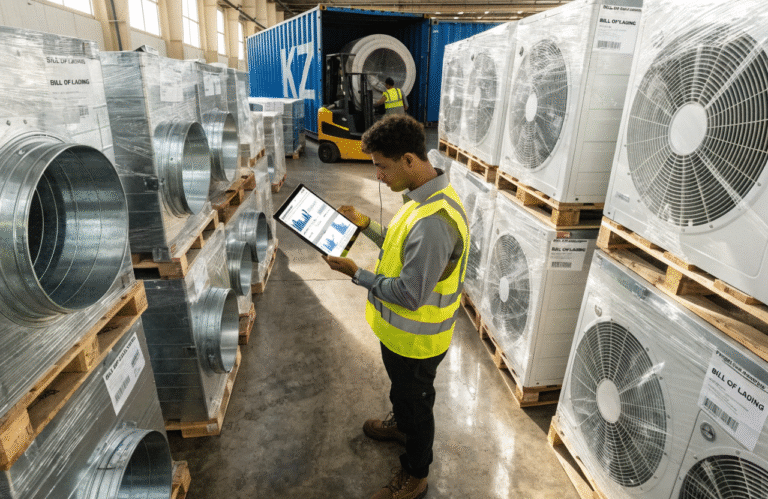


Finding the wrong manufacturing partner can cost you a full season of sales, lost clients, and a damaged reputation.
Choosing the right HVAC distributor partner comes down to asking the right questions before you sign anything. The best partners offer flexible MOQs, OEM/ODM capability, a proven supply chain, and a team that supports you through compliance and logistics — not just unit delivery.
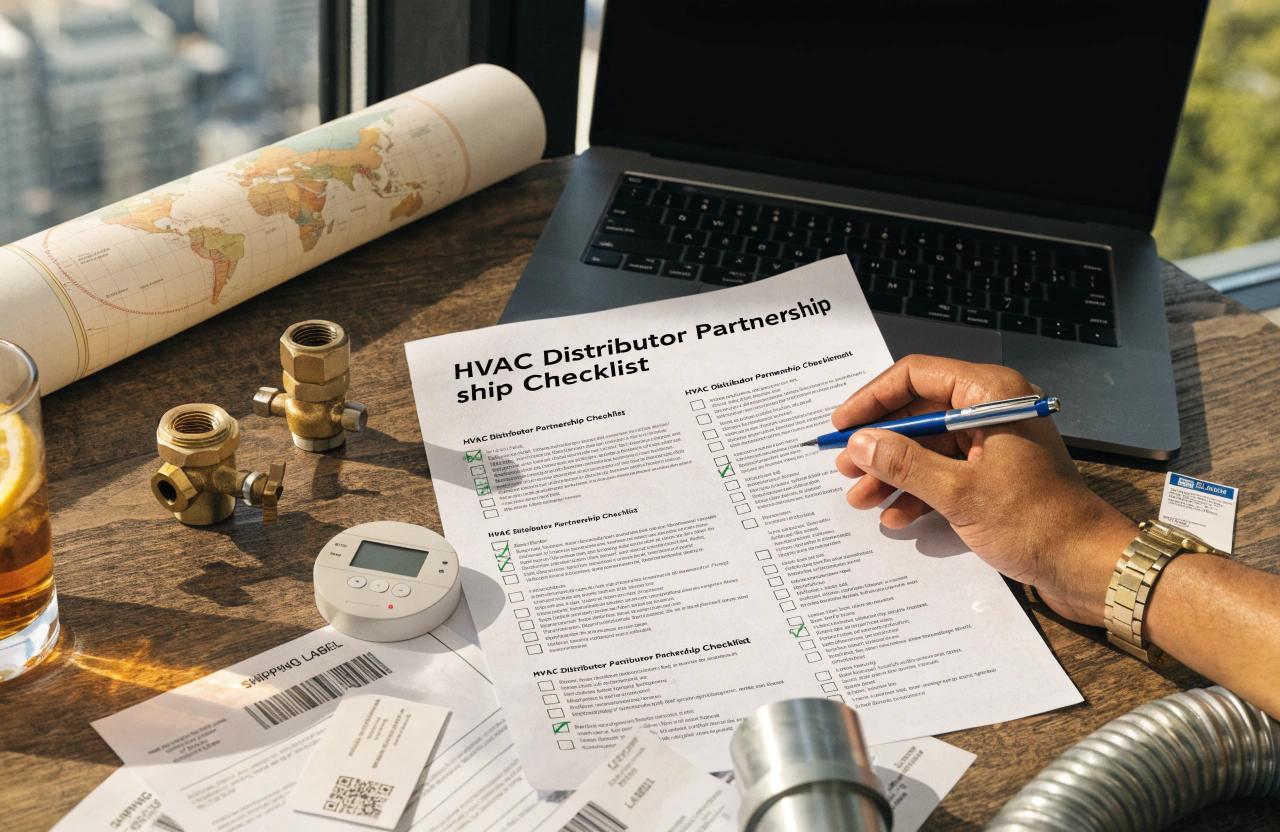
I have spoken with dozens of distributors across South Africa and Latin America. Most of them made the same early mistakes. They focused only on price, signed with a large rigid supplier, and then got stuck when their market demanded something different. This post is what I wish someone had told them before that happened. Keep reading — the next section alone could save you from the most common trap in this industry.
What Reliable HVAC Distributors Really Prioritize — Beyond Unit Price?
Price gets you in the door. But it does not keep your business running when shipments are delayed, units fail in the field, or your retail customers want a private label.
The most reliable HVAC manufacturing partners prioritize supply chain stability1, after-sales support infrastructure2, and production flexibility. Unit price matters, but distributors in growth markets consistently report that delivery reliability3 and technical support availability have a bigger impact on their long-term margins.

I want to break this down clearly, because I see this mistake repeated constantly. A distributor finds a supplier with the lowest per-unit cost. They place a large order. Then one of three things happens: the shipment arrives late and misses the peak cooling season, the product quality is inconsistent across batches, or the supplier has no real support team to help when issues come up in the field.
Each of those outcomes costs far more than the savings on unit price.
Here is what I have found the most successful distributors actually look for when they evaluate a manufacturing partner:
Supply Chain Reliability
| Factor | Why It Matters |
|---|---|
| Production lead time4 | Delays in peak season = lost sales and damaged retailer trust |
| Factory capacity | Can they scale with your growth without dropping quality? |
| Raw material sourcing | Do they control their supply chain or depend on third parties? |
| Track record with similar markets | Experience in your region means fewer surprises |
A manufacturer with a strong industry partnership — like our collaboration with TCL — has already passed a level of quality and operational scrutiny that most buyers cannot easily verify on their own. That kind of credibility is worth more than a few dollars off the unit price.
After-Sales and Technical Support
This is where most manufacturers fail distributors. You place an order, the units ship, and then you are on your own. When a unit fails in a hotel in Johannesburg or a retail store in São Paulo, you need answers fast. A professional service team that can walk you through troubleshooting, provide documentation, and help you respond to your end customer is not optional — it is a core part of what you are buying.
I run a professional service team for exactly this reason. The distributors who work with us do not have to figure out compliance documents, import paperwork, or technical specs alone. We handle that alongside them.
Flexibility in Order Terms
This is the factor most distributors underestimate. Large brands often lock you into high minimum order quantities, rigid SKU selections, and fixed payment terms. That works for a distributor with a stable, mature market. It does not work for a distributor who is still building their customer base or testing a new product category.
Low MOQ is not a sign of a small or unreliable manufacturer. It is a sign of a manufacturer who has invested in production efficiency and is serious about supporting partners at every stage of their growth.
HVAC OEM/ODM Private Label vs. Direct Resale: Which Model Fits Your Market?
Most distributors start with direct resale5 because it feels simpler. But simple does not always mean profitable — especially in competitive markets.
OEM/ODM private labeling6 gives distributors full control over their brand identity, pricing power, and customer loyalty. Direct resale is faster to launch but leaves you competing on price alone. For distributors in high-growth markets, private label is the cleaner path to sustainable margins.

I want to be direct here. If you are reselling another brand’s product, you are building their brand — not yours. Every positive customer experience goes to them. Every complaint still comes to you. And you have no leverage on pricing because your competitor can sell the exact same product.
Private labeling changes that completely.
OEM vs. ODM: What Is the Actual Difference?
These two terms get used interchangeably, but they are not the same. Here is a simple breakdown:
| Model | What You Get | Best For |
|---|---|---|
| OEM (Original Equipment Manufacturer) | You provide the design and specs, the factory produces it | Distributors with existing product designs who need manufacturing capacity |
| ODM (Original Design Manufacturer) | The factory provides the design, you apply your brand | Distributors who want a ready product under their own label without design investment |
For most distributors I work with — especially those entering a new market or category — ODM is the faster and more practical path. You get a proven product design that has already been tested in similar climates and markets. You apply your brand. You control your price point. You own the customer relationship.
Why This Matters in South Africa and Latin America
These are high-growth markets with real demand for affordable, reliable cooling. But they are also markets where brand differentiation matters. Local consumers and business buyers want to buy from names they recognize. If you are a distributor in Johannesburg or Bogotá and you are reselling a Chinese brand that your customers can look up on Alibaba themselves, you have a margin problem. If you have your own brand on the unit, the conversation changes entirely.
Private labeling also gives you room to negotiate with retailers. You are not competing on who has the lowest price for the same SKU. You are offering something only you can supply.
At iClima, our ODM and OEM capabilities are built to support exactly this kind of transition. We work with distributors who are ready to move from resale to brand ownership7, and we make that process as straightforward as possible.
How to Vet a Reliable HVAC Manufacturer: A Practical Checklist for Distributors?
Most distributors do not have a clear system for evaluating manufacturers. They visit a trade show, talk to a few sales reps, and make a decision based on feeling. That is a risky way to choose a partner you will depend on for years.
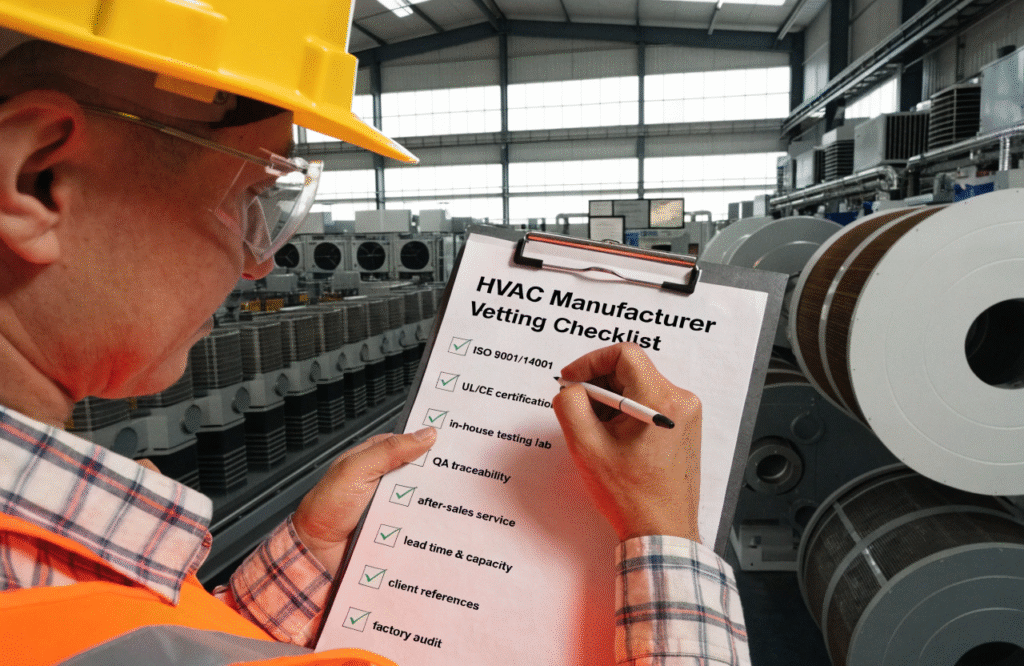
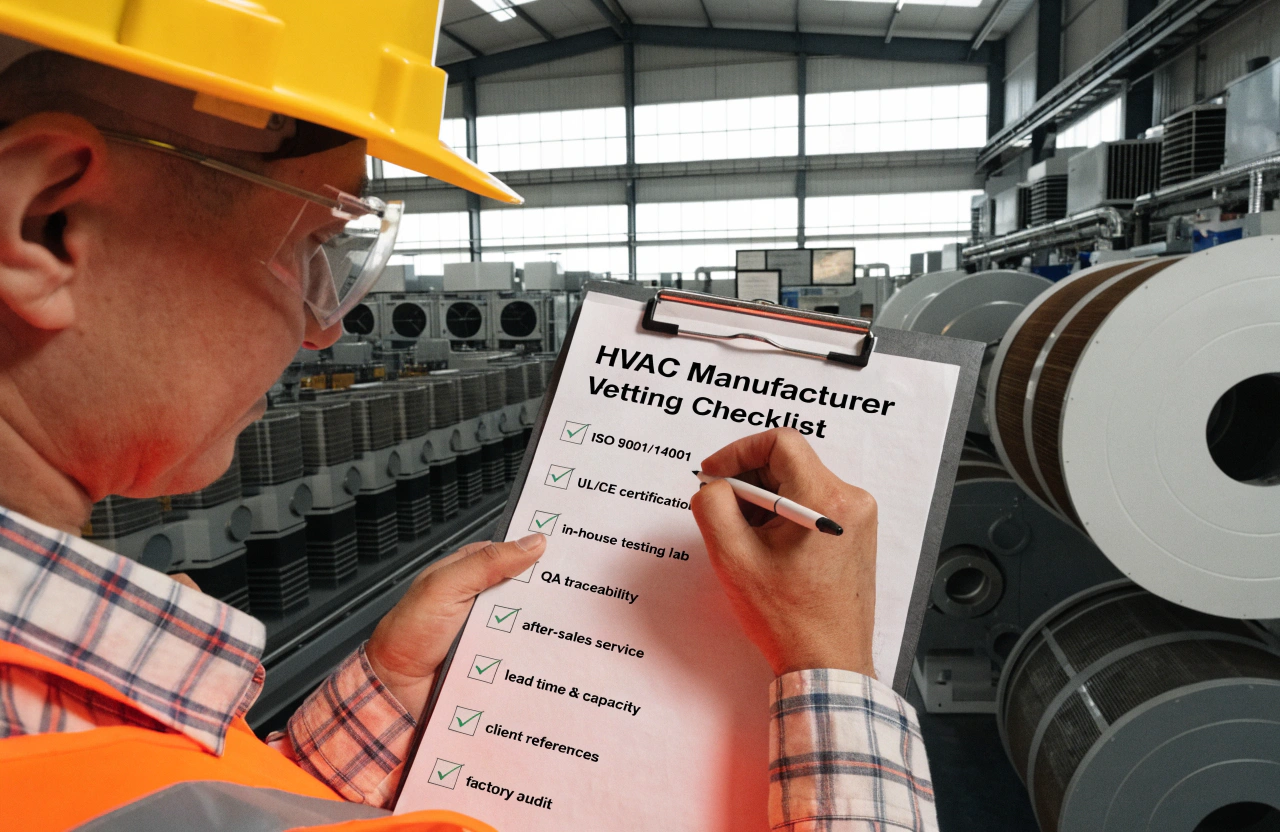
To vet a reliable HVAC manufacturer, check five things: production facility ownership8, quality certifications, existing client references in your region, MOQ flexibility, and their capacity to support you with documentation and compliance. A manufacturer who cannot answer all five clearly is not ready to be your partner.
I have seen distributors skip this process entirely and pay for it later. I have also seen distributors use a clear, structured approach and build partnerships that held up through supply chain disruptions, regulatory changes, and market shifts. The difference is almost always preparation.
Here is the checklist I recommend every distributor use before committing to a manufacturing partner:
The Practical Vetting Checklist
1. Production Facility Ownership
Does the manufacturer own their factory, or are they a trading company reselling someone else’s product? This matters because trading companies cannot guarantee production timelines, quality consistency, or customization. Ask directly. Ask for facility photos, video walkthroughs, or an in-person visit.
At iClima, we own both automatic workshops and manual production lines. That means we can handle large standardized orders and customized small-batch runs at the same time.
2. Industry Certifications and Partnerships
Certifications like ISO, CE, and regional compliance marks tell you the product meets baseline standards. But partnerships matter just as much. A manufacturer who works alongside a recognized brand like TCL has already gone through a level of quality verification that is very difficult to fake.
3. Regional Experience
| Question to Ask | What You Are Looking For |
|---|---|
| Have you exported to my region before? | Familiarity with local regulations and climate requirements |
| Do you have existing clients there? | Proof that your market works for their product |
| How do you handle regional compliance documentation? | A real process, not a vague answer |
A manufacturer with no experience in South Africa or Latin America will cost you time and money as they learn on your order.
4. MOQ Flexibility
This is the one most distributors do not ask about clearly enough. Do not just ask for the MOQ number. Ask what happens if you want to test a new model with a smaller batch. Ask what happens if your first order is smaller than you projected. A manufacturer who can only work with large fixed orders is not built to support your growth — they are built to serve companies much larger than you.
5. Support Infrastructure
Ask the manufacturer directly: who handles documentation for import? Who do I call if there is a technical issue in the field? Who helps me if there is a quality dispute? If the answer is vague or involves routing you through multiple departments with no clear ownership, that is a problem. You want a partner with a professional service team that treats your success as their own business concern.
Conclusion
The right HVAC manufacturing partner offers more than a low price. They offer flexibility, reliability, OEM capability, and a team that actually supports your market growth.
-
Explore strategies and case studies that prevent late shipments and protect peak-season sales — essential for distributor margins. ↩
-
Find frameworks and service models that reduce field failures and shorten resolution times for international customers. ↩
-
Learn logistics, forecasting, and partner-management tactics that keep products in market when customers need them most. ↩
-
Compare benchmarks and actionable tactics to cut lead times, avoid lost-season sales, and maintain retailer trust. ↩
-
Understand quick-launch advantages versus long-term margin and competition risks when reselling established HVAC brands. ↩
-
Explore practical guides on private labeling to boost margins, brand control, and retailer negotiation strategies for HVAC distributors. ↩
-
Discover actionable strategies to build a private-label HVAC brand, secure pricing power, and strengthen customer loyalty. ↩
-
Find guides and verification steps to confirm factory ownership so you avoid trading companies that can’t guarantee timeline or quality. ↩