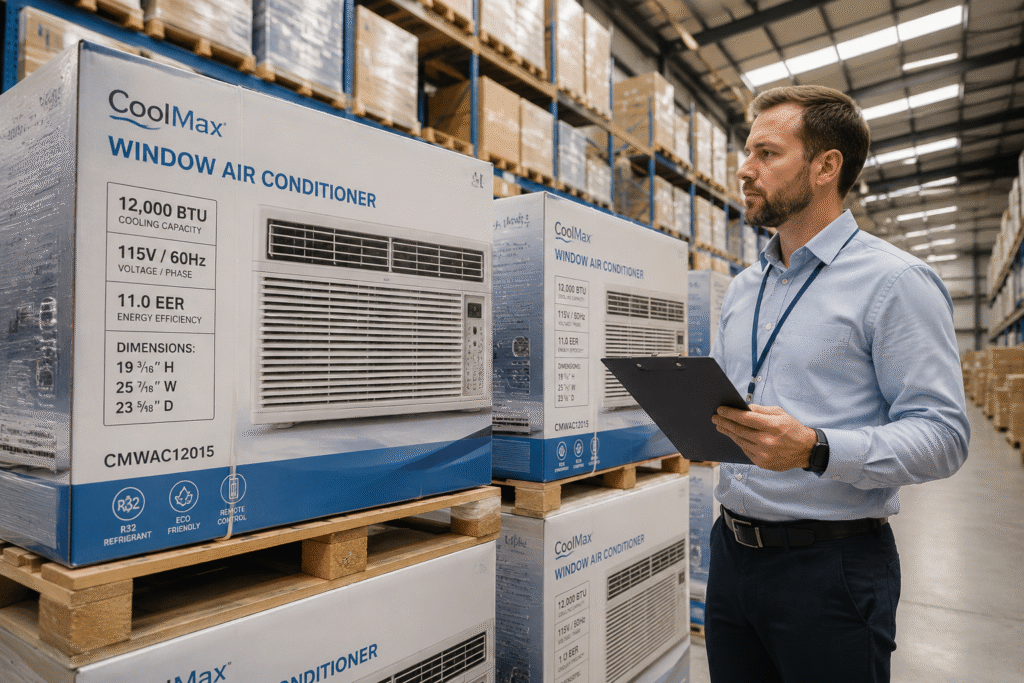
Are high costs and poor cooling ruining your big projects? Finding good AC units is a big headache. This guide helps you source 8000 BTU window ACs with total confidence.
Sourcing 8000 BTU window air conditioners requires balancing cost, performance, and clear customization. As a B2B buyer, you must focus on energy efficiency, noise limits, and OEM choices. These units provide perfect cooling for mid-sized rooms, ensuring fast sales and strong profit margins for your own brand.
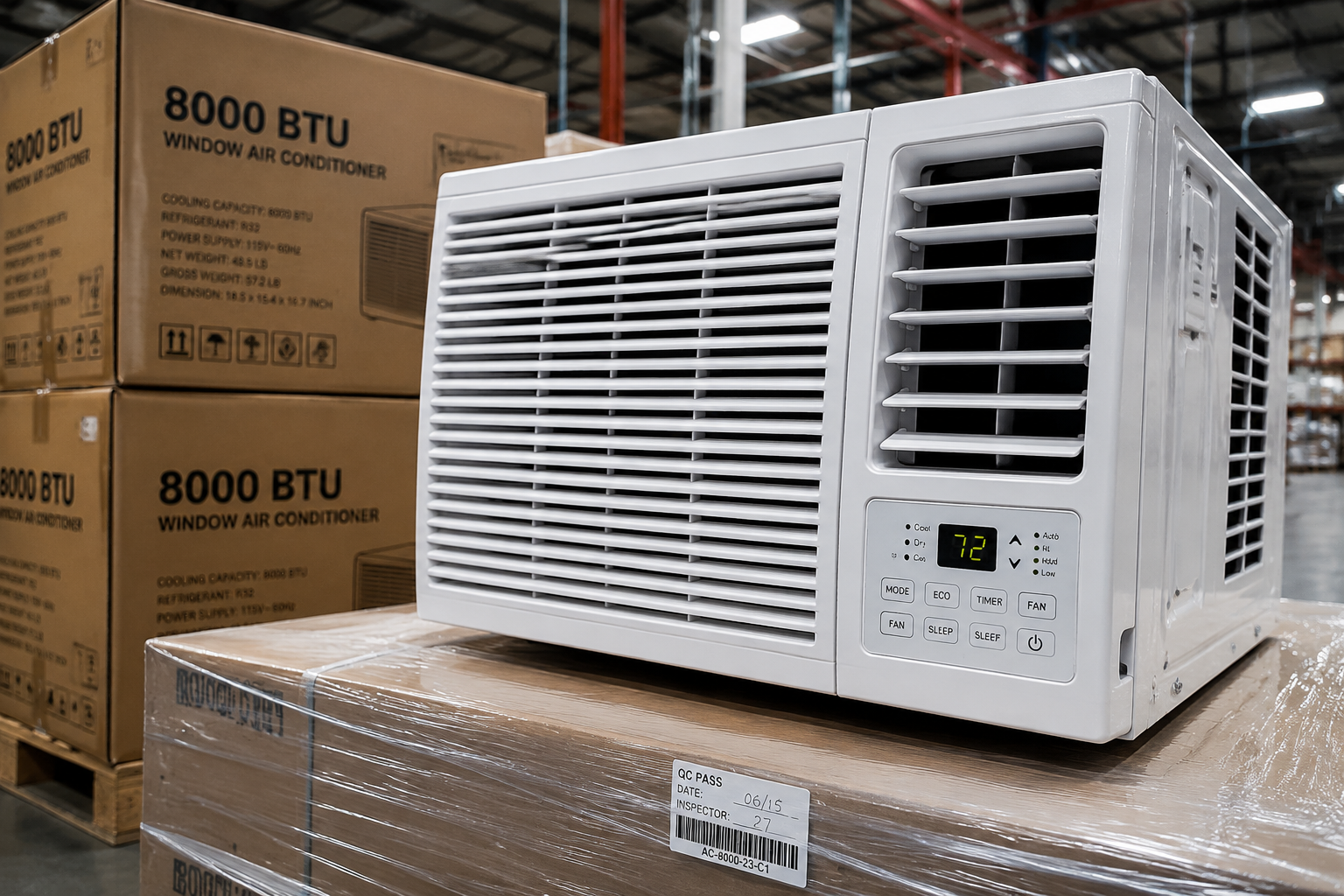
Many buyers struggle to pick the perfect cooling machine. Small mistakes can lead to huge costs later on. Let me show you the simple facts you need to make the best sourcing choices today so you can protect your profits.
Why Do 8000 BTU Window Air Conditioners Suit Hotels and Offices?
Guests hate hot rooms and staff hate noisy offices. Standard big AC units often waste too much power. An 8000 BTU window AC solves these problems fast and cheap.
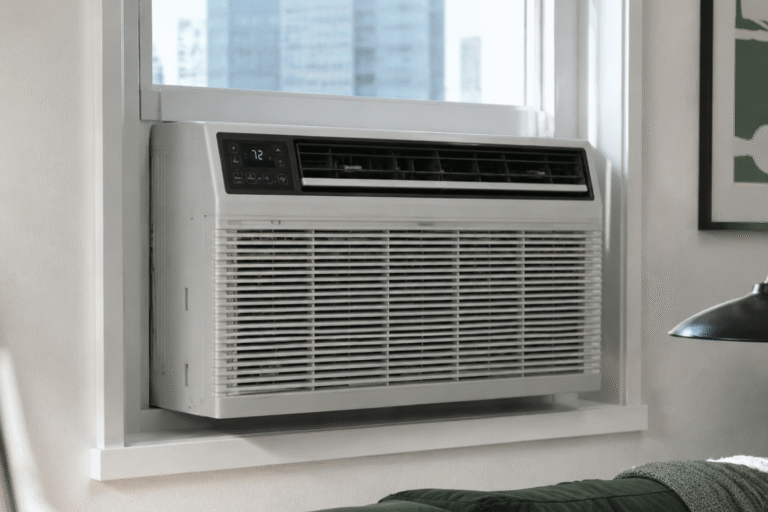
An 8000 BTU window air conditioner cools areas up to 350 square feet perfectly.1 This makes it the ideal size for normal hotel rooms and private offices. It offers steady cooling, easy quick installation, and very low running costs for smart businesses.
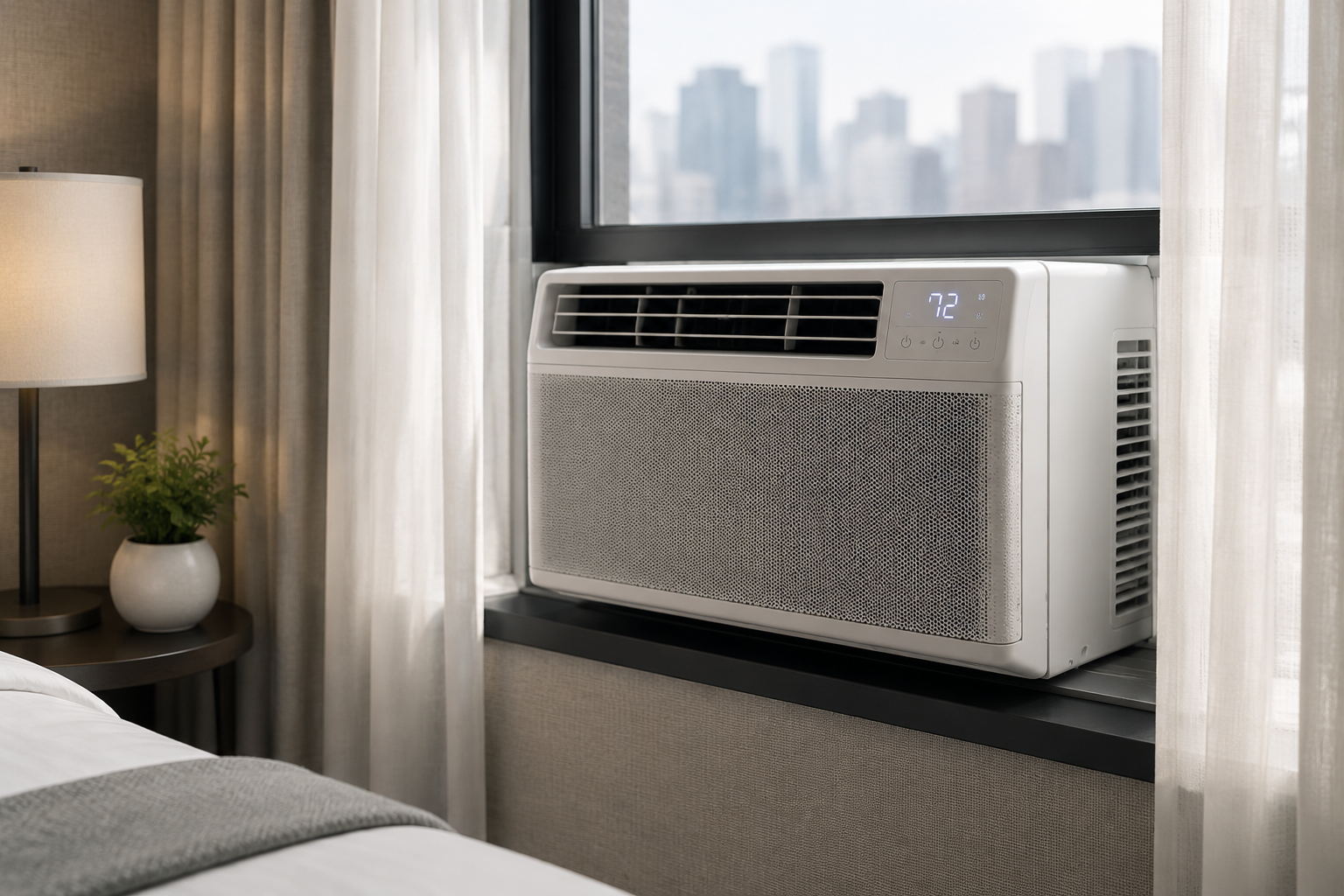
I often talk to hotel buyers who buy units that are way too big. They waste a lot of money on power bills. Let us break down why the 8000 BTU size is the perfect match for commercial spaces.
Finding the Perfect Balance
When you buy for a hotel or an office building, you need a unit that fits right in. You do not want cold blasts of air or weak breezes. The 8000 BTU output matches standard room sizes very well. This means the engine cycles on and off normally. It saves a lot of power and extends the total life of the machine. I always tell my clients to match the BTU exactly to the room size.
Commercial Space Application Table
| Space Type | Average Size | Cooling Need | Why 8000 BTU Works Best |
|---|---|---|---|
| Hotel Room | 300 sq ft | Moderate to High | Quick cool down time, very low cost. |
| Private Office | 250 sq ft | Steady | Keeps perfect quiet, stable temps. |
| Small Clinic | 350 sq ft | Very Stable | Safe and reliable cooling for people. |
As a factory owner exporting to South Africa and Latin America, I see buyers win big projects simply because they pick the right size. It keeps their total project costs low and makes fitting the units very easy.
What Are the Key Bulk Ordering Specs Like CEER, Noise, and Compressor Quality?
Buying cheap machines can ruin your good name. High power bills and loud noises will make your clients angry fast. You must check the real facts before buying in bulk.
When ordering in bulk, check the Combined Energy Efficiency Ratio (CEER)2 to ensure low power use. Demand noise numbers below 55 decibels for quiet rooms. Always check the main compressor quality, because it is the heart of the machine and decides its full lifespan.
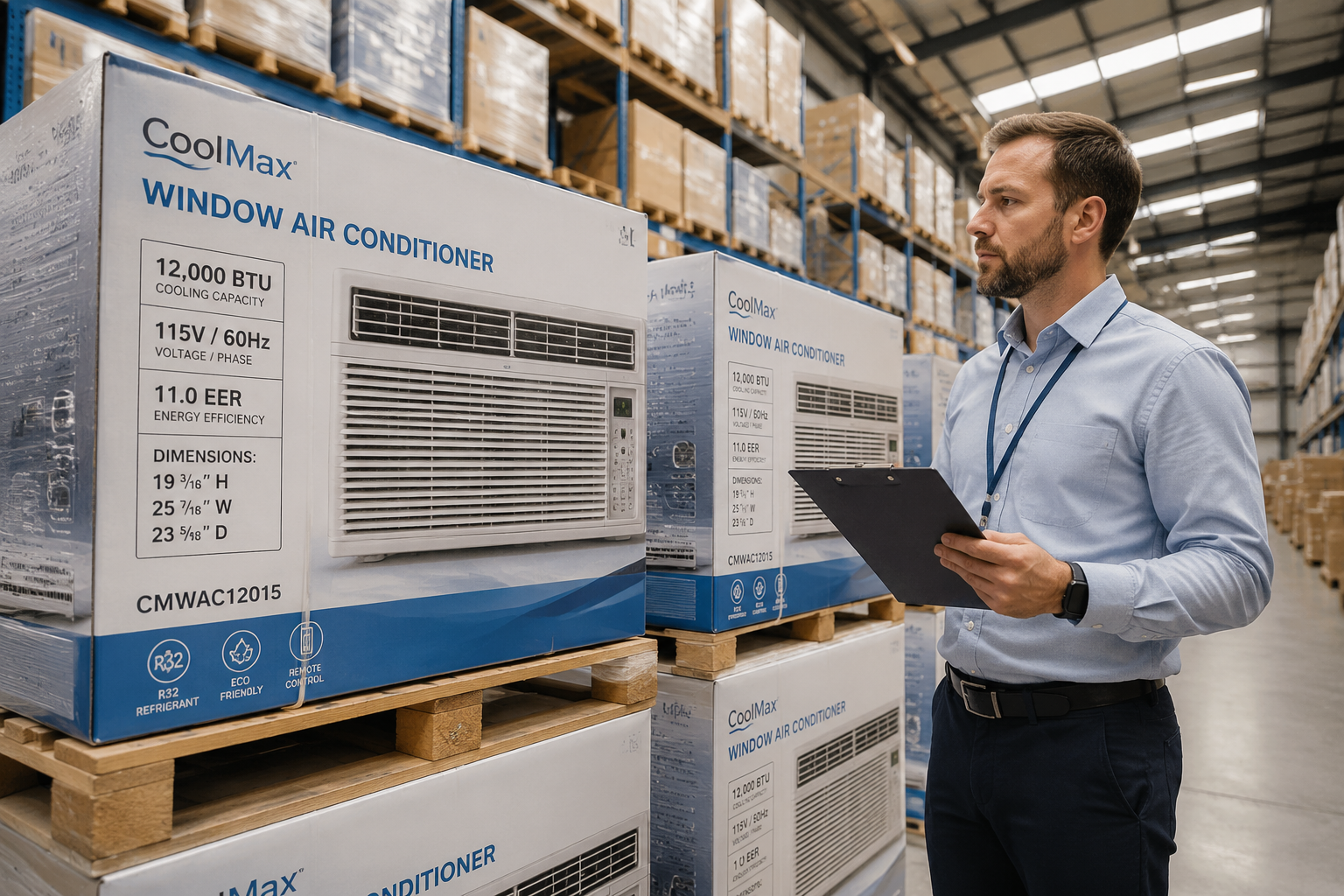
The numbers on paper matter a lot when you order a thousand units at a time. Many buyers just look at the low price tag. That is a very big mistake. I always tell my clients to look deep inside the machine.
The Big Three Numbers
CEER tells you exactly how much money your client will save. A higher CEER means lower electric bills every month. In places like Latin America, power costs are very high. High efficiency wins big deals. Next is the noise. Nobody wants a buzzing box in their window while they sleep. Lastly, you must check the compressor. At iClima, our main partnership with TCL means we use Tier-1 compressors. They last much longer and break down less often.
Key Sourcing Facts
| Main Part | What It Means | Ideal B2B Goal | Real Impact on Business |
|---|---|---|---|
| CEER Number | Energy power use | 11.0 or higher | Lower daily running costs |
| Noise Level | Sound output | Under 55 dB | Better sleep for users |
| Compressor part | Core motor engine | Tier-1 Brand | Far less warranty claims |
By checking these three things, you fully protect your brand. You will sell units that run quietly and last for many years. This brings your happy customers back for more orders.
How Can You Maximize B2B Margins via OEM Customization and Low MOQ?
Fighting on price alone kills your hard profits. Selling standard models makes you look just like everyone else. Customizing your own brand changes the whole game for you.
Maximize margins by using OEM options to build a strong private regional brand. This stops bad price wars. Partnering with a good factory that offers a Low Minimum Order Quantity (MOQ) lowers your exact stock risk while you sell high-margin units.
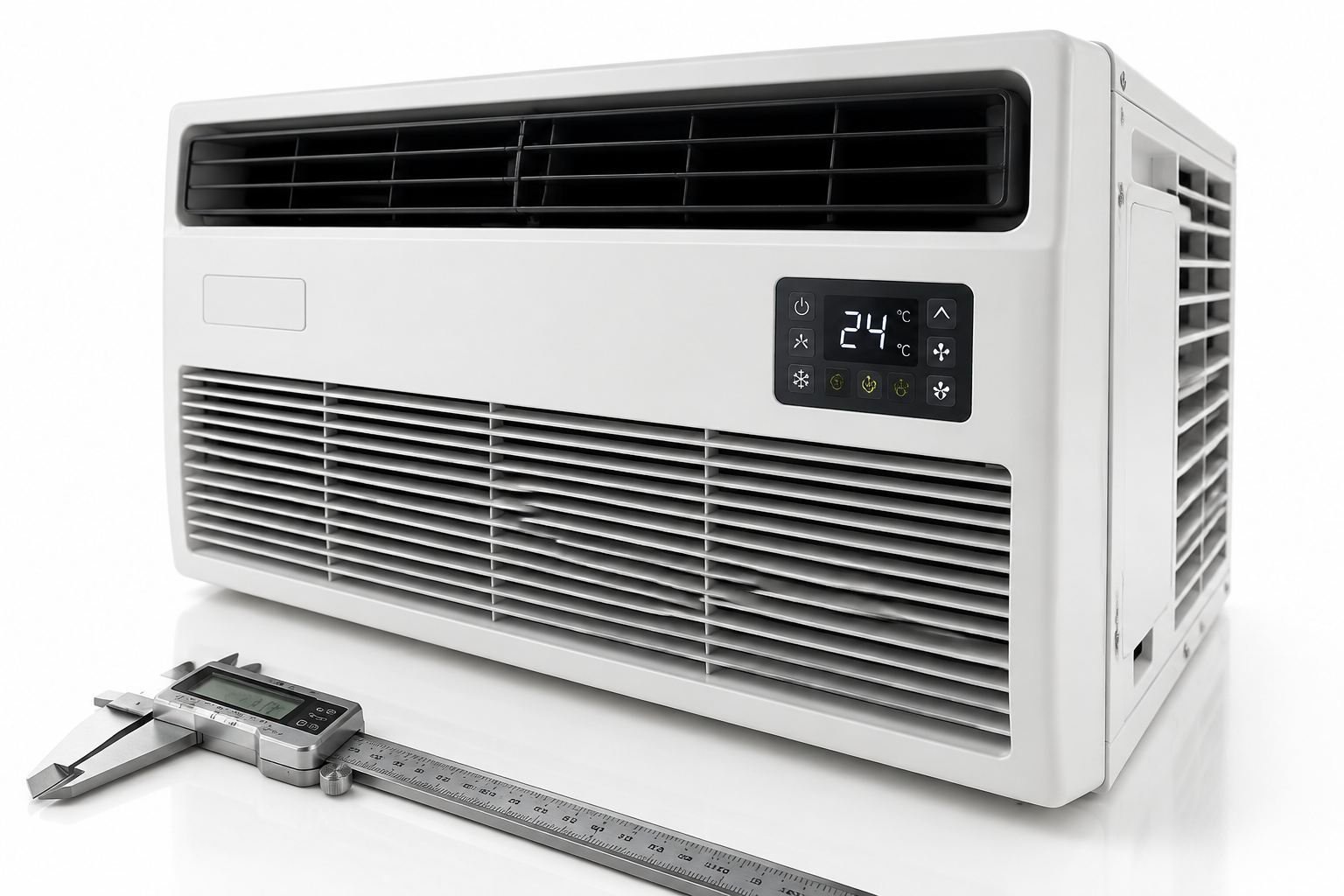
Distributors in Latin America and South Africa often miss the deep power of private labeling. They sell standard 8000 BTU models and fight hard for pennies. I built iClima to change this bad habit completely. You can easily sell a fast-moving unit like an 8000 BTU window AC under your very own name.
Building Your Strong Regional Brand
You do not need to buy ten thousand units to start your brand today. We offer a very low MOQ for buyers. This means you can test the new market without big stock risks. Backed by our close link with TCL, you get top-level safety. You put your good brand on a machine you can firmly trust.
OEM Value Breakdown Facts
| Sourcing Way | Profit Margin | Brand Power | Unsold Stock Risk |
|---|---|---|---|
| Factory Standard | Very Low | None | Medium |
| Big Brand Resell | Medium | None | Very High |
| Private Label (OEM) | High | Growing Fast | Low (with our MOQ) |
When you use our full OEM abilities, you change a basic cooler into a real brand asset. It strongly limits your daily risk and grows your long-term money fast. You control the market instead of letting the market control you.
Conclusion
Sourcing 8000 BTU window ACs requires smart room sizing, strict parts checks, and OEM branding. Choose iClima for low MOQs and safe units to boost your real B2B profits firmly.
-
"Room Air Conditioners | Department of Energy", https://www.energy.gov/energysaver/room-air-conditioners. Guidance from energy-efficiency authorities and HVAC sizing charts (for example, U.S. Department of Energy / ENERGY STAR and standard BTU-to-area tables) commonly list ~8,000 BTU room air conditioners as appropriate for spaces on the order of 300–350 square feet; these sources support the general numeric sizing rule but make clear that required capacity varies with ceiling height, insulation, occupancy, solar gain and climate. Evidence role: statistic; source type: government. Supports: An 8000 BTU window air conditioner cools areas up to 350 square feet perfectly.. Scope note: Recommended area per BTU is a rule-of-thumb—actual required capacity depends on room and climate-specific factors and manufacturer specifications. ↩
-
"Purchasing Energy-Efficient Room Air Conditioners", https://www.energy.gov/cmei/femp/purchasing-energy-efficient-room-air-conditioners. U.S. Department of Energy / ENERGY STAR documentation defines CEER (Combined Energy Efficiency Ratio) as the energy-efficiency metric for room air conditioners and states that higher CEER values indicate greater efficiency (i.e., lower energy use); actual dollar savings depend on operating hours, climate, and local electricity rates. Evidence role: definition; source type: government. Supports: CEER tells you exactly how much money your client will save. A higher CEER means lower electric bills every month.. Scope note: DOE/ENERGY STAR show CEER as an efficiency metric and explain the direction of savings, but they do not give a universal dollar-amount saving because real savings vary with usage patterns and electricity prices. ↩