

Your project deadline is close. Your budget is tight. You need to pick between window and split AC units, and picking wrong means wasted money or unhappy tenants.
Split AC systems generally deliver better cooling and heating performance for larger spaces, while window AC units perform just as well in smaller, single rooms. The "better" choice depends on room size, budget, and installation constraints, not on one technology being universally superior.
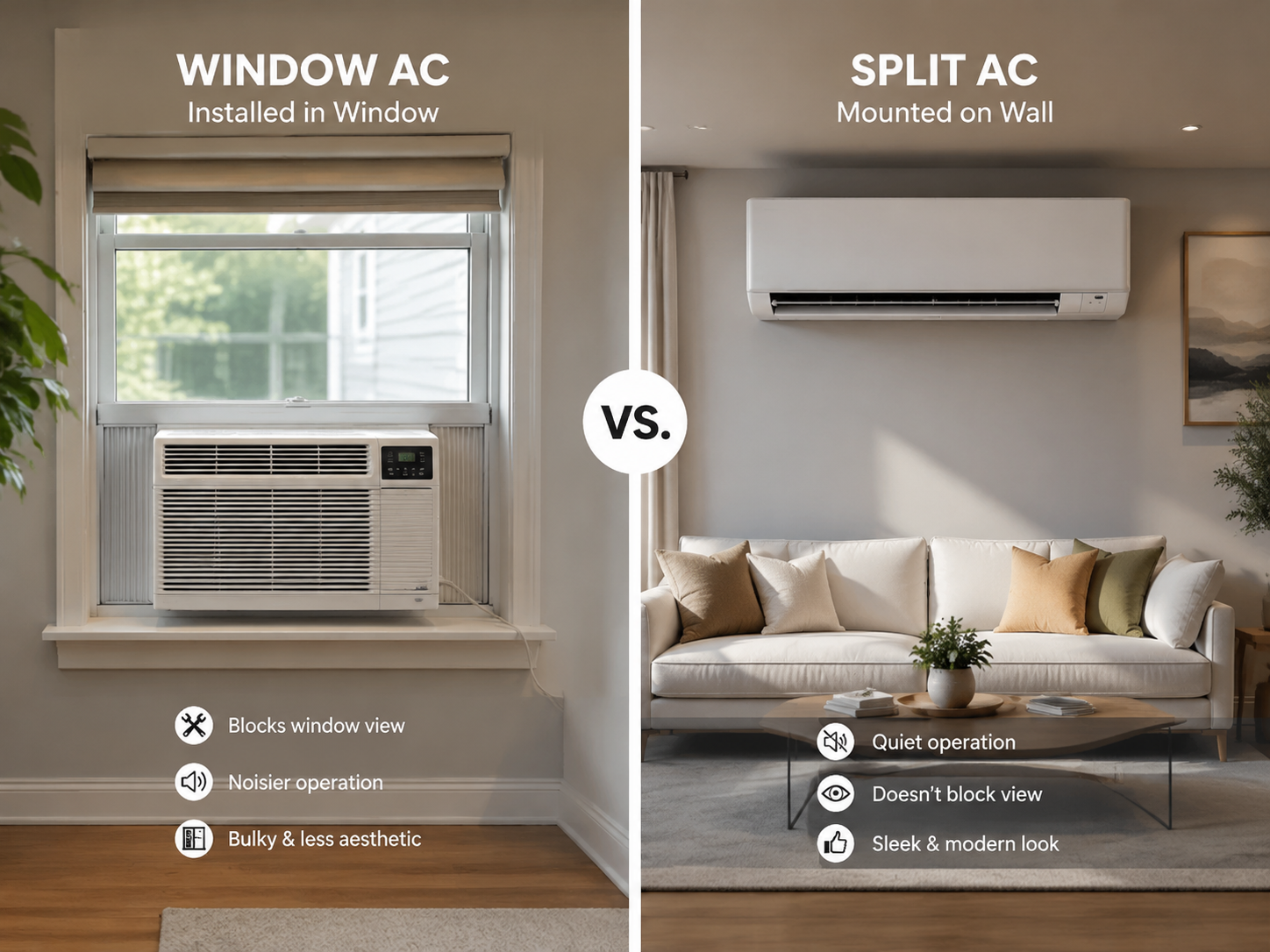
Most procurement managers I talk to assume split units are the "premium" choice and window units are just a cheaper fallback. That is not how I see it after 15 years running a factory that builds both product lines. Each system has a job it does best. Let me walk you through how they actually work, where each one wins, and how smart buyers mix both types in the same project.
How They Cool (and Heat) Differently: Window AC vs Split System Technology Explained
You pick a system without knowing how it actually moves heat. That mistake costs you comfort and money later.
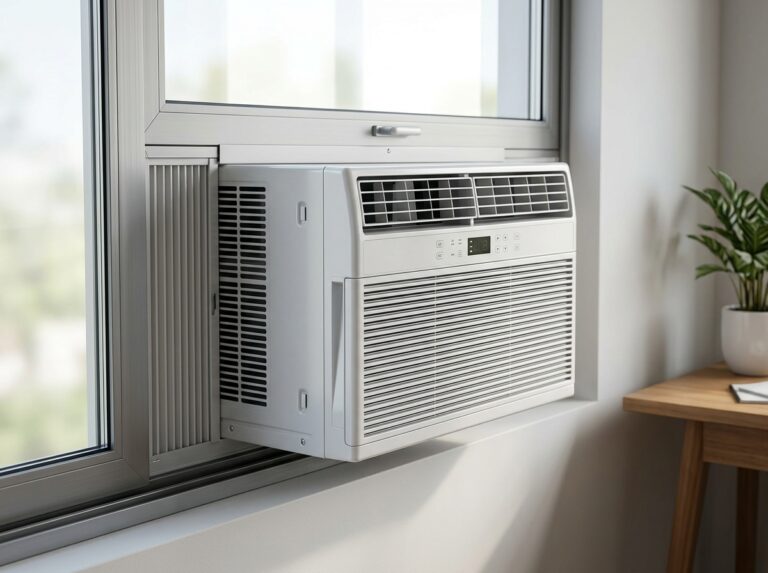
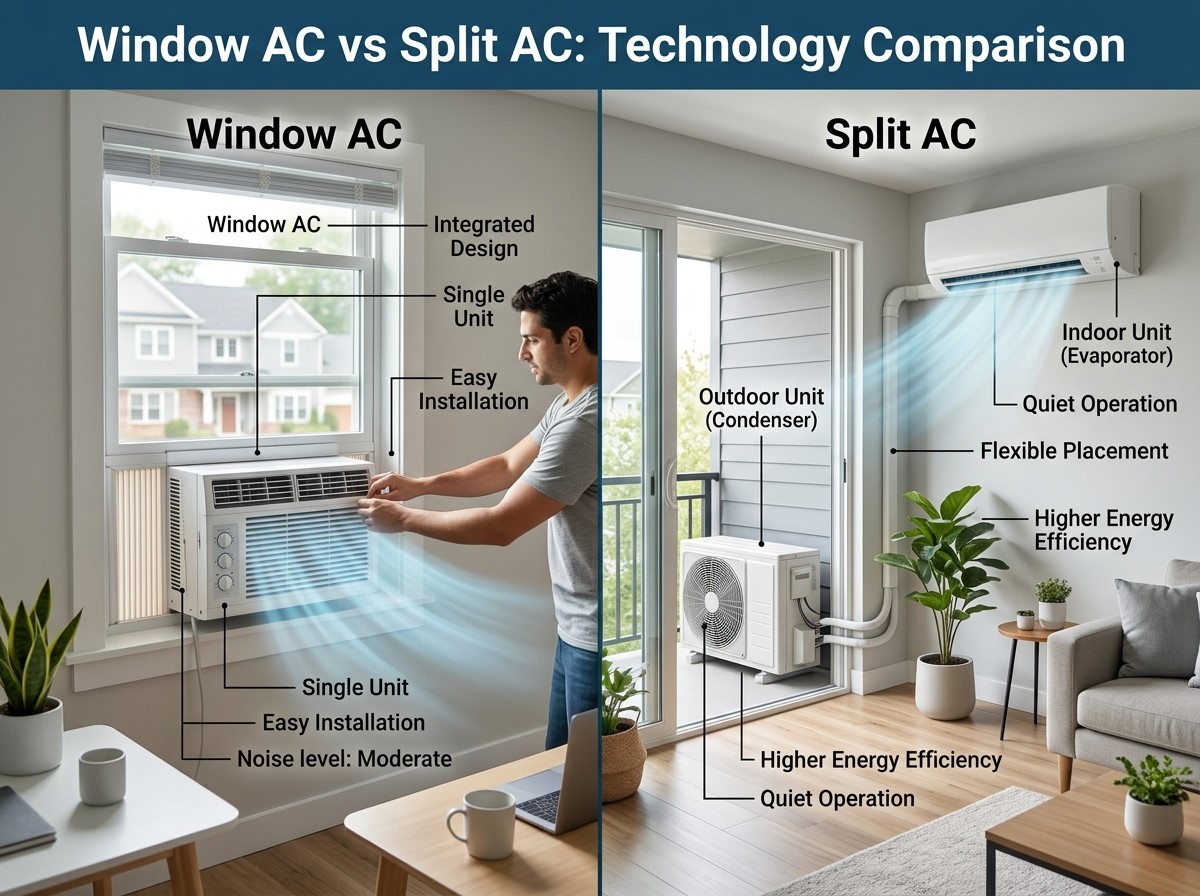
Window AC units house the compressor, condenser, and evaporator in a single box mounted in a window or wall opening.1 Split AC systems separate these parts into two units — an indoor unit and an outdoor compressor — connected by refrigerant lines, which allows for quieter indoor operation and more flexible placement.
The Core Mechanical Difference
A window AC pulls in room air, cools it, and pushes the hot air outside through the back of the same unit. Everything happens in one box. A split system works differently. The indoor unit only handles the cooling coil and fan. The compressor, the noisy and hot part, sits outside in a separate unit.
| Feature | Window AC | Split AC |
|---|---|---|
| Compressor Location | Inside the unit | Outside, separate unit |
| Noise Level Indoors | Higher | Lower |
| Installation Complexity | Simple, fits in window/wall | Requires wall drilling, outdoor mounting |
| Best Room Size | Small to medium | Medium to large |
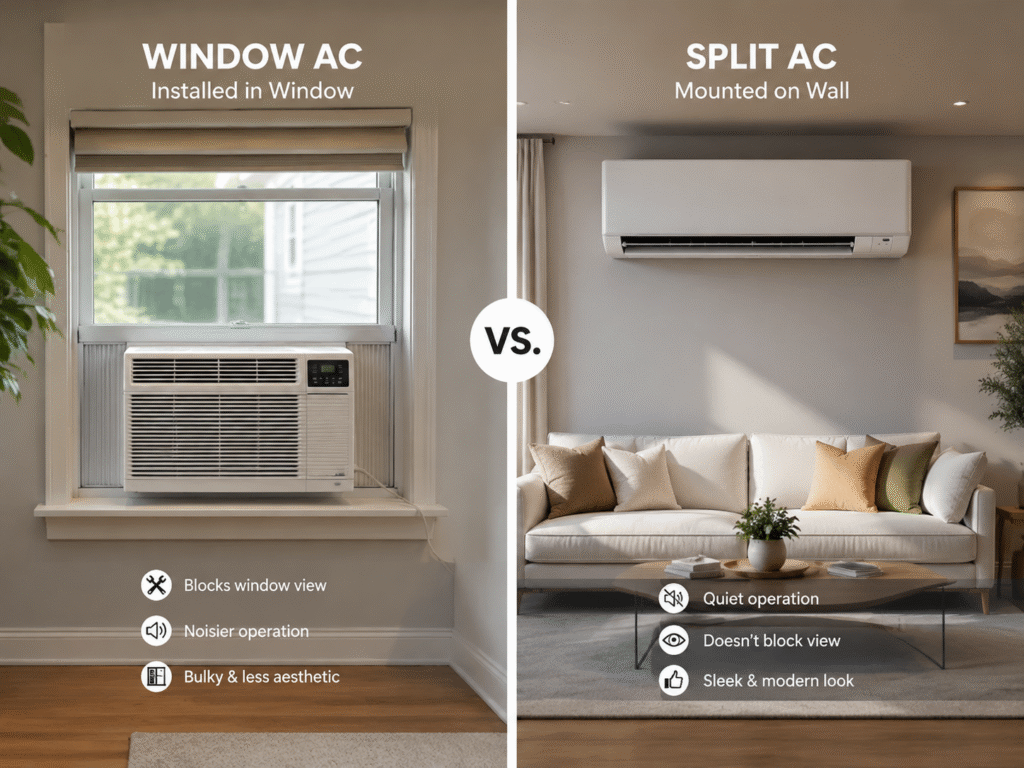
This difference explains almost every other comparison point you will read below. One box means simple install but more noise. Two boxes mean quieter rooms but more work to set up.
Window AC vs Split AC: 5 Key Factors Compared — Cost, Installation, Efficiency, Noise & Space
You compare specs sheets for hours and still can’t decide. The numbers alone don’t tell you which unit fits your actual project.
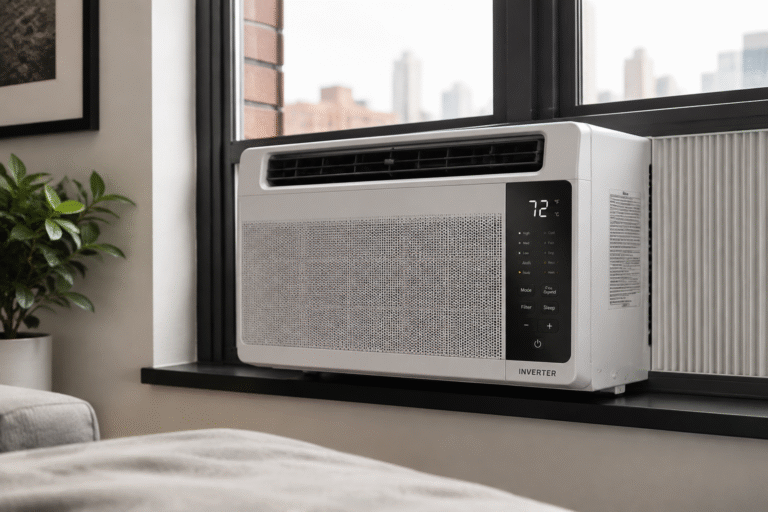
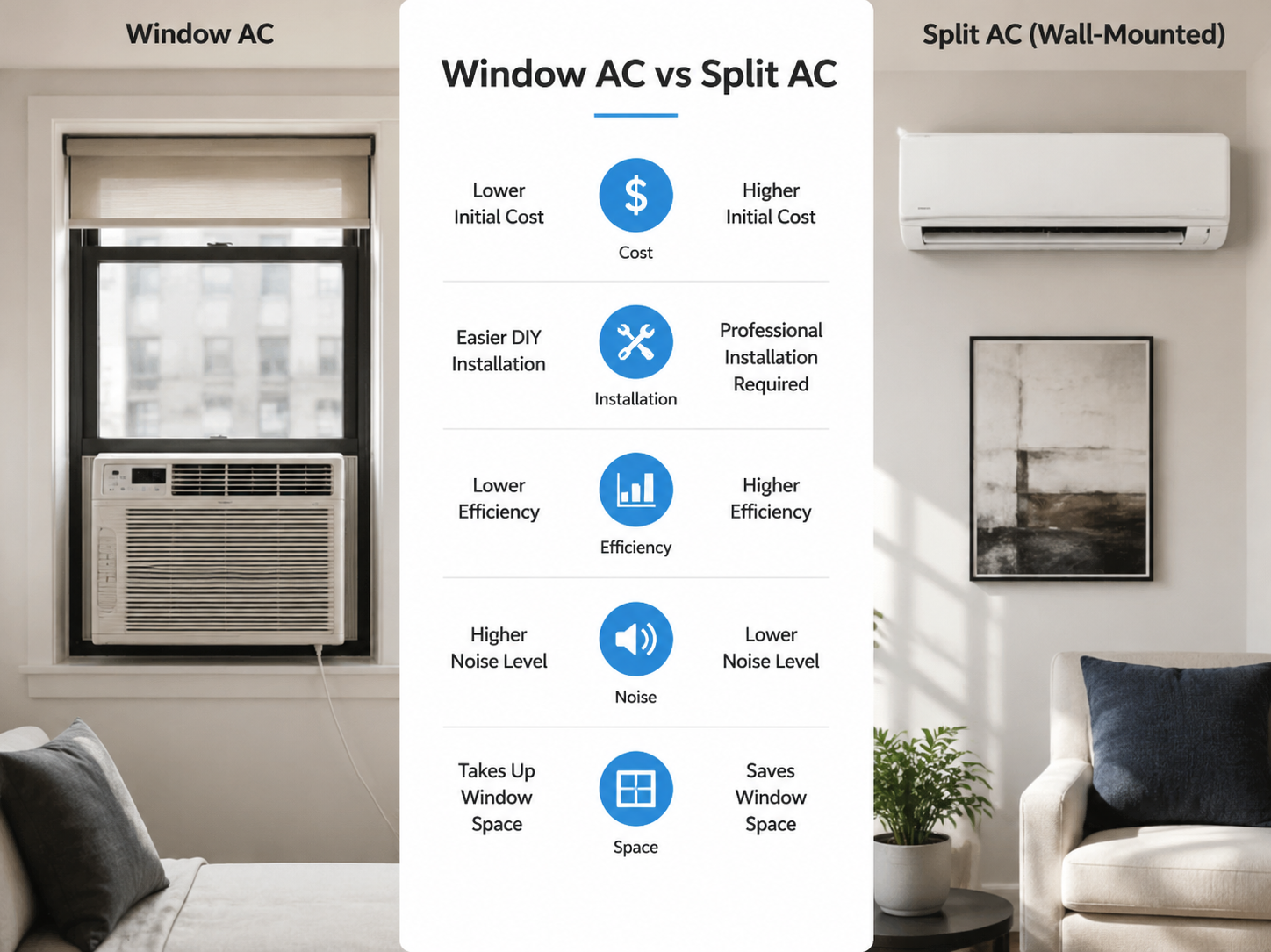
Window AC units cost less upfront and install faster, making them ideal for retrofits and single rooms. Split AC systems cost more but offer better energy efficiency, lower noise, and cleaner aesthetics for larger commercial spaces or multi-room buildings.
Breaking Down the 5 Factors
Let me go through each factor one at a time, because bundling them together is where most buyers get confused.
Cost. Window units win here. Lower unit price, lower installation labor, no outdoor mounting bracket needed. For a 500-unit dormitory project, this adds up fast.
Installation. A window AC goes in within an hour. A split system needs wall drilling, refrigerant line work, and outdoor unit mounting. This takes longer and needs skilled labor.
Efficiency. Split systems generally run more efficiently over time, especially in larger rooms, because the separated compressor runs cooler and lasts longer.
Noise. Split units win clearly. The compressor noise stays outside, away from guests or staff.
Space. Window units need a window or wall opening. Split units need indoor wall space plus outdoor space for the compressor. If your building has no room for an outdoor unit, window AC becomes the only real option.
| Factor | Window AC | Split AC |
|---|---|---|
| Cost | Lower | Higher |
| Installation Speed | Fast | Slower |
| Energy Efficiency | Good | Better |
| Noise Level | Higher | Lower |
| Space Requirement | Window/wall opening only | Indoor + outdoor space |
Bulk Buying Guide: How Hotels, Developers & Contractors Should Choose Between Window and Split AC Systems
You don’t need one winner. You need a strategy that fits every room type in your building.
Hotels, developers, and contractors get the best results by mixing unit types across a single project — window AC for staff rooms, storage areas, and retrofits, and split AC for guest rooms, lobbies, and spaces where noise and aesthetics matter most.

Matching Unit Type to Room Scenario
This is the part most buyers miss. They think of the decision as "either/or" for the whole project. I think of it as a room-by-room match.
Take a hotel renovation. Guest rooms need quiet operation, so split units make sense there.2 But staff dormitories, back-office rooms, or storage spaces don’t need the same noise standard. Window units save money in those rooms without hurting the guest experience.
I have seen this exact strategy work well for several of our clients in Latin America and South Africa doing hotel renovations. They split their order between window and split units based on room function, not based on a single company-wide policy. This approach stretches the budget further and still delivers comfort where it matters most.
| Room Type | Recommended Unit | Why |
|---|---|---|
| Guest Rooms | Split AC | Quiet, better aesthetics |
| Staff Dormitories | Window AC | Lower cost, fast install |
| Retail Floor | Window AC | No outdoor space needed |
| Lobby/Common Areas | Split AC | Efficiency for larger space |
| Retrofit Projects | Window AC | Simple install, no wall drilling |
If you are planning a mixed procurement order, our team at iClima can help you build a sourcing plan based on your actual room breakdown, not a generic recommendation. We manufacture both window and split lines at scale, so a mixed order doesn’t mean juggling two suppliers.
Conclusion
Neither window nor split AC wins outright. Match the unit type to each room, and your budget and comfort both improve.
Frequently Asked Questions (FAQ)
Is split AC always more energy efficient than window AC?
Split AC is generally more efficient for medium to large rooms because the compressor sits outside and runs cooler. For small rooms, window AC efficiency is often comparable.
Can window AC units handle commercial spaces like hotels?
Yes. Window AC works well in hotel staff rooms, storage areas, and retrofit projects where outdoor space is limited or budget matters more than noise level.
Why do window AC units cost less than split systems?
Window units have a simpler single-box design and require less installation labor, since there is no outdoor unit mounting or refrigerant line work needed.
What is the best AC choice for a hotel renovation project?
A mixed procurement strategy works best. Use split AC in guest rooms for quiet comfort, and window AC in staff areas or retrofits to save on cost and installation time.
Does iClima offer both window AC and split AC for bulk orders?
Yes. iClima manufactures both product lines at our 50,000 sqm factory, with low MOQ and ODM/OEM options, so buyers can order a mixed batch from a single supplier.
How do I decide between window and split AC for a specific room?
Consider room size, noise tolerance, and available outdoor space. Small rooms with no outdoor space fit window AC. Larger rooms needing quiet operation fit split AC better.
-
"Air Conditioning : Environmental Health & Safety", https://www.umass.edu/ehs/air-conditioning. Technical references on room air conditioners describe window units as self-contained systems that place the compressor, condenser, evaporator, and fan components in one enclosure installed in a window or wall opening. ↩
-
"The effect of air conditioner sound on sleep latency, duration, and … – PMC", https://pmc.ncbi.nlm.nih.gov/articles/PMC6341869/. Research and reference sources on air-conditioner design can support that split systems typically place the compressor outdoors, which reduces indoor operating noise relative to many window units; this makes them a common choice where quieter indoor conditions are desired. Evidence role: mechanism; source type: paper. Supports: Guest rooms need quiet operation, so split units make sense there.. Scope note: This supports the noise rationale generally, but actual sound levels depend on the specific model, installation, and maintenance. ↩