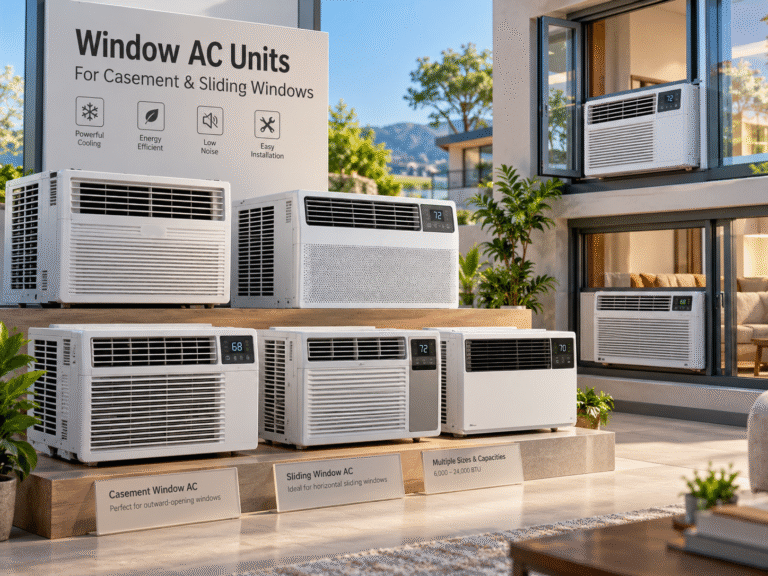
Ignoring the demand for horizontal sliding window air conditioners costs B2B distributors and contractors steady, high-margin revenue. When project tenders prohibit external condenser mounting or core drilling, standard ductless splits fail to qualify. Without a reliable, factory-direct supply of compact window units, importers lose lucrative retrofit contracts to better-prepared regional competitors.
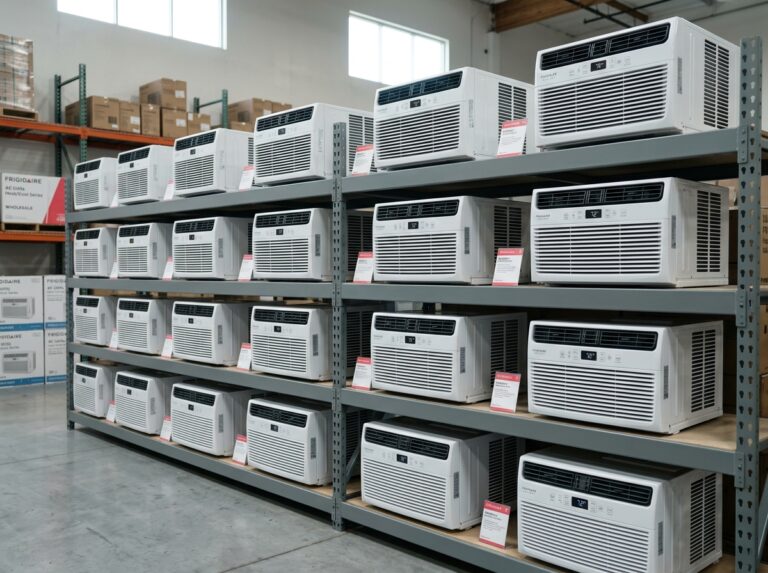
Sourcing air conditioner units for side sliding windows requires verifying compact chassis widths, structural mounting brackets, and regional energy compliance before placing a bulk order. For importers and contractors, partnering directly with an OEM/ODM manufacturer enables mixed-container loading and eliminates middleman markups, ensuring healthy margins on specialized retrofit tenders.
Understanding why these specialized units remain in high demand helps procurement teams forecast inventory accurately and bid on upcoming infrastructure projects with confidence.
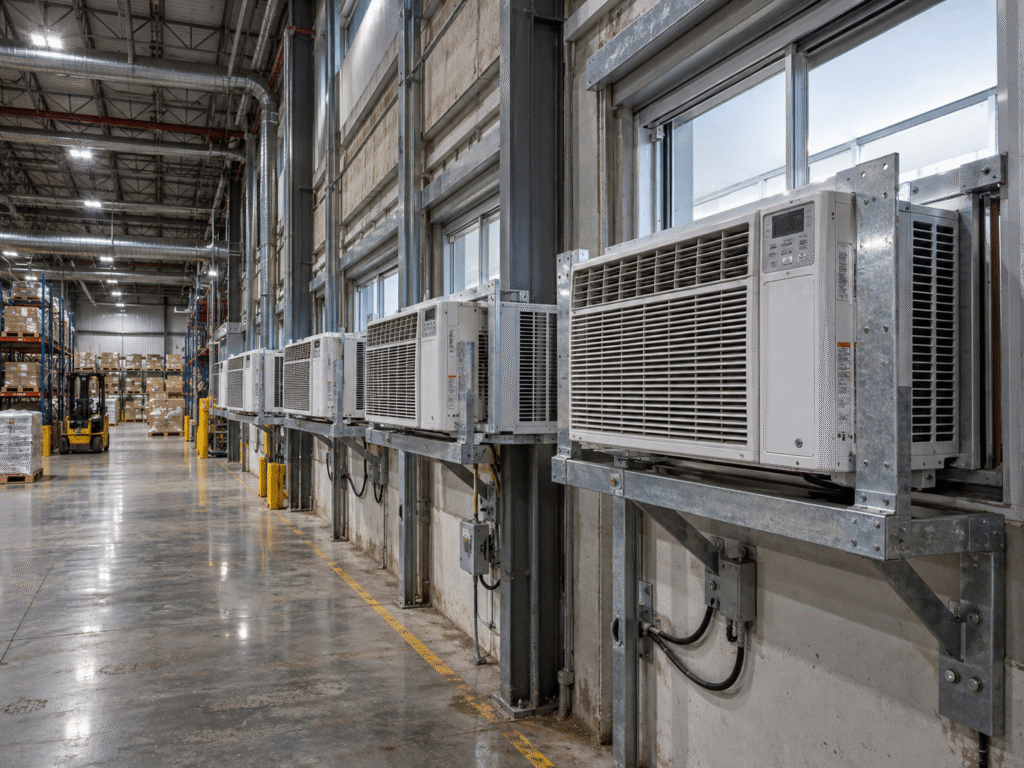
While many procurement managers assume the window AC market is shrinking, units compatible with side sliding windows remain a massive volume driver in regions like Latin America and South Africa1. They are frequently the only viable cooling solution for large-scale retrofit projects where structural modifications are strictly prohibited or financially unfeasible.
In many older commercial buildings, schools, and public housing developments, installing ductless mini-splits presents major obstacles. Drilling through reinforced concrete or historic facades drives up labor costs and often violates local building codes. Furthermore, high-rise apartments frequently ban external condenser brackets due to safety regulations and aesthetic rules. Compact window and casement units solve this by keeping the entire refrigeration cycle within the window frame.
Where Sliding Window ACs Deliver the Highest B2B Value
- Public Housing Tenders: Government-funded upgrades require fast, standardized installations with zero refrigerant line brazing required on-site.
- School and University Retrofits: Educational facilities often feature heavy-duty horizontal sliding windows and limited maintenance budgets, making self-contained plug-and-play units ideal.
- Older Commercial and Modular Buildings: Temporary site offices, clinics, and legacy office blocks benefit from units that can be installed, removed, or replaced by general maintenance staff without specialized HVAC tooling.
Application Boundaries:
- Suitable for: Legacy architecture, budget-constrained public tenders, coastal or high-wind zones where external wall brackets corrode or pose fall hazards, and modular construction.
- Unsuitable for: Luxury residential developments requiring near-silent indoor operation, interior rooms without exterior window access, or spaces with narrow window openings that cannot support the unit’s minimum width and weight load.
Buyer Action: Review your local government and commercial tender boards for upcoming school, clinic, or housing retrofits. Stocking a baseline inventory of compact window units allows you to supply contractors who need immediate solutions for restricted building facades.
4 Factory Audit Criteria for Importers: Chassis Dimensions, Mounting Kit Quality, Energy Compliance, and Low MOQs
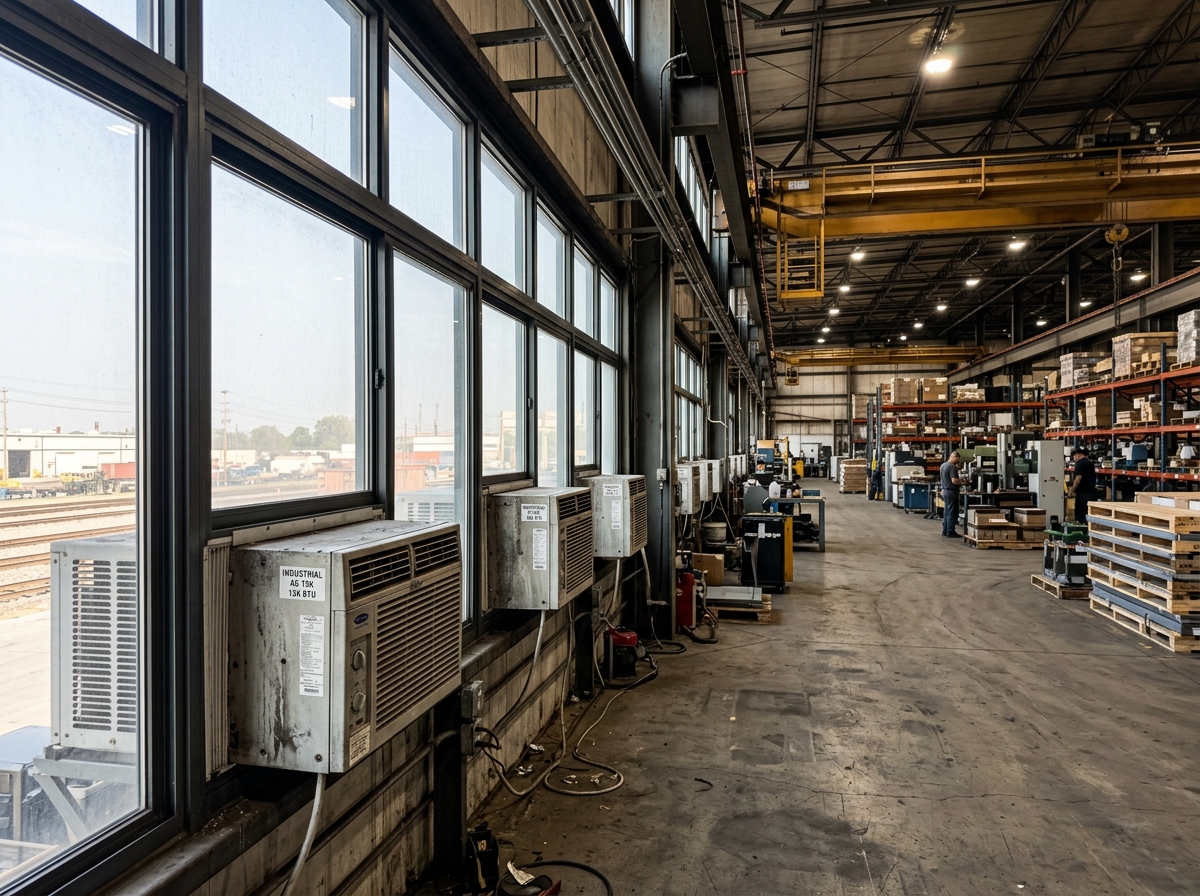
When evaluating an HVAC manufacturer for side sliding window units, your primary goal is to prevent installation failures and customs delays. Unlike vertical double-hung windows, horizontal sliders create a tall, narrow opening that exposes poor chassis design and weak mounting hardware2.
Before paying a deposit, procurement teams and project engineers should audit suppliers across four critical areas:
- Exact Chassis Width and Airflow Clearance: Side sliding windows limit the maximum width of the AC unit. You must verify the exact millimeter dimensions of the cabinet—not just the faceplate—and ensure the side air intake louvers will not be blocked by the sliding window frame tracks.
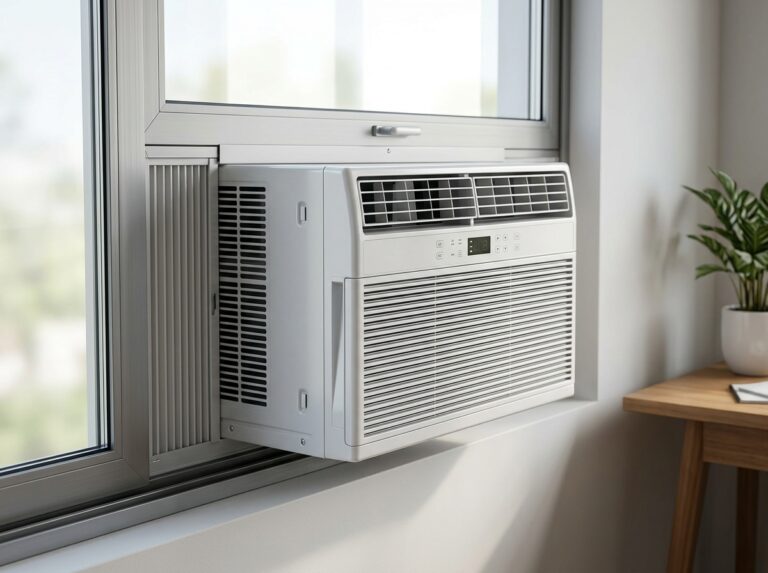
- Mounting Kit and Filler Panel Quality: A standard vertical accordion curtain does not work in a horizontal sliding window. Verify that the factory supplies heavy-duty exterior support brackets to bear the cantilever weight of the compressor, alongside rigid, UV-resistant vertical filler panels and structural window locks to seal the tall gap above the unit.
- Regional Energy and Voltage Compliance: Ensure the factory can match your local power grid (e.g., 115V/60Hz or 220-240V/50Hz) and meet regional Minimum Energy Performance Standards (MEPS). Never accept vague claims of "global certification." Demand the exact test report and certificate number from the issuing body, and verify that the model number on the certificate matches your commercial invoice.
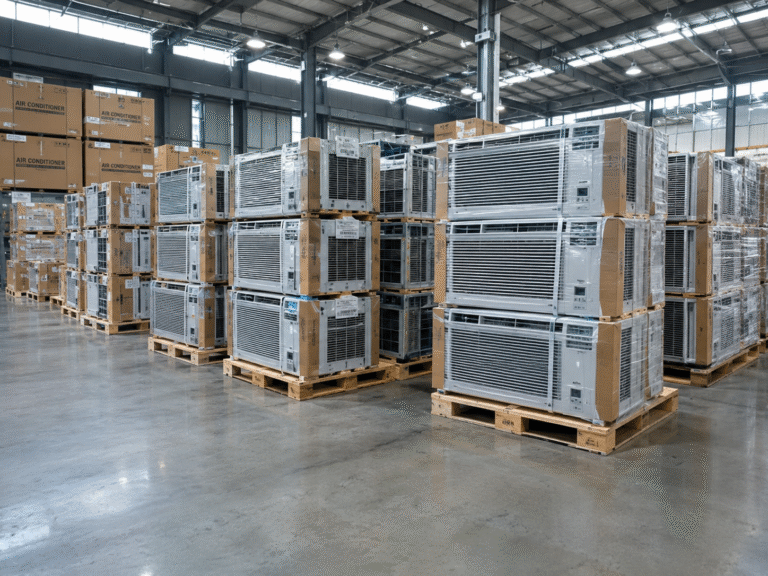
- MOQ Flexibility and Mixed-Container Loading: Because sliding window ACs are specialized SKUs, tying up working capital in full-container loads of a single model is risky for regional wholesalers. Look for a large-scale manufacturer that permits lower Minimum Order Quantities (MOQs) by allowing mixed-container loads.
What to Verify Before You Pay a Deposit
- Request a dimensional CAD drawing showing the chassis width, depth, and side louver placement.
- Ask for physical samples or detailed drop-test videos of the external support bracket and vertical window framing kit.
- Confirm whether the unit uses a slide-out chassis or a fixed chassis, as this dictates how contractors will mount the cabinet into a narrow track.
- Verify the factory’s ability to combine Window ACs with Split ACs or Light Commercial units in the same 40HQ container.
OEM Private Label vs. Ready-to-Ship Italian Brand: Maximizing ROI with 30-Day Factory-Direct Lead Times from China
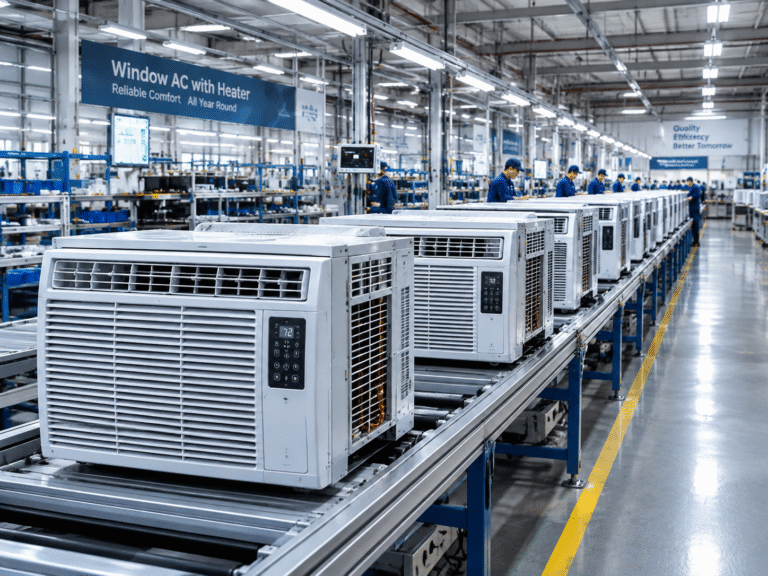
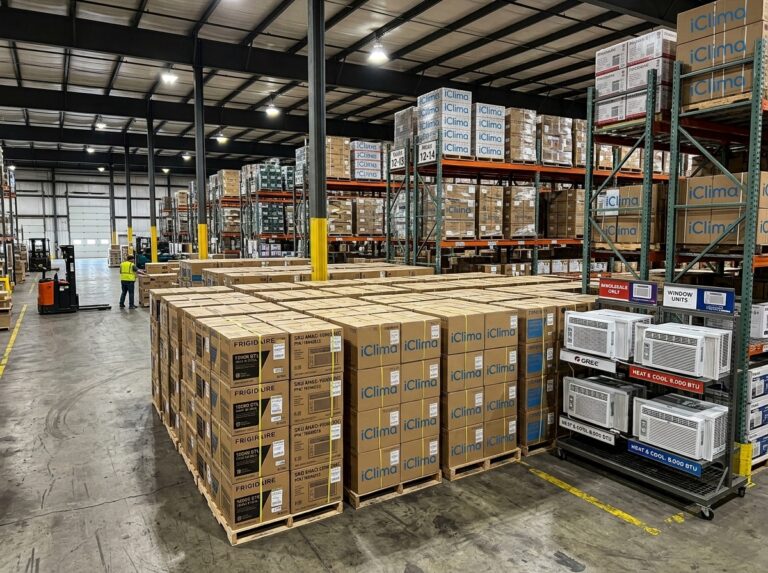
Choosing between building your own OEM private label and distributing an established factory brand depends on your market timeline, working capital, and tender requirements. Sourcing directly from a high-capacity manufacturer—such as iClima, which operates a 50,000-square-meter manufacturing base in China with an annual output of approximately 3 million units3—eliminates trading company markups on niche window AC models.
Whether you need custom engineering (ODM) for a specific government tender or rapid replenishment before the summer peak, understanding the trade-offs between private labeling and stocking our Italian-origin iClima brand will help you optimize your return on investment.
| Procurement Dimension | OEM / ODM Private Label | Ready-to-Ship iClima Brand |
|---|---|---|
| Target Buyer Profile | Established regional distributors, retail chains, and large brand owners. | Project contractors, importers needing fast turnaround, and wholesalers testing new SKUs. |
| Customization Scope | Custom fascia, carton artwork, brand badges, and specific regional voltage/plug configurations. | Standardized Italian-brand aesthetics and proven factory configurations. |
| Minimum Order Quantity (MOQ) | Higher per-model threshold to cover custom printing and tooling costs (based on capacity). | Lower threshold; ideal for mixed-container orders alongside split or solar ACs. |
| Production Lead Time | Typically requires additional time for artwork approval and component sourcing. | Streamlined production (30-day factory-direct lead times based on seasonal schedule and order specs). |
| Working Capital Impact | Higher upfront commitment for dedicated inventory. | Optimized cash flow via mixed-SKU container loading. |
Practical Takeaway: If you are bidding on an urgent retrofit project or want to add side-sliding window units to your catalog without overextending your warehouse budget, ordering under the iClima brand in a mixed container offers the fastest path to market. If you already command strong regional brand equity and forecast steady annual volume, OEM customization protects your price margins against direct retail comparison.
Optimizing Working Capital with Mixed Containers
With over 15 years of industry experience, iClima supports importers in South Africa, Latin America, and other key global markets4 by offering factory-direct pricing across a complete HVAC portfolio. Instead of ordering an entire container of window units, distributors can balance their inventory risk by combining compact Window ACs with high-velocity Split ACs, Light Commercial units, Free-Match systems, or Solar ACs in a single shipment.
Request Your Technical Spec & Window Clearance Sheet
Are you preparing a commercial tender submission or planning your next seasonal inventory order? Contact our engineering and export team to request a downloadable Technical Spec & Window Clearance Sheet for our window air conditioner line.
Share your target market, power supply requirements, estimated cooling loads, and preferred mix of Window and Split AC units. Email us directly or visit https://www.iclimaac.com/ to discuss factory-direct pricing and container loading plans.
Conclusion
Sourcing air conditioners for side sliding windows is a strategic way for distributors and contractors to capture high-margin retrofit tenders where split systems cannot be installed. To protect your profitability, prioritize compact chassis widths, robust vertical mounting kits, and verified regional energy compliance. Before placing your next bulk order, request exact dimensional drawings and explore mixed-container loading with a factory-direct supplier like iClima to maximize your working capital.
FAQ
Can standard window air conditioners be installed in horizontal sliding windows?
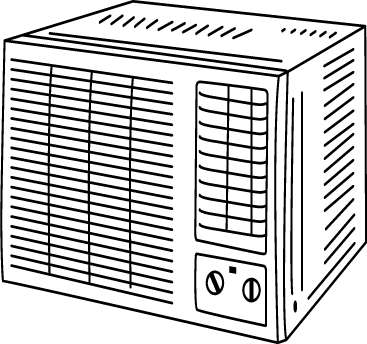
Many compact window air conditioners can fit into horizontal sliding windows if the chassis width is narrower than the maximum window opening. However, standard units usually come with mounting curtains designed for vertical double-hung windows. Buyers must ensure the supplier provides heavy-duty exterior support brackets and tall vertical filler panels for a secure, weatherproof installation.
What is the difference between a casement window AC and a standard compact window AC?
A casement window AC features a tall, narrow vertical profile designed specifically for crank-out casement or narrow sliding windows. A standard compact window AC has a traditional horizontal profile. While compact horizontal units are more cost-effective and widely available for wide sliding windows, true vertical casement units are required for extremely narrow window openings.
Can we mix window ACs and ductless split systems in the same shipping container?
Yes, when working directly with a multi-category manufacturer like iClima, you can combine window air conditioners, ductless split systems, and light commercial units in a mixed container load. This strategy helps regional distributors and contractors meet factory shipping volumes while stocking specialized retrofit units without tying up excessive working capital.
How do we verify energy compliance and electrical compatibility for Latin American or South African markets?
Always provide your supplier with the exact destination country, required voltage, and frequency (such as 115V/60Hz or 220V-240V/50Hz) before requesting a quote. To verify compliance, request the official energy efficiency test report and certificate number, then cross-check the certified model number directly against the issuing authority’s database prior to paying a deposit.
What affects the factory lead time for bulk OEM window air conditioner orders?
Factory lead times depend on whether you choose a ready-to-produce factory brand or custom OEM private labeling. OEM orders require extra time to confirm custom carton artwork, user manuals, and specific regional plugs or refrigerants. Ordering during peak manufacturing seasons in China can also extend timelines, making early forecasting essential for contractors.
-
"Nearly 90% of U.S. households used air conditioning in 2020", https://www.eia.gov/todayinenergy/detail.php?id=52558. Sources on regional air-conditioner market composition should show that window or compact casement units remain widely used in retrofit and residential cooling markets in specific geographies; if direct regional sales data is unavailable, the citation should be treated as contextual evidence rather than proof of the exact market share claim. ↩
-
"How To Install Window AC Unit With Horizontal Sliding Window", https://www.youtube.com/watch?v=QXVGp3VUmnE. Sources on window-mounted air conditioners can support that horizontal sliding windows require different installation hardware and sealing arrangements than standard double-hung windows, which can expose fit and support issues if the chassis and mounting kit are not designed for that window type. ↩
-
"Wholesale Heat and Air Conditioner Window Units … – iClima China", https://iclimaac.com/wholesale-heat-and-air-conditioner-window-oem/. A source should confirm the manufacturer’s facility size and annual production capacity, which are presented here as factual claims about scale. ↩
-
"iClima Split Air Conditioner: The Smart B2B Sourcing Choice", https://iclimaac.com/how-can-you-experience-the-iclima-difference-in-your-split-air-conditioner-sourcing/. A source should document the company’s years in operation and the regions it serves, as these are factual claims about business history and market reach. ↩