

Struggling to choose between mini splits and window ACs for your commercial project? Making the wrong choice costs you serious money. Let us fix this exact problem right now.
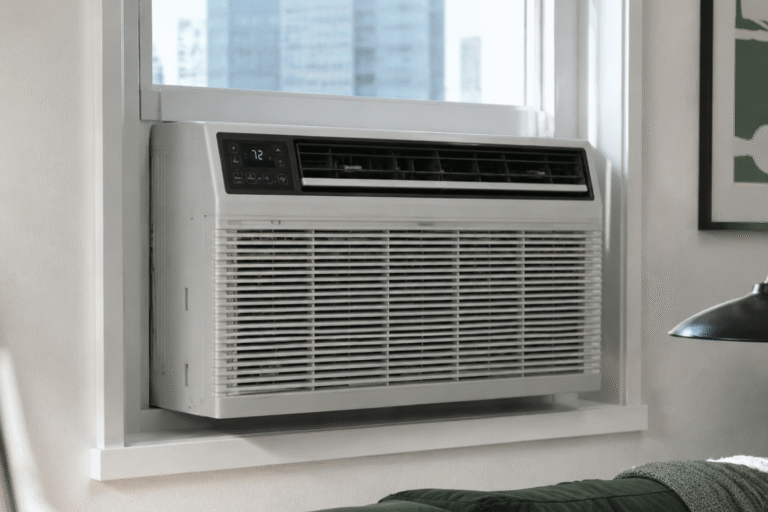
Mini splits offer better long-term ROI with 30% more energy savings and whisper-quiet operation, making them perfect for premium commercial spaces. Window ACs provide the cheapest upfront cost and easiest installation, ideal for budget-conscious volume projects. Your best choice depends entirely on your specific project goals and budget.

Are you ready to see which cooling system will give you the highest return on investment? Let me walk you through the real numbers and facts right now.
How Do Cooling Efficiency and Installation Costs Compare in High-Volume Projects?
High electricity bills ruin your long-term profits. Bad installation processes cause long project delays. You need a cooling system that fits your exact budget and timeline right now.
Window ACs win on upfront pricing and fast installation. You simply slide them into a wall hole. Mini splits require professional installation and copper piping, which costs more at the start. However, mini splits cool rooms much faster and save serious energy over time.

Breaking Down Upfront Costs vs. Real Efficiency
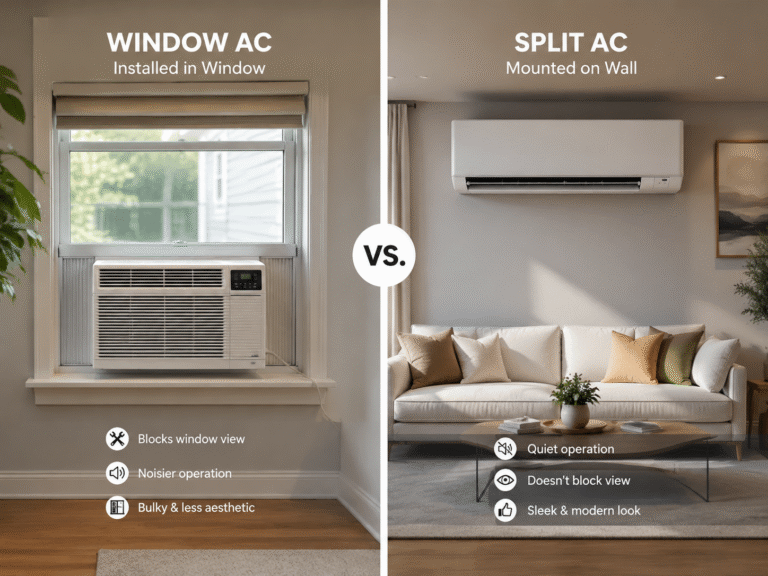
Many B2B buyers only look at the low upfront cost of window ACs. As a manufacturer in China, I see this mistake all the time. Buyers miss a huge fact. Mini splits give a whisper-quiet experience.1 They also give over 30% in long-term energy savings. This changes everything for a commercial project. Let us look closely at a 500-room hotel project.
| Feature | Window AC Units | Mini Split AC Units |
|---|---|---|
| Unit Cost | Low | Medium to High |
| Install Cost | Very Low | Higher (needs technician) |
| Cooling Speed | Average | Fast and Targeted |
| Noise Level | High | Whisper-quiet |
| Energy Use | High | Low (Highly Efficient) |
When you do the math, the cheap window unit starts to cost more after two years of heavy use. High electric bills eat up your upfront savings. If you build a premium space, noise is a big issue. Window units are loud. Mini splits are quiet. This elevates the premium feel of any property. Your guests stay happy. Your power bills stay low. This is the real secret to high ROI in high-volume projects. I always advise my clients to look past the first invoice.
What is the Real Difference in Lifespan, Maintenance, and Energy Savings?
Broken AC units make your end clients angry. Constant repair calls waste your daily maintenance budget. You must know which system lasts longer before you buy in bulk today.
Mini splits usually last 12 to 15 years with basic filter cleaning.2 They save up to 30% on power.3 Window units last 8 to 10 years and face rough weather outside, which causes more rust. Mini splits clearly win the long-term saving battle.

The True Cost of Long-Term Maintenance
I always tell my B2B clients at iClima to think about year five, not just year one. Lifespan and energy rules matter most. Window units sit halfway outside. Rain, sun, and dirt hit them every single day. This causes early rust and heavy damage. You will replace them sooner. Mini splits keep their vital parts safe. The outside unit is built tough. The inside unit stays clean.
| Maintenance Factor | Window AC | Mini Split AC |
|---|---|---|
| Average Lifespan | 8 – 10 Years | 12 – 15 Years |
| Weather Damage Risk | High | Low |
| Filter Cleaning | Easy | Very Easy |
| Energy Savings | Base Standard | Up to 30% More |
You get up to 30% more energy savings with mini splits over their whole life. Think about regional distributors in markets like Latin America or South Africa. Power costs keep going up there. Your end buyers want energy savings. A split system pays for itself over time. Maintenance is also very simple. My factory builds them to last long. We test them safely to make sure they run well for years. Less repair means much higher profit for you.
What are the Best Use Cases: Choosing AC Units for Hotels and Real Estate?
Choosing the wrong AC type makes your modern hotel feel very cheap. Buyers will not pay top dollar for loud rooms. Pick the exact right unit to match your property grade.
Use window ACs for basic motels, worker camps, or low-budget apartments where lowest cost is the only goal. Use mini splits for luxury hotels, high-end real estate, and modern offices where quiet operation and energy savings add real property value.4
The Dual-Track Strategy for Regional Distributors
For our buyers in South Africa and Latin America, I suggest a special business plan. I call it the "dual-track approach." It is counter-intuitive but it works great in real markets. I see many distributors struggle to balance price and quality. You can solve this easily.
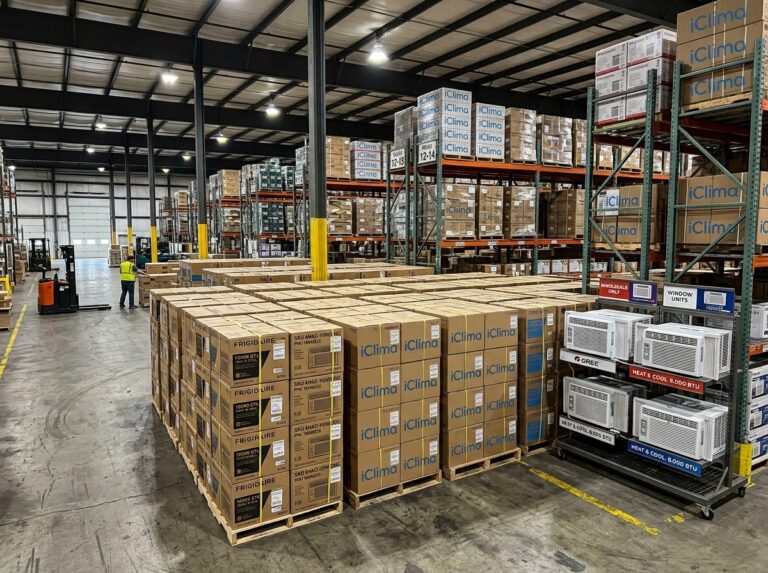
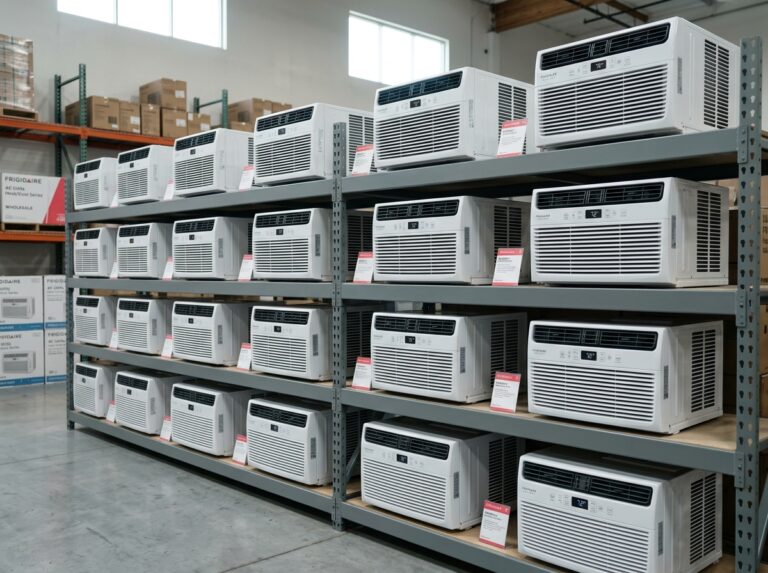
Use OEM window units for high-volume, budget-conscious sales. Then, use white-labeled mini splits to capture higher profit margins. Many distributors worry about buying too much stock at once. That is why iClima offers a low Minimum Order Quantity (MOQ). You can test both product lines in a single order with minimal inventory risk.
| Market Segment | AC Type to Use | Why It Works |
|---|---|---|
| Budget / High-Volume | OEM Window AC | Low price wins the bid fast. |
| Premium / High-Margin | White-Label Mini Split | Quiet feeling raises property value. |
| Public Tenders | Light Commercial AC | Meets strict government rules. |
Because we are an official partner with TCL, you get instant credibility with your local clients. The build quality is solid. You can offer a cheap option to win the buyer first. Then you upsell them to the premium mini split. This builds your brand fast and makes you much more money.
Conclusion
Choosing the right AC boosts your commercial project’s ROI. Mix window units for tight budgets and mini splits for long-term savings to maximize your local market profits today.
-
"Mini-Split vs. Window AC : Which One to Choose this Summer.", https://jaymoodyhvac.com/resources/blog/mini-split-vs-window-ac-which-one-to-choose-this-summer/. Sources on HVAC system design should support that mini-split systems are generally quieter at the indoor unit than window air conditioners, because the compressor is typically located outside the room; this is a general acoustic comparison rather than proof for every model. Evidence role: general_support; source type: research. Supports: Mini splits give a whisper-quiet experience.. Scope note: Noise performance varies by model, installation quality, and operating mode. ↩
-
"How Often Should a Mini Split be Cleaned – A C Masters", https://acmasters.com/how-often-should-a-mini-split-be-cleaned/. Sources on HVAC service life can support the typical expected lifespan of mini-split systems and note that routine filter cleaning is part of standard maintenance; if the source is a general reference, it should be read as a typical range rather than a guaranteed lifespan for every installation. Evidence role: general_support; source type: institution. Supports: Mini splits usually last 12 to 15 years with basic filter cleaning.. Scope note: Lifespan varies substantially with climate, usage, installation quality, and maintenance practices. ↩
-
"[PDF] A review of ductless mini split HVAC system", https://scholarworks.uttyler.edu/cgi/viewcontent.cgi?article=1019&context=me_fac. Studies and institutional explanations of ductless mini-split efficiency can support that mini-splits are often more efficient than window AC units and may reduce electricity use under some conditions; however, the exact percentage depends on climate, sizing, operating pattern, and comparison baseline. Evidence role: statistic; source type: paper. Supports: They save up to 30% on power.. Scope note: The exact savings percentage is context-dependent and may not apply to all homes or commercial settings. ↩
-
"Central Air Conditioning | Department of Energy", https://www.energy.gov/energysaver/central-air-conditioning. Research and institutional sources on split-system mini-split air conditioners can support that they are typically quieter than window units and can offer higher efficiency, which may be relevant in upscale hospitality, residential, and office settings; this is contextual support, not direct proof of increased property value. Evidence role: general_support; source type: research. Supports: Mini splits are suitable for luxury hotels, high-end real estate, and modern offices because they are quiet and energy efficient, which can add property value.. Scope note: The source should be used carefully because it supports acoustic and efficiency characteristics, not the claim that these characteristics reliably increase property value in all cases. ↩