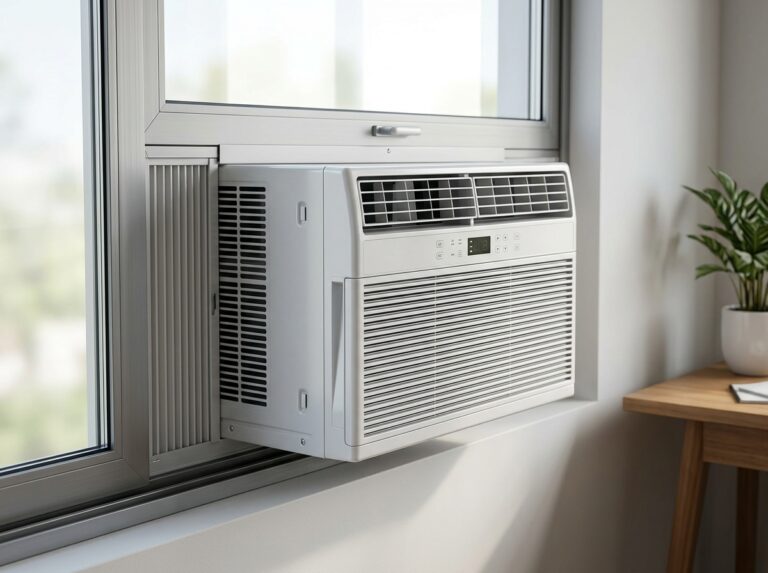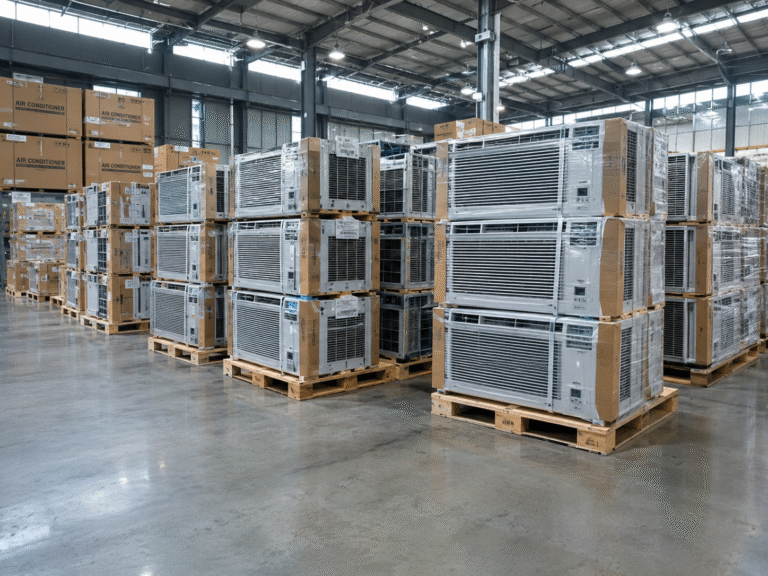
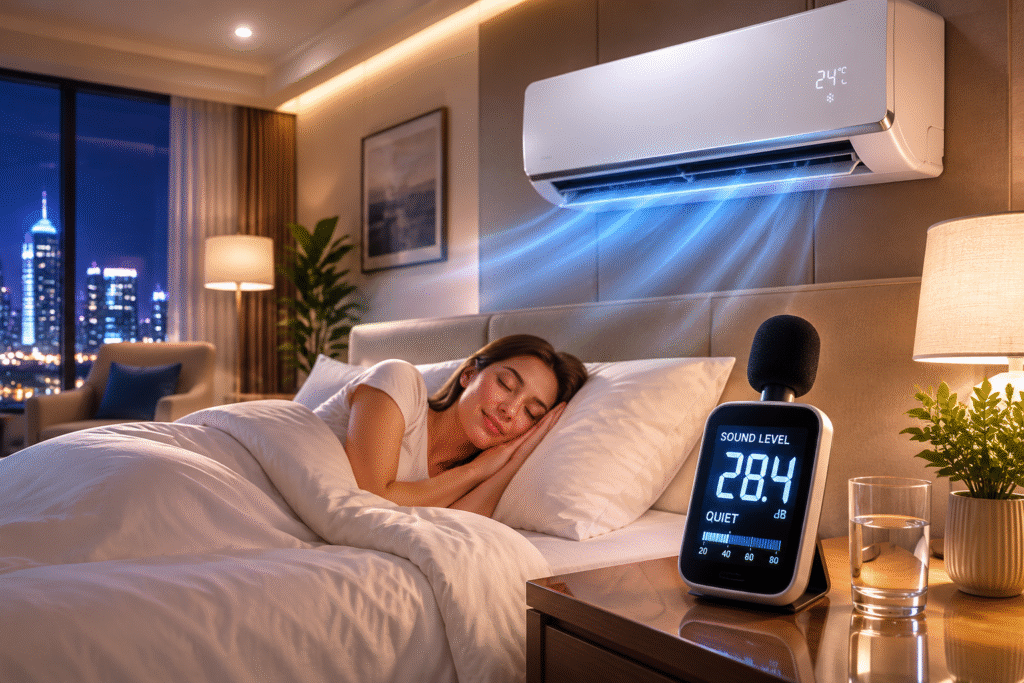
Noisy air conditioners ruin sleep and kill your brand reputation. Are you losing big commercial contracts because your current window units are too loud? You need better solutions immediately.
The quietest window air conditioners use advanced inverter technology to keep noise levels below 45 decibels. For commercial buyers, sourcing these low-noise units directly from trusted OEM manufacturers ensures premium quality, higher profit margins, and maximum guest satisfaction in large hospitality or government projects.
Finding a truly quiet air conditioner for a massive project can feel impossible when dealing with standard suppliers. But once you understand the technology and the right sourcing strategy, you can quickly turn this problem into your biggest competitive advantage. Today, I want to show you exactly how we do this at iClima.
Decibel Standards: Why Hotels Need Low-Noise Solutions?
Guest complaints about loud air conditioners lead directly to bad reviews. Bad reviews cost hotels serious money. Do you want to sell units that fix this problem fast? Yes, you do.
Real commercial decibel standards require hotel air conditioners to operate between 35 and 45 decibels indoors. Units exceeding 50 decibels disrupt sleep cycles, making low-noise window ACs a strict requirement for all modern hospitality procurement contracts and large commercial building upgrades.
The True Cost of Noise
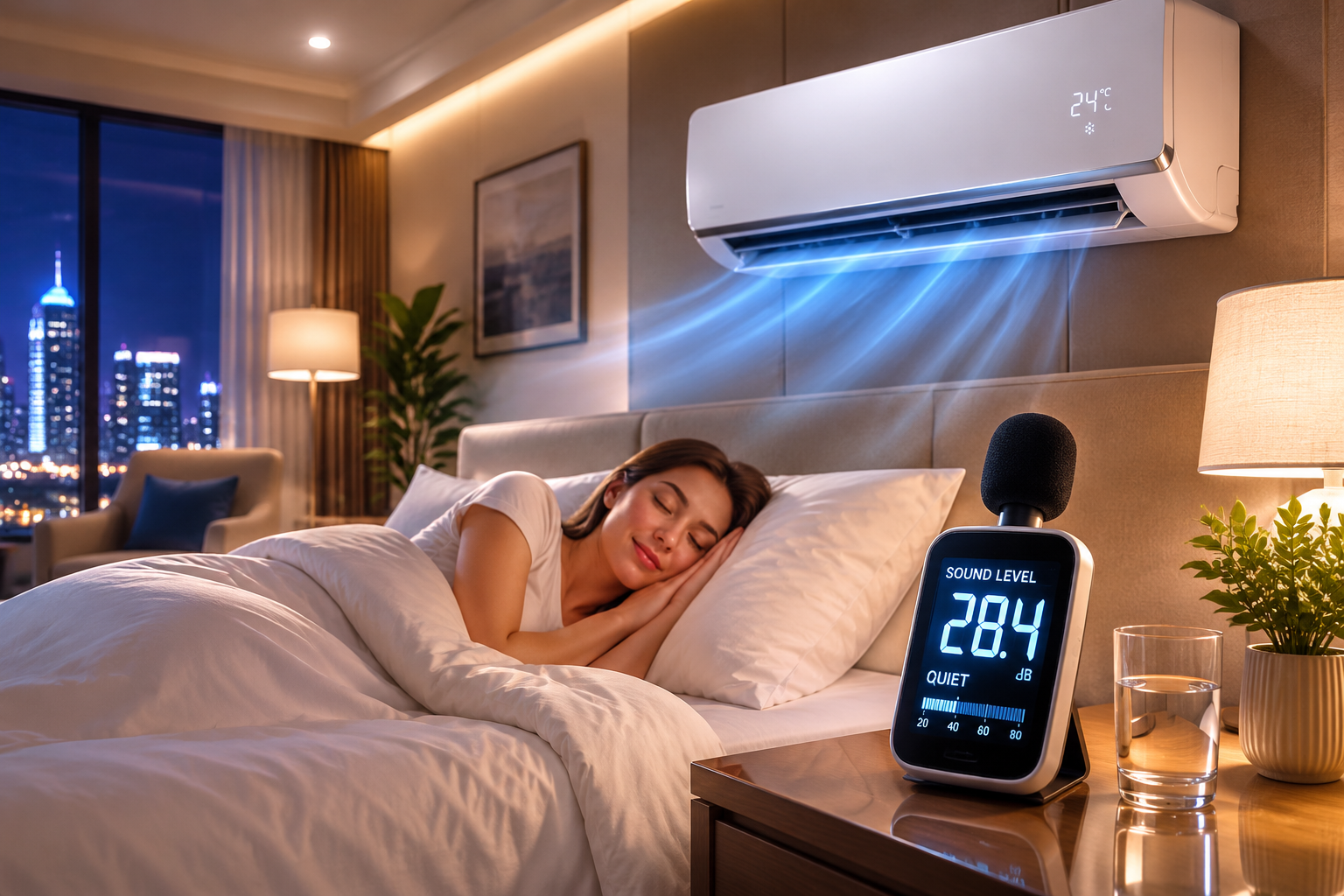
When I talk to hotel procurement managers in South Africa and Latin America, their biggest fear is bad sleep quality. A traditional window air conditioner often hits 60 decibels.1 That sounds like a loud conversation happening right next to your bed. You cannot sleep well next to that kind of noise. A quiet window air conditioner drops that noise down to a soft hum. As a bulk buyer or corporate distributor, this is your gold mine. In the B2B world, "ultra-quiet" is no longer just a small fancy feature. It is a premium selling point that directly boosts your profit margins and guarantees guest satisfaction.
What Do the Numbers Mean?
To fully understand how noise impacts a commercial space, we have to look closely at decibel levels. I always tell my B2B clients to check these numbers before they write a tender for any project.
| Noise Level (dB) | Common Example | Impact on Hotel Guests |
|---|---|---|
| 30 – 40 dB | Quiet library | Ideal for deep sleep. Very high guest satisfaction. |
| 45 – 50 dB | Light rainfall | Acceptable for most, but might wake light sleepers. |
| 55 – 65 dB | Normal conversation | Causes sleep disruption. Leads to bad hotel reviews. |
If your window units fall in the top category, you instantly win the hotel contract. Hotels will gladly pay more for total silence. You just need a factory partner that can deliver this exact standard every single time.
Core Noise Reduction Tech: Inverter vs. Traditional ACs?
Old window air conditioners shake and rattle all night long. This ruins the user experience. Do you know why modern units are so much quieter? The big secret is in the compressor.
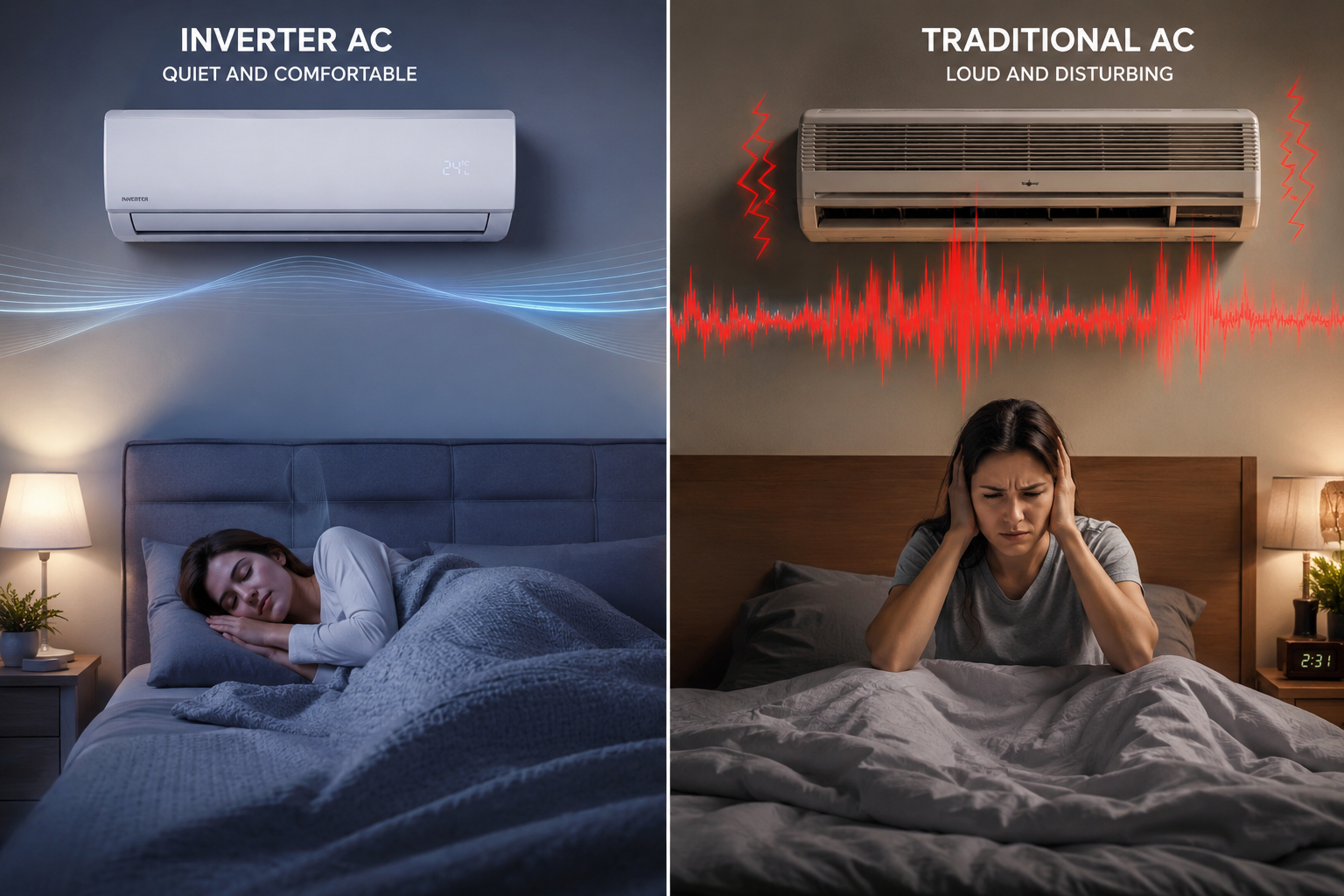
Inverter technology is the core noise reduction feature in modern quiet air conditioners.2 Unlike traditional units that loudly click on and off, inverter compressors run continuously at varying speeds. This eliminates sudden background noise spikes and vibrations, making them perfect for silent commercial operation.
How the Compressor Works
Let me explain this very simply. Traditional air conditioner units only have two modes: they are 100% on or completely off. Every time the room gets a little warm, the compressor kicks on with a loud bang. The whole window shakes. Inverter technology changes this completely. An inverter compressor gently speeds up and slows down based on the room temperature. There are no loud clicks in the middle of the night. There are no sudden vibrations in the wall.
The Value for B2B Buyers
In the B2B sector, you must sell real solutions, not just cheap metal boxes. When you buy from a reliable manufacturer like iClima, you get access to advanced inverter tech. This is backed by our official collaboration with TCL. This partnership ensures you get top-tier quality control and high credibility in your local market.
Comparing the Two Systems
Here is a very simple breakdown of why you should choose inverter models for your next bulk order:
| Feature | Traditional AC | Inverter Window AC |
|---|---|---|
| Compressor Cycle | On / Off | Variable Speed |
| Noise Spikes | Very common and loud | Extremely rare and quiet |
| Energy Use | High | Up to 30% lower |
| Price Point | Low | Premium (High Margin) |
Using smooth inverter models allows you to charge a premium price while giving your clients exactly what they need. Government buyers also love inverter tech because it saves energy on public projects.
Bulk Buying & OEM: Building a High-Margin Quiet AC Brand?
Sourcing big global brands leaves you with tiny profit margins. Are you tired of fighting on price alone in your local market? It is time to create your own premium brand.
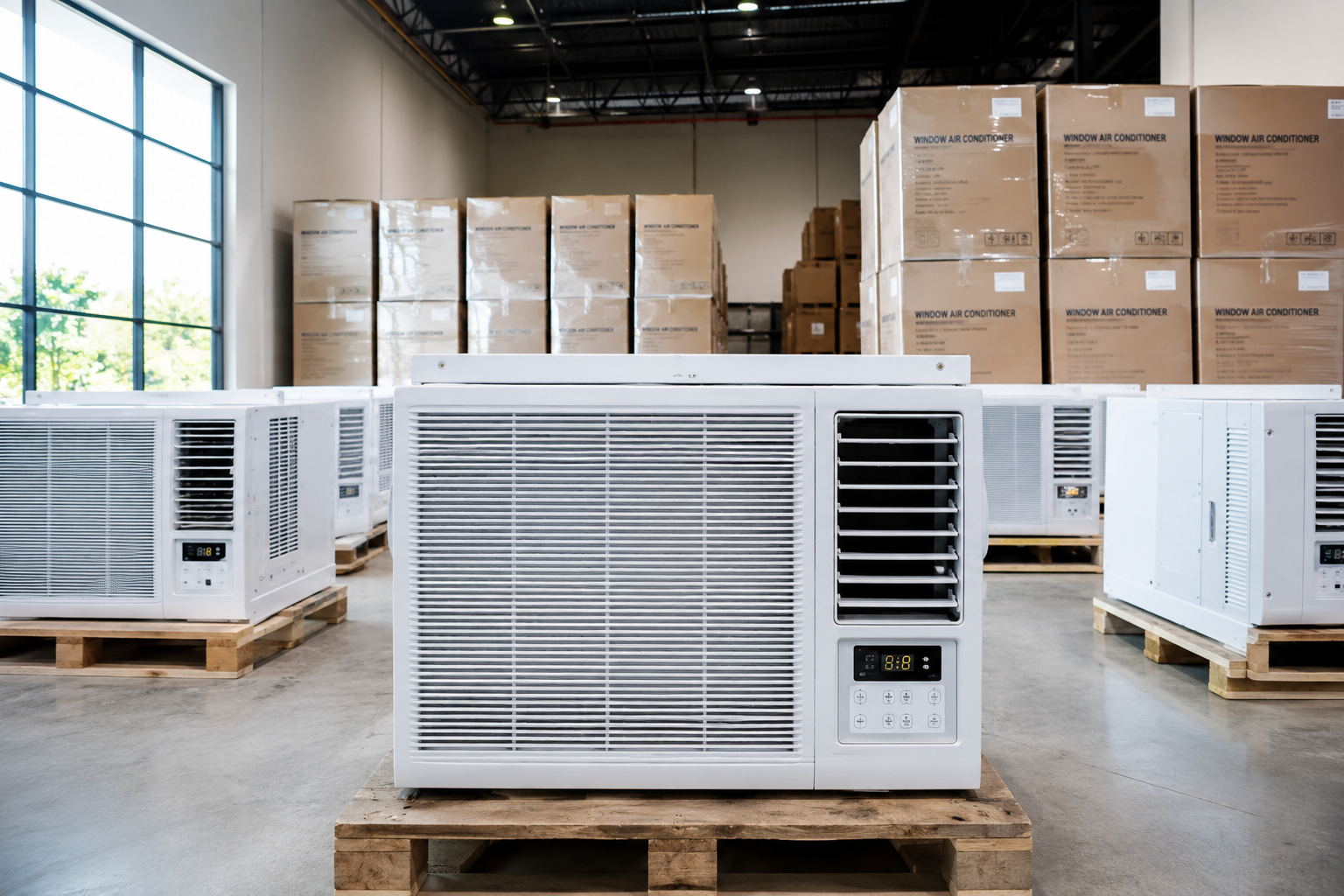
Using full OEM services allows distributors to build a custom, high-margin quiet air conditioner brand. By partnering with a flexible B2B manufacturer with a low Minimum Order Quantity, buyers can test local markets with premium silent models without taking on massive inventory risks.
The Power of Low MOQ
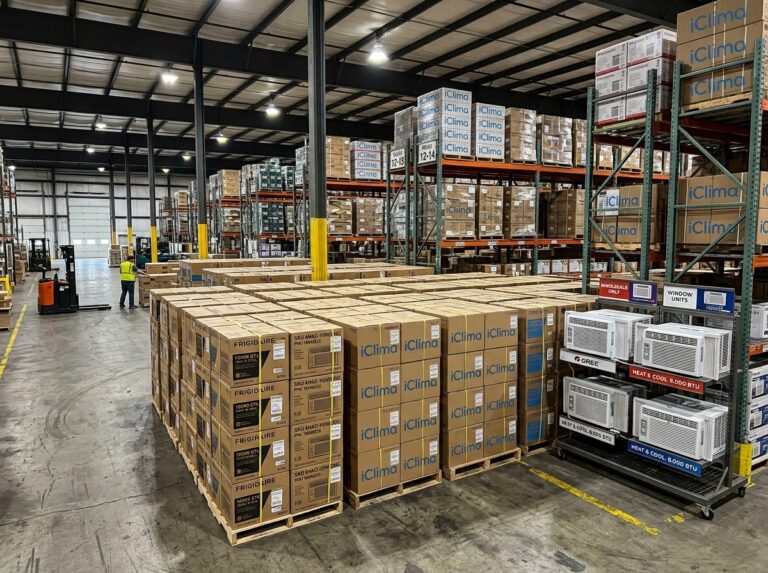
Corporate distributors in Latin America and South Africa often face a big problem. Giant factories demand orders of 5,000 units before they will even talk to you or print your logo on the box. That is a huge financial risk. At iClima, we do things differently. We offer a low Minimum Order Quantity (MOQ). This flexibility means you can order a small batch of ultra-quiet window air conditioners to test the market first. You take almost no risk.
Full Customization for Your Market
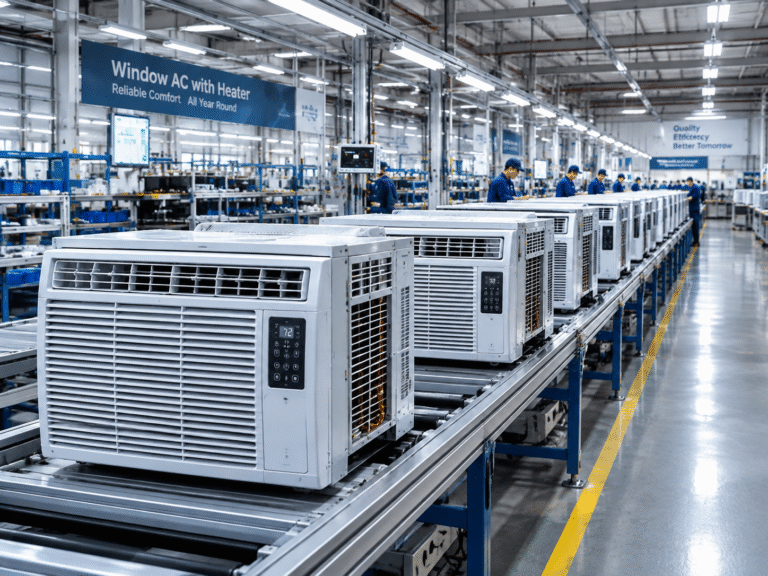
Instead of searching everywhere for a single quiet B2C unit online, you should partner directly with us. You get direct access to our automatic workshops and manual production lines. You can customize the look, the smart features, and the shipping packages. You get one-stop shopping.
Steps to Build Your Brand
Building your own brand gives you full control over your profits. Here is exactly how we make it happen together:
| Phase | Action Required | Result for Your Business |
|---|---|---|
| First Step | Select our ultra-quiet inverter models | You get a premium product feature to sell. |
| Second Step | Use our Low MOQ offering | You order just enough. Your cash flow stays safe. |
| Third Step | Use full OEM and ODM capabilities | You add your brand. You stop competing with cheap brands. |
| Fourth Step | Scale up your orders | You order larger sizes. Your profit margins increase fast. |
Our professional service team stays with you the whole way. We handle all the heavy manufacturing, so you can focus only on selling to your local retail chains and contractors.
Conclusion
Sourcing the quietest window air conditioners directly boosts your margins and pleases your clients. Partner with trusted manufacturers, use low MOQs, and build a highly profitable commercial brand today.
-
"[PDF] High-Efficiency Window Air Conditioners – Department of Energy", https://www.energy.gov/eere/buildings/articles/high-efficiency-window-air-conditioners-building-america-top-innovation. Product testing or technical documentation for standard window air conditioners commonly reports sound levels around 55–65 dB, which can contextualize the claim that many conventional units are near 60 dB. Evidence role: statistic; source type: research. Supports: A traditional window air conditioner often hits 60 decibels.. Scope note: Measured sound output varies by model, fan speed, and test method, so this should be treated as an approximate range. ↩
-
"Noise Reduction Techniques in HVAC Compressors – GreyB", https://xray.greyb.com/hvac/compressor-noise-reduction. Sources on air-conditioning design can support that inverter-driven compressors reduce cycling-related noise and vibration compared with fixed-speed compressors, although the degree of quietness depends on the full unit design and installation conditions. Evidence role: general_support; source type: paper. Supports: Inverter technology is the core noise reduction feature in modern quiet air conditioners.. Scope note: This supports a general relationship between inverter operation and reduced noise, not that inverter technology is the sole or universal core noise-reduction feature. ↩