
Buying bad ACs ruins your reputation. A high defect rate costs you money and loses clients fast. Here is how to spot and avoid the worst window AC brands today.
You should avoid window air conditioner brands that offer rock-bottom prices, lack transparent manufacturing credentials, and have high defect rates. Stay away from suppliers who refuse low minimum order quantities (MOQ) for testing and cannot provide strong partnerships like TCL to back up their quality.
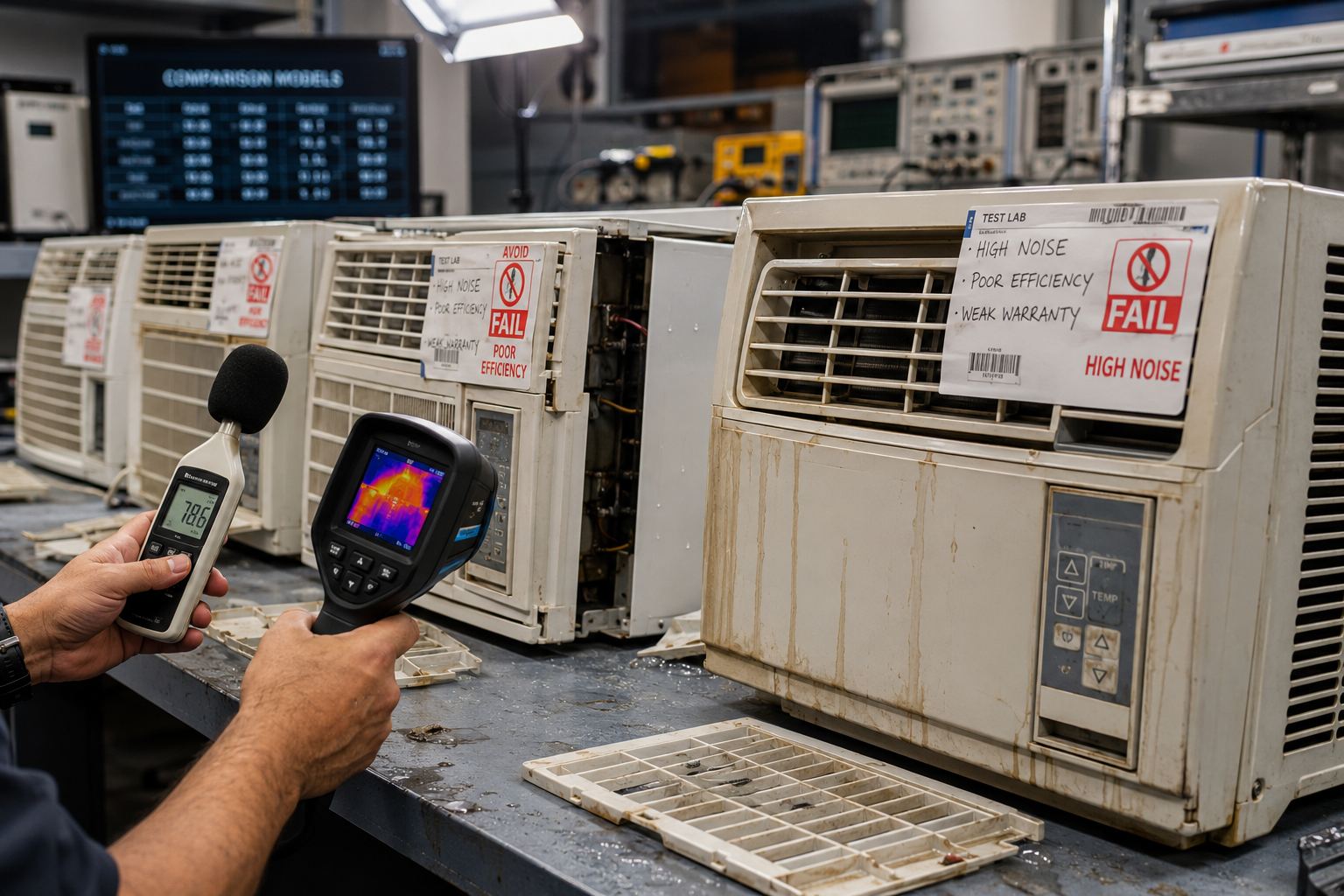
I have seen buyers in Latin America and South Africa lose everything because they chose the wrong factory. Let us dig into the real warning signs that save your business from a supply chain disaster.
What Are the Spec Red Flags That Identify High Failure Rates in AC Manufacturers?
Fake specs cause big problems. Your customers complain when units break down early. You can avoid this by looking closely at the technical details before you buy.
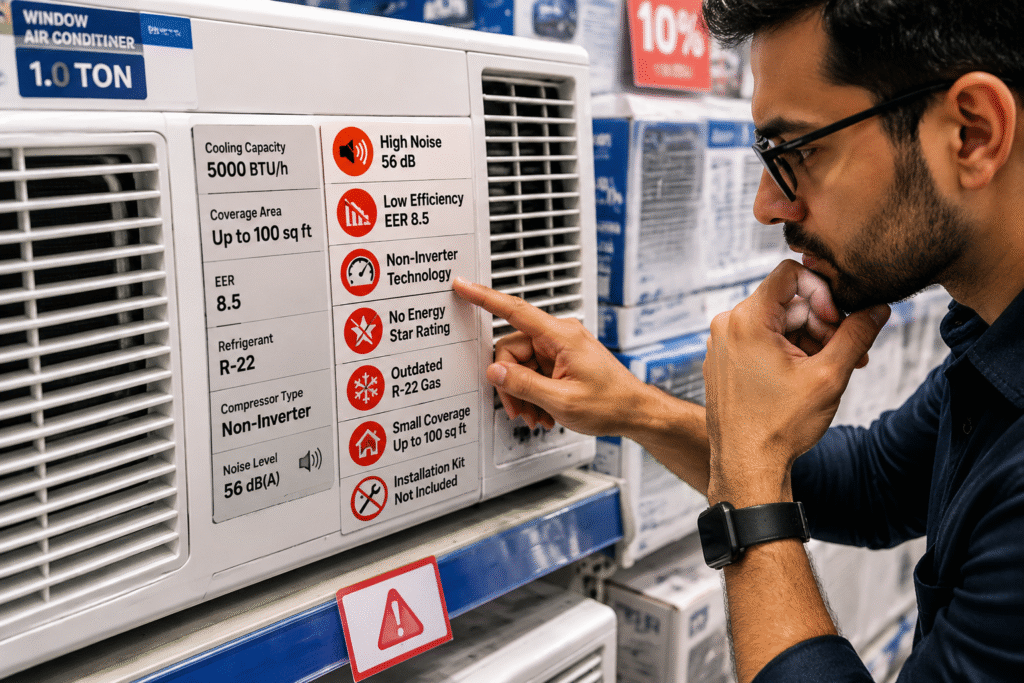
Red flags include hidden component sources, poor compressor warranties, and a lack of energy certifications. If a factory quotes a very low price but will not share details about the copper pipes or the compressor brand, you will likely face a defect rate over 10 percent.1
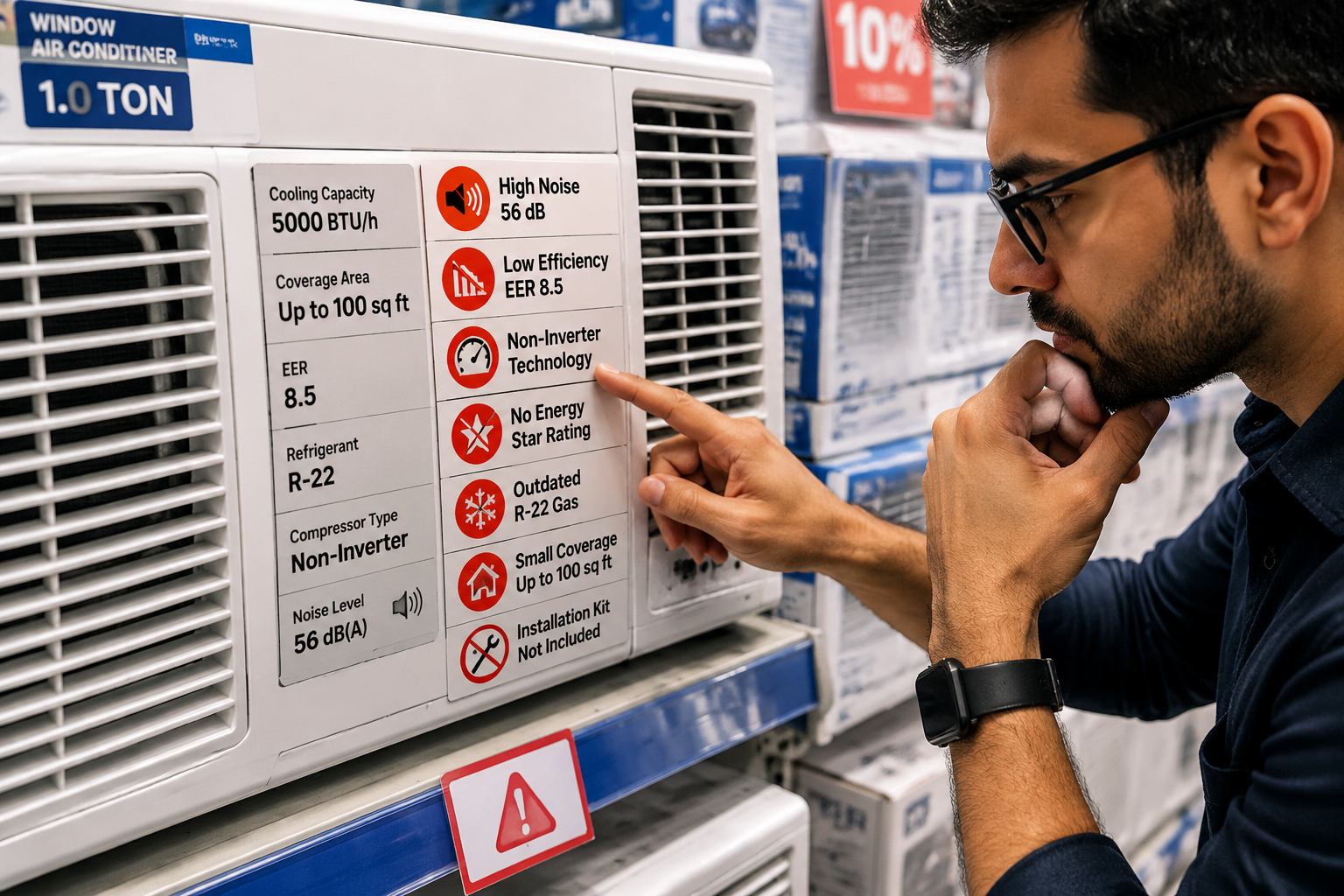
I run an AC factory in China. I know how easy it is for bad factories to cut corners. They use thin aluminum instead of strong copper.2 They use old compressors and print fake labels. This is why you must use critical thinking. Ask yourself: why is the price so low? Usually, the answer is cheap parts. When I started iClima, I decided to never use cheap parts. Quality matters more than a fast sale.
Let us break down the common spec tricks used by bad suppliers.
Common Spec Warning Signs
| Part | Good Quality | Bad Quality (Red Flag) |
|---|---|---|
| Compressor | Famous brand with a long warranty | No-name brand, hard to find online |
| Piping | 100% thick copper | Thin aluminum mixed with copper |
| Plastic Shell | Strong, new ABS plastic | Recycled, brittle plastic that yellows fast |
| PCB Board | Coated for moisture protection | Open, cheap boards that short out easily |
If you see these bad quality signs, walk away. Do not trust a single golden sample. That sample is perfect, but the real order will be trash. You must ask for a trial run. This is the only way to know the truth.
What Is the Supplier Blacklist and the Top 3 Fatal Flaws of Low-End AC Brands?
A bad supplier list is growing. If you buy from them, your market share drops. You must know their fatal flaws so you do not buy their junk.
The top 3 fatal flaws of low-end AC brands are unstable supply chains, a lack of local market compliance, and zero after-sales support. These brands win with rock-bottom prices but destroy your local market reputation with defect rates as high as 15%.
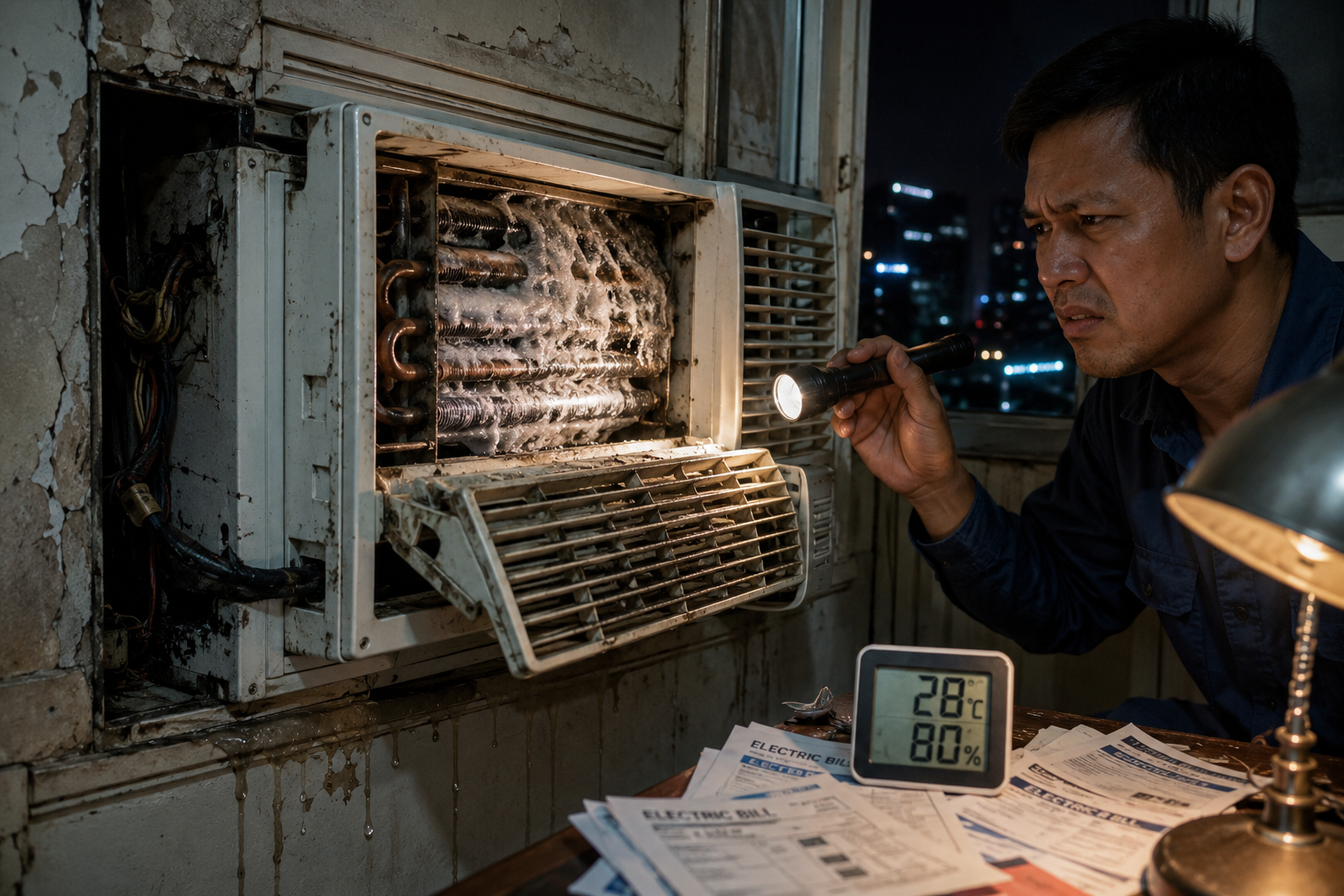
Many distributors in Africa and Latin America come to me for help. They tell me sad stories. They bought cheap window AC units from a low-end brand. The first container arrived late. The second container had 15% broken units. Their local retailers got angry and stopped buying from them. This is the reality of the supplier blacklist.
To avoid getting tricked, you need to understand the three fatal flaws deeply.
The Three Fatal Flaws Explained
| Fatal Flaw | How It Hurts Your Business | How to Spot It Early |
|---|---|---|
| 1. Unstable Supply Chain | Projects get delayed, you miss peak season sales. | They cannot give a clear lead time. |
| 2. No Compliance | Units get stuck at customs, costing you heavy fines. | They do not have CE, CB, or UL papers. |
| 3. Zero After-Sales Help | You pay for all repairs from your own pocket. | They stop replying to your emails after shipping. |
These factories focus only on a single deal. They do not want a long relationship. At iClima, we built our professional service team to fix these exact pains. We stay with you after the sale. If a factory does not answer questions fast, put them on your blacklist right away.
How to Mitigate Supply Chain Risks by Choosing TCL-Level Quality and OEM/ODM Services?
Supply chain risks keep buyers awake at night. A delayed or bad order can kill next year’s budget. The answer is choosing reliable partners and testing small orders first.
You mitigate risks by working with manufacturers that have official strategic partnerships, like iClima has with TCL. Use a Low MOQ policy to order a small pilot run. This tests their real-world quality and OEM/ODM capability before you commit to large, expensive container orders.

As a business owner, I always tell corporate procurement managers: do not take blind risks. Big retail chains and hotel groups need a stable supply. If you order 5000 units and they fail, it is a disaster. That is why iClima is an official collaborator with TCL. This partnership ensures our quality is top level.3 It gives our buyers peace of mind.
But big names are not enough. You must test the factory yourself. This is where the custom OEM/ODM process and small orders come in.
How to Safely Test a New Supplier
| Step | Action | Benefit to Your Business |
|---|---|---|
| 1. Check Credentials | Ask for factory audit reports and partner letters. | Proves they are a real, capable factory. |
| 2. Use Low MOQ | Order just 50 or 100 units as a test. | Low financial risk if the units are bad. |
| 3. Test OEM Design | Ask them to print your logo on the small run. | Checks their custom skill and packaging care. |
| 4. Track Service | Measure how fast they reply during the test. | Shows what future support will look like. |
By testing a small batch, you see the real product, not just a golden sample. If the trial passes, you can safely scale up your OEM or ODM order. This simple step saves you from huge supply chain risks.
Conclusion
Avoid bad window AC brands by checking parts, testing with small orders, and choosing factories with strong partnerships like TCL. Smart buying protects your market reputation completely.
-
"[PDF] Evaluation of Air Conditioning Performance Degradation – Publications", https://publications.energyresearch.ucf.edu/wp-content/uploads/2018/09/FSEC-PF-474-18.pdf. A source should support the relationship between opaque component disclosure, low-price manufacturing, and elevated defect or failure rates in air-conditioning products; if evidence is indirect, it should be treated as contextual rather than proof of a specific 10 percent threshold. Evidence role: statistic; source type: paper. Supports: If a factory quotes a very low price but will not share details about the copper pipes or the compressor brand, you will likely face a defect rate over 10 percent.. Scope note: The exact 10 percent defect-rate figure is unverified in the article and may vary by factory, product class, and inspection method. ↩
-
"Four Facts to Know about HVAC/R Coil Corrosion: Copper versus …", https://blog.copper.org/hvac/r/four-facts-to-know-about-coil-corrosion-copper-versus-aluminum. Sources on HVAC and heat-exchanger materials can support that copper has been widely used in air-conditioning tubing and that material choice affects thermal and mechanical performance; any claim that aluminum is inherently a red flag should be framed as contextual unless the source directly compares failure rates. Evidence role: general_support; source type: research. Supports: They use thin aluminum instead of strong copper.. Scope note: Material choice alone does not prove poor quality, because modern designs may use aluminum or mixed materials for legitimate engineering reasons. ↩
-
"iClima: Global B2B Air Conditioning & Heating Solutions", https://iclimaac.com/iclima-your-premier-air-conditioning-and-heating-solutions-partner-for-global-b2b-procurement/. A source should support only that a formal partnership or collaboration exists; it should not be used to substantiate a broader claim that the partnership guarantees superior product quality. Evidence role: historical_context; source type: institution. Supports: That iClima is an official collaborator with TCL and that this partnership ensures our quality is top level.. Scope note: Partnership evidence does not directly prove product quality or supply-chain reliability. ↩