Are high electricity bills eating into your project profits? Ignoring the total cost of ownership hurts your bottom line. We must look past the initial price tag.
The real commercial cost of window air conditioners is the Total Cost of Ownership (TCO). TCO adds the initial unit price, installation fees, and long-term electricity costs together. High Energy Efficiency Ratio (EER) units cost more upfront but save thousands in the long run for large commercial projects.
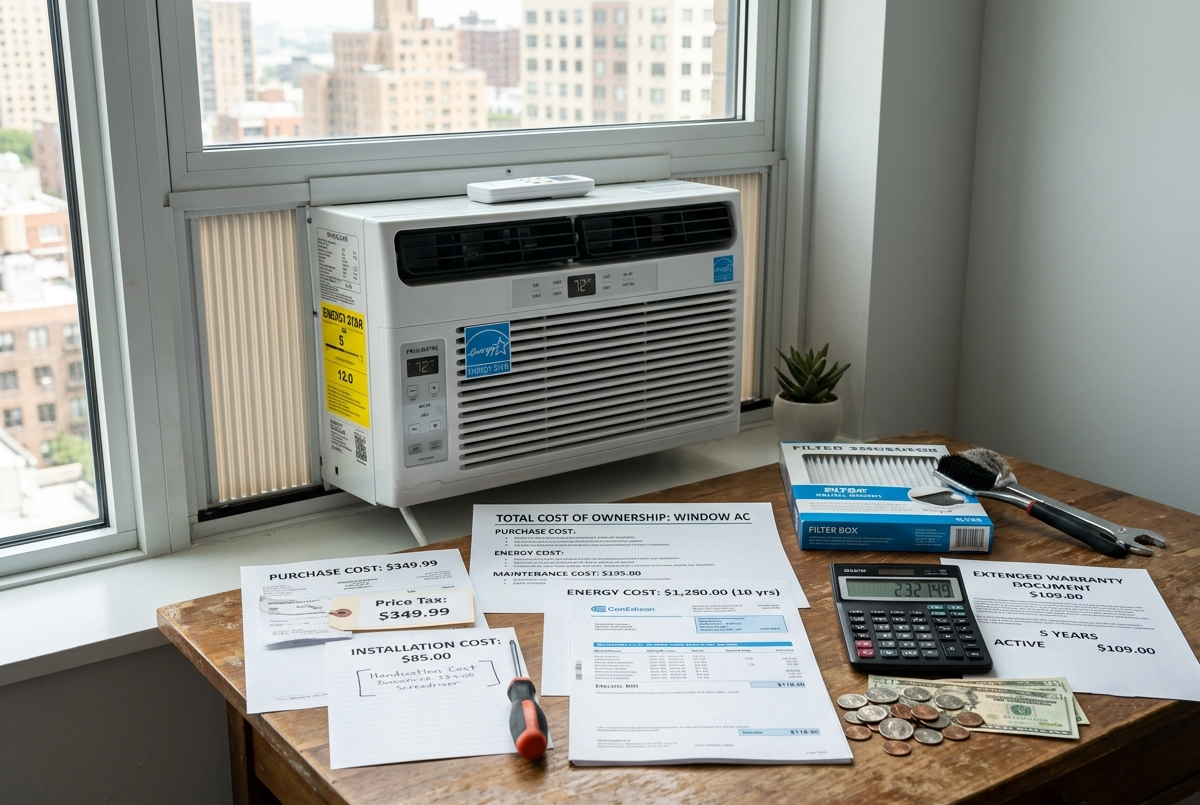
Let us break down these costs. Understanding this data will change how you buy cooling units for your next big project and help you avoid common buying mistakes right from the start.
How to Calculate Power Consumption: What Are the Formulas for Real-World AC Costs?
Struggling to predict actual electricity costs for a tender? Guessing leads to budget overruns. You need exact formulas to show real-world expenses to your sensitive clients.
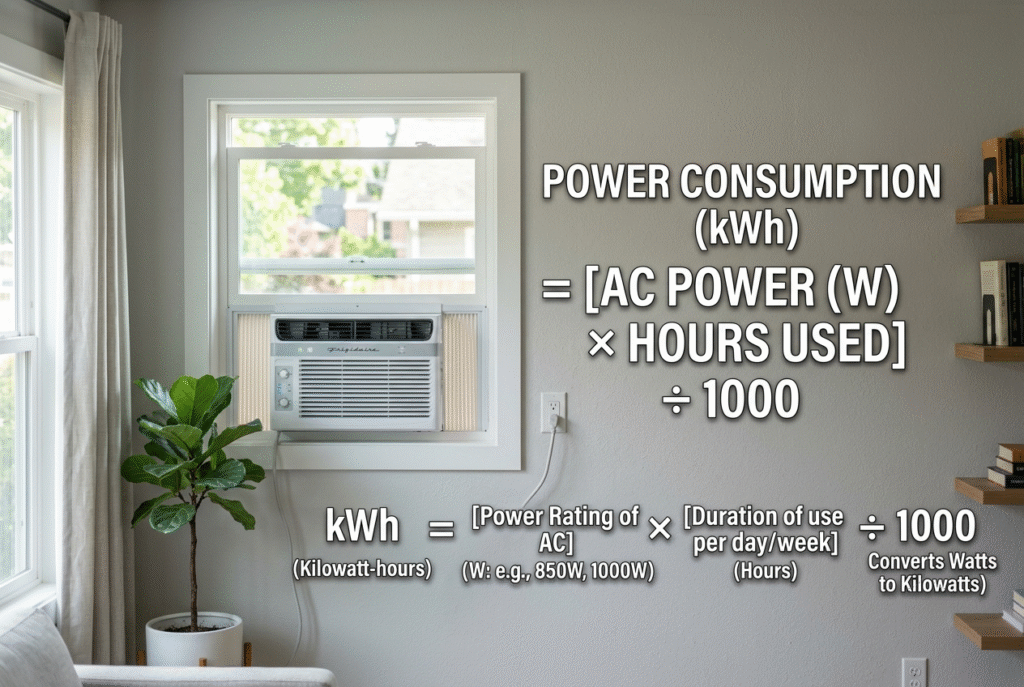
To find real-world AC costs, use this simple formula: (Cooling Capacity in BTUs / EER) × Daily Run Hours × Electricity Rate1. For B2B buyers, showing this math proves your window ACs use less power, which helps you win deals in places with high energy prices.
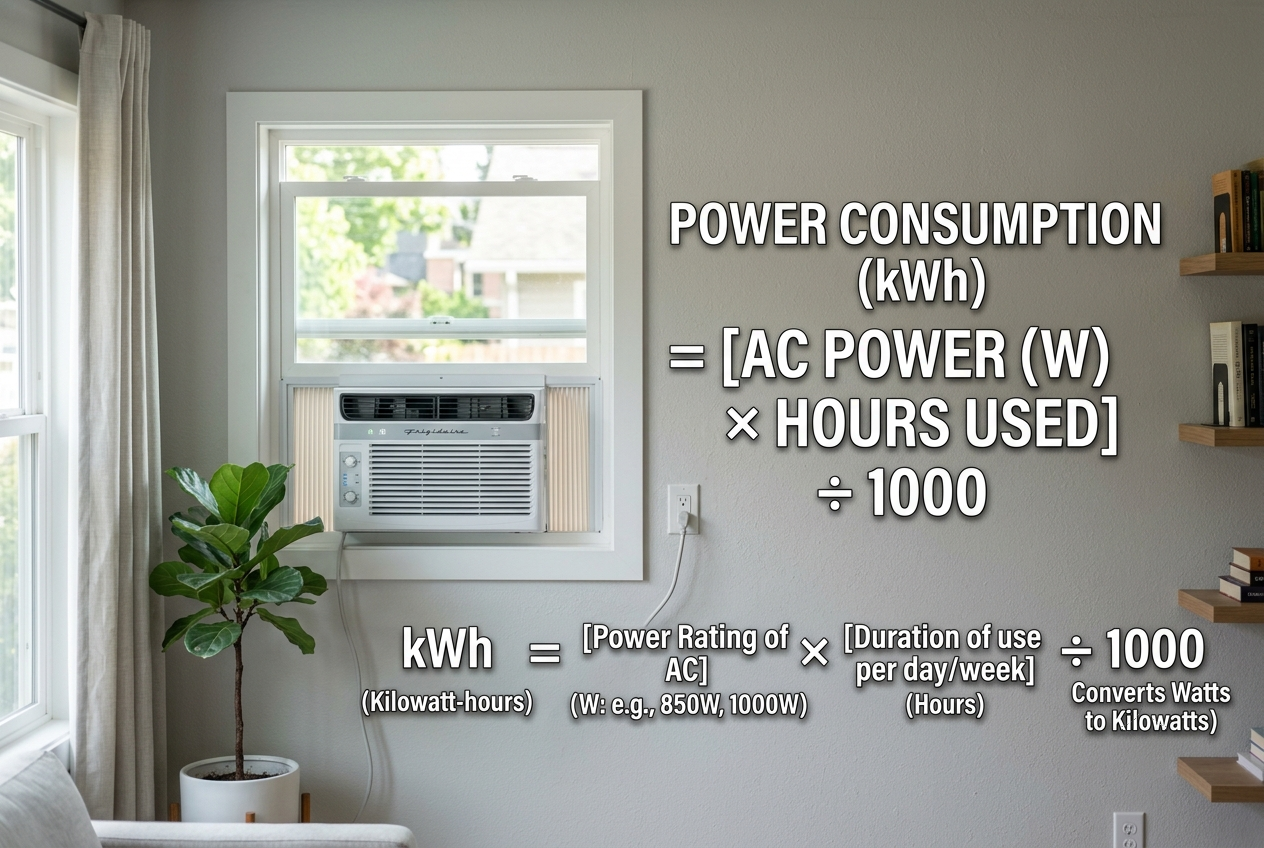
When you buy AC units for commercial dormitories or low-income housing, you must know the exact power usage. I always tell my clients in South Africa and Latin America to check the EER or CEER rating first before making any decision.
Breaking Down the Cost Math
You cannot just guess the equipment running cost. You need plain and hard facts to show your buyers. Let us look at a simple breakdown to see why energy efficiency matters so much over time.
| Unit Type | BTU | EER | Power Used per Hour | Daily Cost (8 hours at $0.15/kWh) |
|---|---|---|---|---|
| Standard Window AC | 12000 | 9.0 | 1.33 kW | $1.60 |
| High EER Window AC | 12000 | 12.0 | 1.00 kW | $1.20 |
If you buy 1000 units for a big public project, that $0.40 daily difference per unit becomes $400 every single day. Over a full year, you save $146,000 for your end client. This is why a cheaper, low-efficiency unit is often a very bad deal. At iClima, our TCL-backed manufacturing ensures you get true energy efficiency ratings you can trust. When you use this critical thinking to calculate power costs, you can quickly prove to government buyers that your long-term running costs are the lowest in the market. This makes your project bid much stronger than your competitors.
Window ACs vs. Split Systems: How Do You Compare Installation and Long-Term ROI?
Are split systems draining your budget before they even turn on? Heavy installation fees can kill your profit margins fast. Let us see why window units might be your best choice.
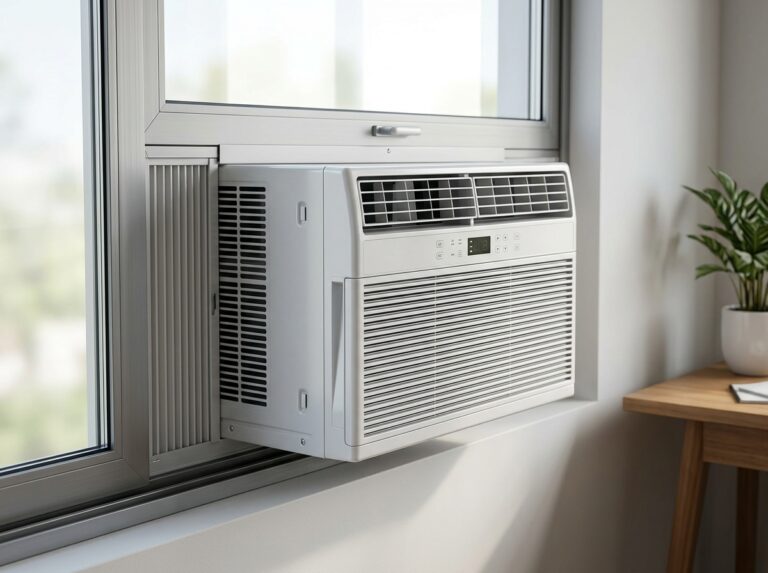
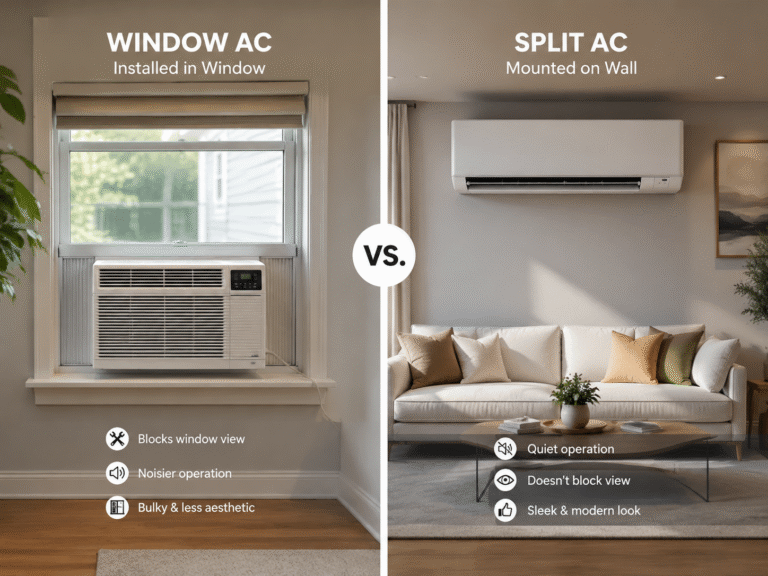
Window ACs offer a faster Return on Investment (ROI) for large projects compared to split systems.2 They have zero copper piping costs and extremely low installation fees. This makes them perfect for mass housing and commercial dormitories where rapid setup and low upfront costs matter most.
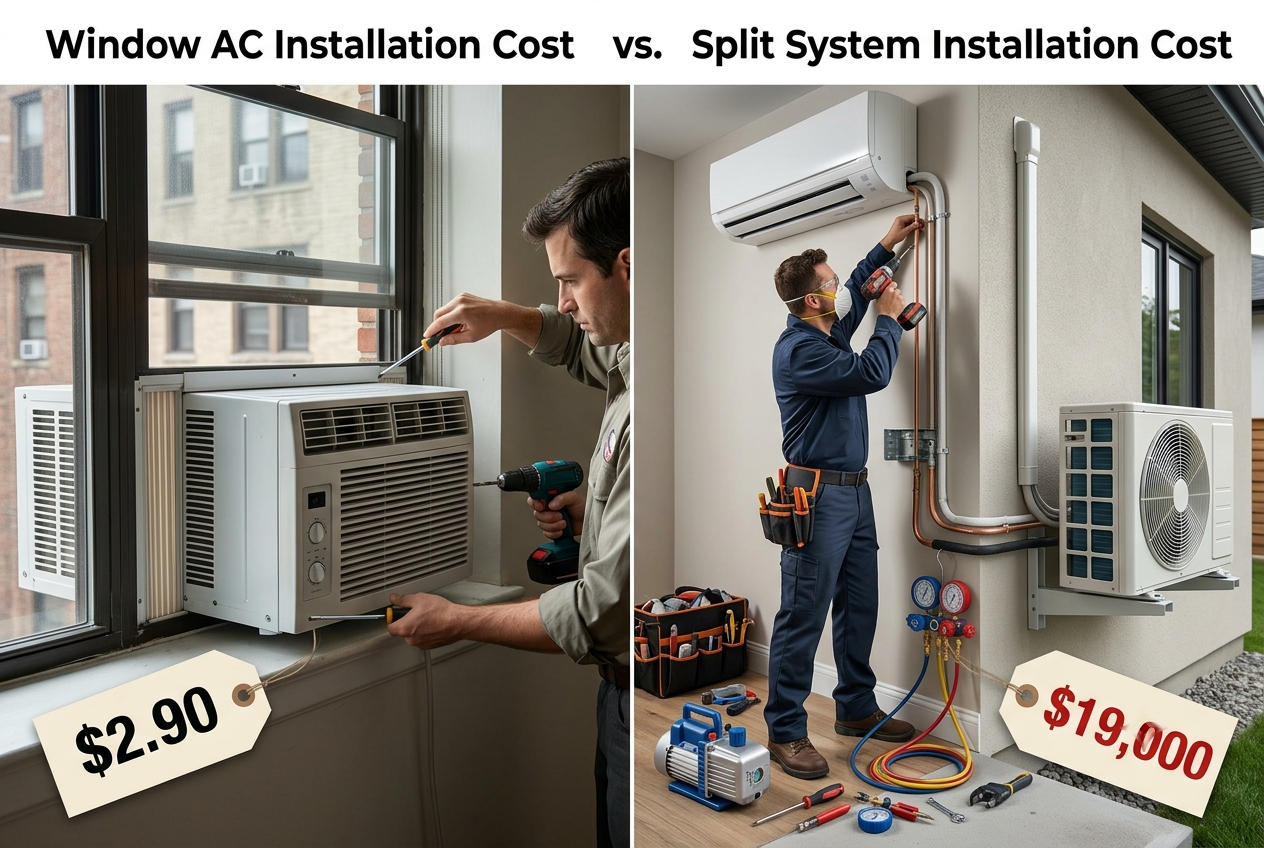
Many procurement managers think split systems are always the better choice. I strongly disagree. When you deal with large-scale projects like 500 units for a worker camp, time equals real money. Split systems need certified cooling technicians to set them up. They need expensive copper pipes to work. They take many hours to install correctly.
Analyzing the True ROI
Let us look at how the actual costs stack up when you compare these two AC options side by side.
| Cost Factor | Window Air Conditioner | Split AC System |
|---|---|---|
| Unit Price | Low | Medium to High |
| Installation Labor | $20 – $50 | $150 – $300 |
| Extra Materials | None | Copper pipes, brackets |
| Setup Time | 30 minutes | 2 to 4 hours |
Window units slide right into a pre-made wall hole. For strict government projects, this fast installation speed saves tens of thousands of dollars in labor fees alone. The long-term ROI is also much better because future maintenance is simpler. If a window unit breaks down, you just pull it out of the wall and put a new one in immediately. With our low MOQ policy at iClima, you can easily buy a small trial batch first. You will quickly see exactly how much time and money you save on installation and daily repairs.
Strategic Sourcing: How Can You Win Tenders with OEM/ODM Window Air Conditioners?
Too many big brands force you into rigid terms with zero room to grow. Are you tired of low margins? Private label units give you the total control you deserve.
You win tough tenders by using strategic sourcing to offer OEM/ODM window air conditioners. Creating a private label lets you bypass big-brand rules, build strong local brand trust, and command much higher profit margins. You give governments exactly what they need at an unbeatable price.
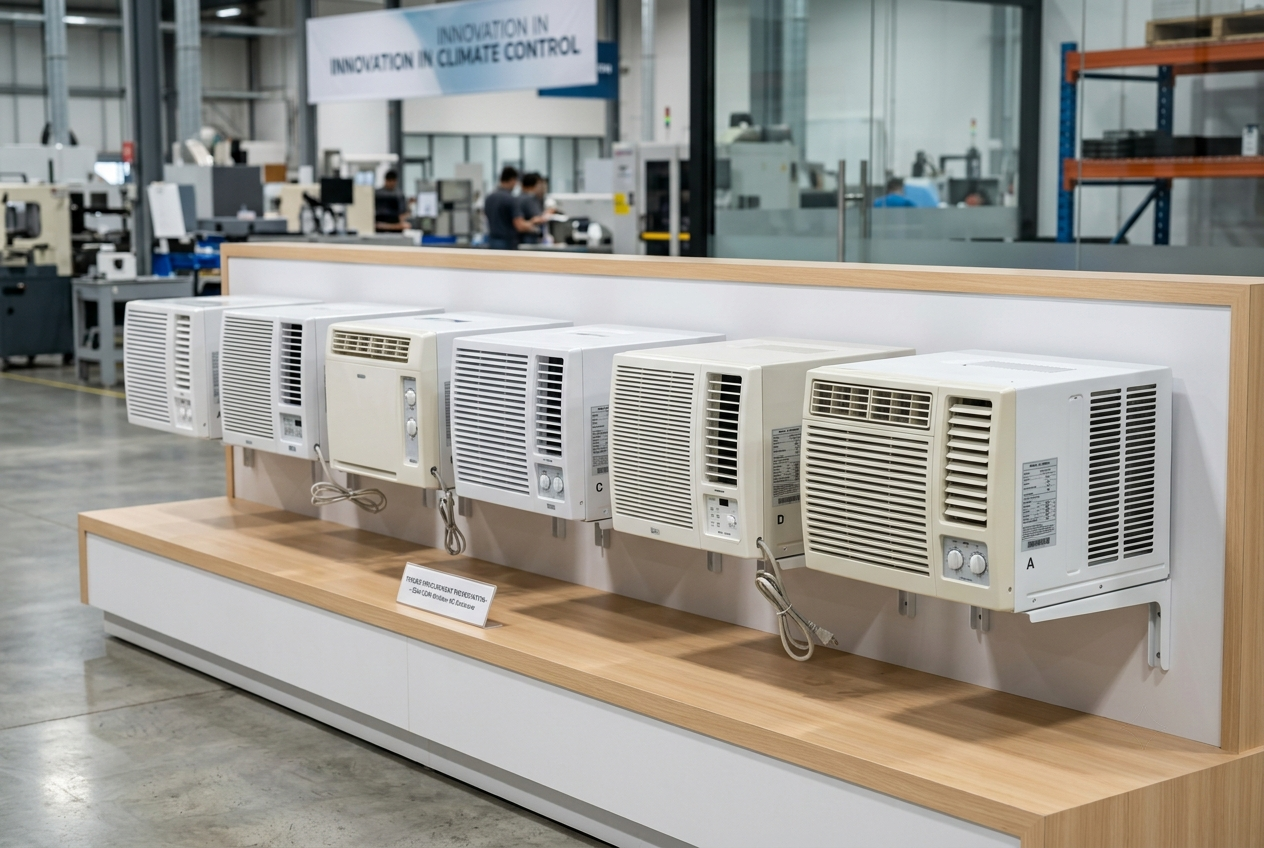
When you just sell big brands, you act only as a middleman. You compete only on the lowest price, and the big guys always win the deal. My corporate distributors in Latin America used to struggle deeply with this exact pain point. Then they started using our professional ODM and OEM services at iClima.
The Power of Private Label Brands
Building your own cooling brand changes everything. You can customize the exact unit features to meet strict government tender rules perfectly.
| Brand Strategy | Profit Margin | Customization | Tender Success Rate |
|---|---|---|---|
| Selling Big Brands | 10% – 15% | None | Low |
| Private Label (OEM) | 30% – 40% | Full | High |
By focusing deeply on a low Total Cost of Ownership (TCO) with high EER ratings, you make your private brand look premium and reliable. You tell the public buyer, "My brand saves you $100,000 in power costs over 5 years." Because iClima is an official collaborator with TCL, you get world-class manufacturing quality under your own brand name. Plus, our factory supports low Minimum Order Quantities (MOQ). You do not need to buy 5000 units just to start your brand. You can order exactly what the local tender requires, beat the big brands, and keep all the heavy profits for yourself.
Conclusion
To succeed in B2B air conditioning sales, stop looking at just the unit price. Focus on Total Cost of Ownership, leverage private labels, and use high energy efficiency to win big projects.
Frequently Asked Questions (FAQ)
What is the total cost of ownership for commercial window air conditioners?
The total cost of ownership (TCO) includes the unit price, installation fees, maintenance, and long-term electricity costs. B2B buyers must calculate TCO to find the real price of the units over their 5-to-10-year lifespan.
How does a high EER rating reduce window AC running costs?
A high Energy Efficiency Ratio (EER) means the unit uses less electricity to cool the same space. In large projects like dormitories, a higher EER drastically lowers monthly power bills, making the overall TCO much cheaper.
Why are OEM window air conditioners better for government tenders?
OEM units allow you to build a private brand and skip rigid big-brand rules. You can customize energy features to meet strict government specs while commanding higher profit margins. Factories like iClima offer low MOQs to help you start.
How do installation costs compare between window ACs and split systems in B2B projects?
Window ACs have zero copper piping costs and take only minutes to install, making labor very cheap. Split systems require certified technicians, extra materials, and hours of work, heavily increasing the initial project budget.
-
"How much electricity is used for air conditioning in …", https://www.eia.gov/tools/faqs/faq.php?id=1174&t=1. Sources on room air conditioner efficiency can support that electrical input power is approximated by cooling capacity divided by EER, and that operating cost is then estimated by multiplying energy use by local electricity price; this is a calculation framework rather than a direct measurement of any specific unit. Evidence role: mechanism; source type: paper. Supports: To find real-world AC costs, use this simple formula: (Cooling Capacity in BTUs / EER) × Daily Run Hours × Electricity Rate.. Scope note: Actual consumption varies with compressor cycling, thermostat settings, ambient temperature, and efficiency metric definitions (EER vs. CEER). ↩
-
"What’s the Average Cost to Replace Your AC Unit in Florida?", https://floridapace.gov/blog/home-systems-efficiency/average-cost-to-replace-ac-unit-in-florida/. Sources on HVAC project economics can be used to show that lower upfront installation costs and faster deployment may improve payback time for window-mounted air conditioners relative to split systems, although ROI itself depends on electricity use, maintenance, and local labor rates. Evidence role: general_support; source type: research. Supports: Window ACs offer a faster Return on Investment (ROI) for large projects compared to split systems.. Scope note: This supports the economic logic of shorter payback, not a universal ROI conclusion for all projects. ↩